CM Shivakumar Reviews Karnataka's 5 Guarantee Schemes at Vidhana Soudha
Synopsis
Chief Minister D.K. Shivakumar reviewed progress on Karnataka's five flagship guarantee welfare schemes at Vidhana Soudha on 19 June 2026, with senior ministers and Chief Secretary Dr. Shalini Rajneesh in attendance, and issued directions for more effective implementation.
Key Takeaways
Shivakumar chaired a review of Karnataka's five guarantee welfare schemes at Vidhana Soudha on 19 June 2026 .
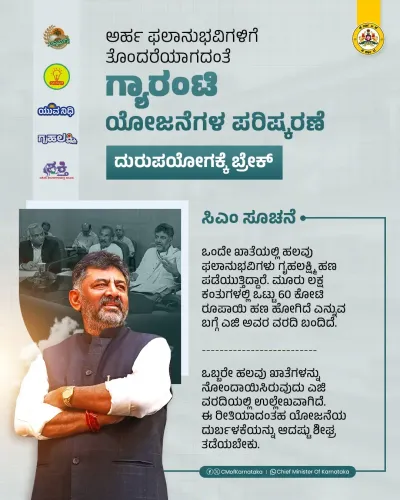
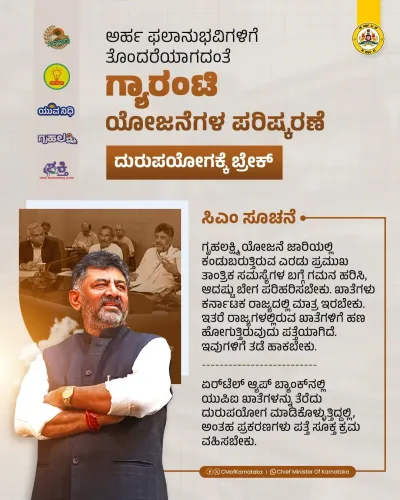
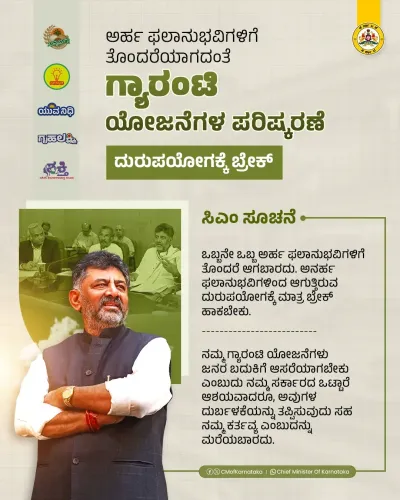
The meeting assessed progress made so far and the Chief Minister issued directions for more effective implementation.
Senior ministers present included K.J.
George (Energy and Tourism), Priyank Kharge (Home), and K.H.
Muniyappa (Food and Civil Supplies).
Shalini Rajneesh and members of the Guarantee Implementation Committee also attended.
The five schemes — Gruha Jyothi, Shakti, Gruha Lakshmi, Anna Bhagya, and Yuva Nidhi — primarily benefit women and low-income households across Karnataka.
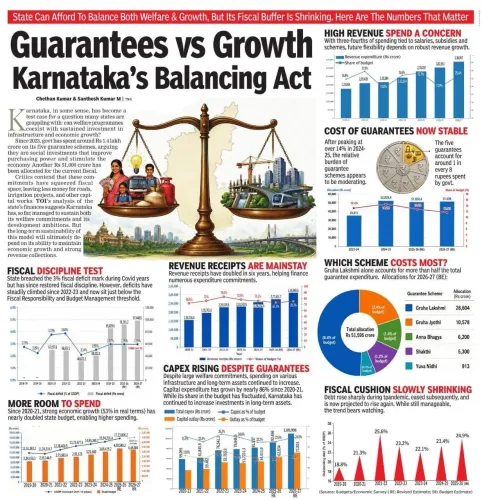
The Congress government has allocated thousands of crores annually for the schemes since the 2023-24 budget cycle.
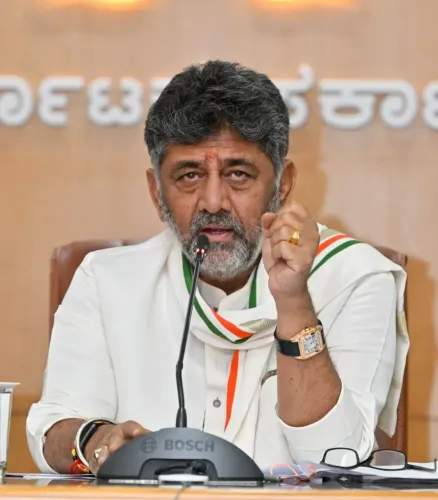
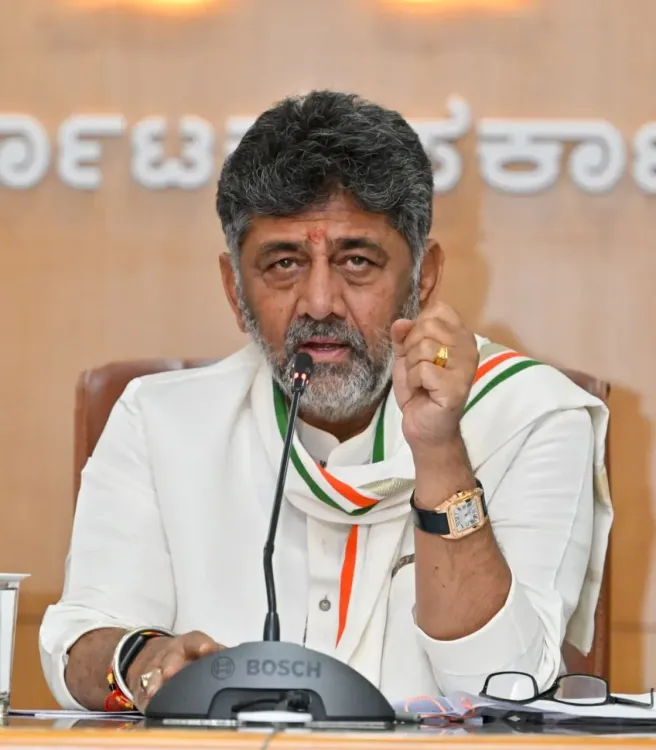
Chief Minister D.K. Shivakumar chaired a high-level review meeting on the Karnataka state government's five flagship guarantee schemes at Vidhana Soudha, Bengaluru, on Friday, 19 June 2026. The Chief Minister's Office of Karnataka announced that the meeting assessed progress made so far and issued directions for more effective implementation of the programmes.
Context
The official post from the Chief Minister's Office states that CM Shivakumar — referred to in the original Kannada text as ಮುಖ್ಯಮಂತ್ರಿ ಶ್ರೀ (Chief Minister Sri) — convened the session to receive a status briefing on the five guarantee yojanas and to give guidance on strengthening their rollout. Senior ministers and bureaucrats from across key departments were present at the meeting.
The gathering included Energy and Tourism Minister K.J. George, Home Minister Priyank Kharge, and Food and Civil Supplies Minister K.H. Muniyappa. Chief Secretary Dr. Shalini Rajneesh, along with members of the Guarantee Implementation Committee and other senior officials, also attended.
Policy Backdrop
The five guarantee schemes were the centrepiece of the Karnataka Congress party's manifesto ahead of the May 2023 assembly elections. After forming the government, the Siddaramaiah-led administration launched a phased rollout of the programmes, establishing a dedicated Guarantee Implementation Committee to oversee delivery.
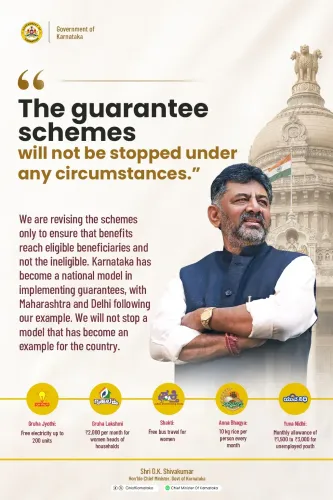
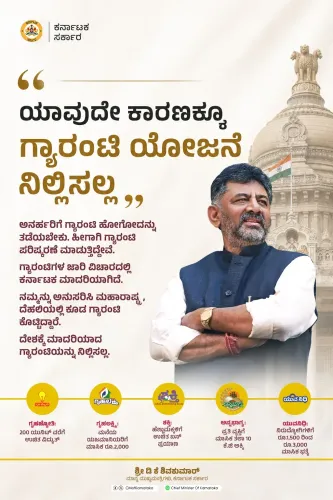
The schemes span a wide welfare canvas: free electricity for households (Gruha Jyothi), free bus travel for women (Shakti), a monthly cash transfer to women heads of households (Gruha Lakshmi), free rice distribution (Anna Bhagya), and an unemployment allowance for educated youth (Yuva Nidhi). State budgets from 2023-24 onwards have allocated thousands of crores annually to sustain the programmes.
The presence of ministers from Energy, Home, and Food and Civil Supplies departments reflects the cross-departmental coordination that the guarantee schemes demand, with each minister accountable for specific components of the welfare basket.
Stakeholders and Impact
The primary beneficiaries of the five guarantees are women and low-income households across Karnataka. The Gruha Lakshmi cash transfer and the Shakti free bus pass scheme are directed specifically at women, while Anna Bhagya and Gruha Jyothi target economically vulnerable families more broadly.
The Yuva Nidhi scheme addresses unemployed graduates and diploma holders, a segment that has been a persistent policy concern in the state. Collectively, the five programmes are among the most ambitious direct-benefit welfare commitments undertaken by any state government in recent years, and their implementation has been watched closely by other states.
What's Next
The directions issued by CM Shivakumar at the review meeting are expected to feed into the next cycle of progress reporting by the Guarantee Implementation Committee. Any fiscal demands arising from implementation gaps could surface as supplementary budget proposals in the upcoming legislative session.
Karnataka's Congress government has consistently positioned the five guarantees as proof of delivery on electoral promises, and high-level reviews of this kind signal that the leadership intends to keep the programmes under active political and administrative scrutiny ahead of future electoral cycles.
Point of View
Home, and Food departments at the table alongside the Chief Secretary, the meeting reflects the cross-departmental complexity of sustaining large-scale direct-benefit programmes under fiscal pressure. The review also carries a political subtext: periodic public demonstrations of oversight help the ruling party reinforce its welfare-delivery narrative ahead of future elections. Other states watching Karnataka's model will pay attention to whether the directions issued translate into measurable improvements in beneficiary reach.
NationPress
19 Sept 2026
Frequently Asked Questions
What are Karnataka's 5 guarantee schemes?
Karnataka's five guarantee schemes are Gruha Jyothi (free electricity), Shakti (free bus travel for women), Gruha Lakshmi (monthly cash transfer to women heads of households), Anna Bhagya (free rice), and Yuva Nidhi (unemployment allowance for educated youth). They were promised by the Congress party in its 2023 election manifesto.
What did CM DK Shivakumar do at the 19 June 2026 review meeting?
CM D.K. Shivakumar chaired a review meeting at Vidhana Soudha on 19 June 2026 to assess the progress of the five guarantee schemes and issued directions for their more effective implementation.
Who attended the Karnataka guarantee scheme review meeting?
The meeting was attended by Energy and Tourism Minister K.J. George, Home Minister Priyank Kharge, Food and Civil Supplies Minister K.H. Muniyappa, Chief Secretary Dr. Shalini Rajneesh, and members of the Guarantee Implementation Committee along with senior officials.
When did Karnataka launch its 5 guarantee schemes?
The Karnataka Congress government began a phased rollout of the five guarantee schemes after forming the government in May 2023, following the party's victory in the state assembly elections.
What is the Guarantee Implementation Committee in Karnataka?
The Guarantee Implementation Committee is a dedicated body set up by the Karnataka government to oversee and coordinate the rollout of the five flagship welfare guarantee schemes across departments.