CM Siddaramaiah Vows to Continue Karnataka's Five Guarantee Schemes

Synopsis
Karnataka Chief Minister Siddaramaiah on June 15, 2026 declared the five Congress guarantee schemes will continue indefinitely, rebutting BJP claims of fiscal collapse and accusing the party of copying the same welfare model in states it governs while opposing it in Karnataka.
Key Takeaways
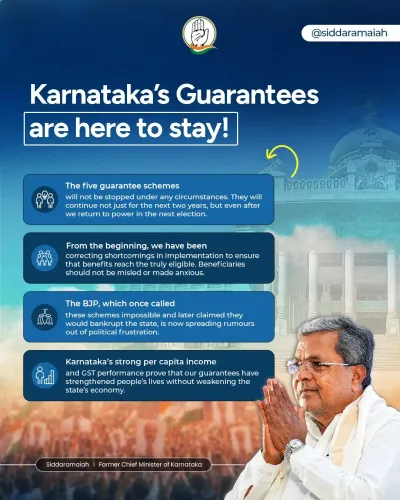
Chief Minister Siddaramaiah declared on June 15, 2026 that Karnataka's five guarantee schemes will not be stopped under any circumstances.
He cited Karnataka's first-place national ranking in per capita income and its second place in GST collection (after Maharashtra) as proof the state is not bankrupt.
Siddaramaiah accused the BJP of hypocrisy, alleging it copied the guarantee-scheme model in Madhya Pradesh, Bihar and West Bengal while opposing it in Karnataka.
The Chief Minister acknowledged misuse by ineligible beneficiaries and called corrective eligibility verification a legal duty, not a sign of scheme cancellation.
He urged beneficiaries — particularly women, rural households and unemployed youth — not to be misled by opposition 'propaganda.' The five schemes, launched after the May 2023 Karnataka assembly election , cover cash for women, free power, subsidised grain, free bus travel and a youth unemployment allowance.
Karnataka Chief Minister Siddaramaiah on Monday, June 15, 2026, issued a firm public assurance that the state's five guarantee schemes will not be discontinued, dismissing opposition claims as 'false propaganda' and accusing the Bharatiya Janata Party (BJP) of spreading deliberate misinformation to unsettle beneficiaries.
Context
In a detailed post on X, Chief Minister Siddaramaiah stated unequivocally: 'The five guarantee schemes will not be stopped under any circumstances. Not just for the next two years — we will return to power in the next election, and the schemes will continue even after that.' The statement comes amid what the Congress government describes as a sustained disinformation campaign by the BJP suggesting the schemes are financially unsustainable and may be wound down.
Siddaramaiah directly addressed beneficiaries, urging them not to be 'anxious by listening to the Opposition's false propaganda,' and characterised the BJP as 'fundamentally an anti-poor party' that has opposed the guarantees from the outset.
Policy Backdrop
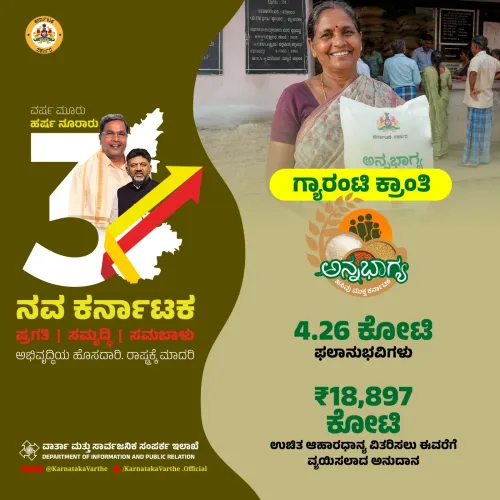
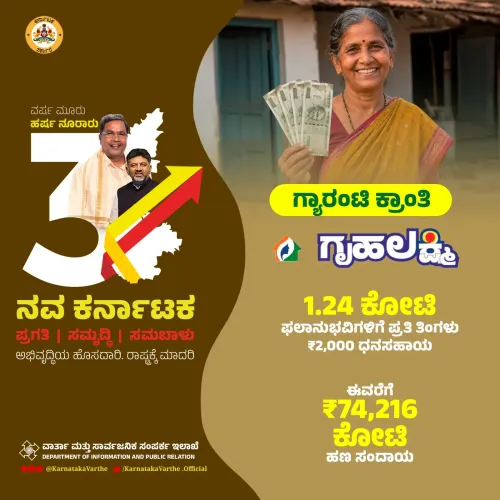
The five guarantee schemes were the centrepiece of the Indian National Congress manifesto ahead of the May 2023 Karnataka assembly elections. They cover monthly cash support for women heads of household, free electricity up to a fixed unit limit, subsidised foodgrain, free bus travel for women, and an unemployment allowance for educated youth. The Congress government began rolling them out after forming the government in May 2023.
The BJP had consistently questioned the fiscal prudence of the programmes, arguing they would strain the state exchequer. Siddaramaiah pushed back directly, pointing to Karnataka's ranking as first in the country in per capita income and its position as second only to Maharashtra in GST collection as evidence that the state's finances remain sound. 'If the treasury were empty and the government were bankrupt, would these achievements have been possible?' he asked.
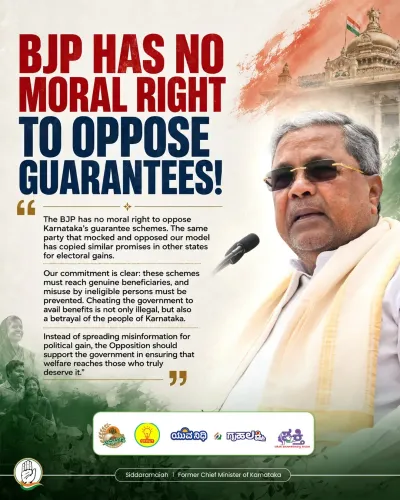
The Chief Minister also turned the tables on the BJP, noting that the party had replicated a similar welfare-transfer model in Madhya Pradesh, Bihar and West Bengal to contest and win elections, while simultaneously attacking the Congress version in Karnataka. 'What moral right do they have to oppose guarantee schemes?' he wrote.
Stakeholders and Impact
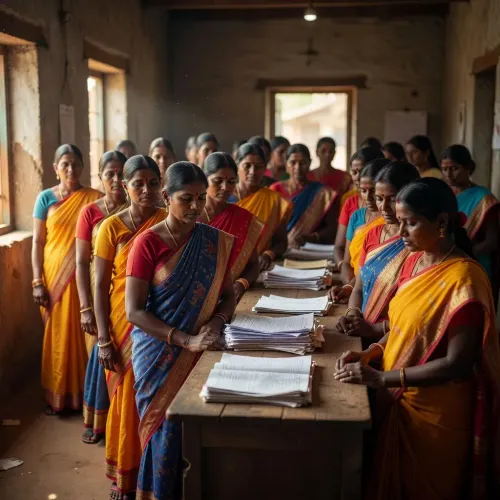
The schemes collectively benefit millions of women, rural households and unemployed youth across Karnataka. Women beneficiaries of the cash-transfer component and free bus travel scheme represent a particularly large and politically significant constituency. Any perception of discontinuation — even if unfounded — risks eroding trust among this base.
Siddaramaiah also addressed the question of misuse, acknowledging that ineligible individuals sometimes avail benefits and framing corrective action as a legal and civic duty. 'Cheating the government out of greed to avail the benefits of guarantee schemes is not only a violation of the law, but also a betrayal of the people of the state,' he wrote, calling on citizens to support eligibility-verification efforts rather than treat them as a prelude to scheme cancellation.
What's Next
The government is expected to continue eligibility-verification and implementation-correction drives in the months ahead, which state budget documents are likely to reflect. With assembly elections in several other states due by 2028, the performance and political salience of Karnataka's guarantee model will be closely tracked by both national parties. Siddaramaiah's post signals that the Congress intends to position the schemes as a replicable governance template, not merely a local welfare measure.
The broader contest over direct-benefit welfare has become a defining axis of Indian state-level politics since 2021, with both the Congress and the BJP offering competing versions of cash, power and grain subsidies to voters. Karnataka remains the most high-profile laboratory for the Congress model.
Point of View
The Congress government aims to shore up beneficiary confidence ahead of what is expected to be a fiercely contested next Karnataka assembly election. The counter-accusation — that the BJP has replicated the guarantee model in states it governs — is a well-worn but effective rhetorical device that shifts the debate from fiscal sustainability to political consistency. The acknowledgement of misuse and the call for citizen vigilance is a notable policy signal, suggesting the government is preparing for a tighter eligibility-verification drive that could generate fresh controversy. Taken together, the statement reflects how direct-benefit welfare has moved from a campaign promise to the central battleground of Indian state-level electoral competition.
NationPress
14 Sept 2026
Frequently Asked Questions
What are the five guarantee schemes in Karnataka?
The five guarantee schemes are direct-benefit programmes introduced by the Karnataka Congress government after its May 2023 election win: monthly cash support for women heads of household, free electricity up to a fixed unit limit, subsidised foodgrain, free bus travel for women, and an unemployment allowance for educated youth.
Will Karnataka's guarantee schemes be stopped?
Chief Minister Siddaramaiah has categorically stated the schemes will not be stopped under any circumstances, dismissing claims to the contrary as BJP misinformation.
Why is the BJP opposing Karnataka's guarantee schemes?
The BJP has questioned the fiscal impact of the schemes, arguing they strain the state exchequer. Siddaramaiah counters that Karnataka leads the country in per capita income and ranks second in GST collection, indicating the state's finances are healthy.
Has the BJP introduced similar welfare schemes in other states?
Siddaramaiah has alleged that the BJP adopted a comparable welfare-transfer model in Madhya Pradesh, Bihar and West Bengal to contest elections, even as it opposes the Congress version in Karnataka.
What happens if ineligible people claim Karnataka's guarantee scheme benefits?
Chief Minister Siddaramaiah has said it is the elected government's duty to prevent misuse, calling it a violation of law and a 'betrayal of the people of the state.' The government is expected to continue eligibility-verification drives to ensure benefits reach genuine beneficiaries.