CM Siddaramaiah marks 3 years, defends welfare as governance duty
Synopsis
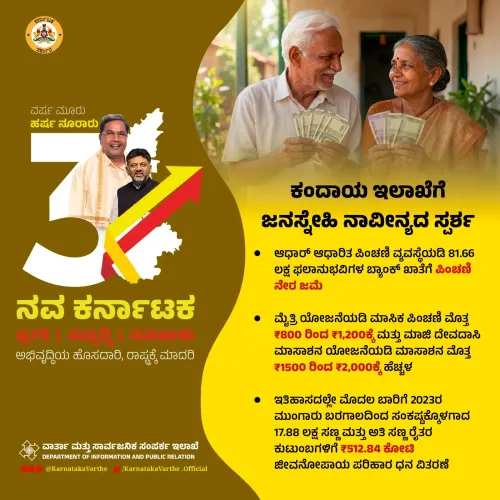
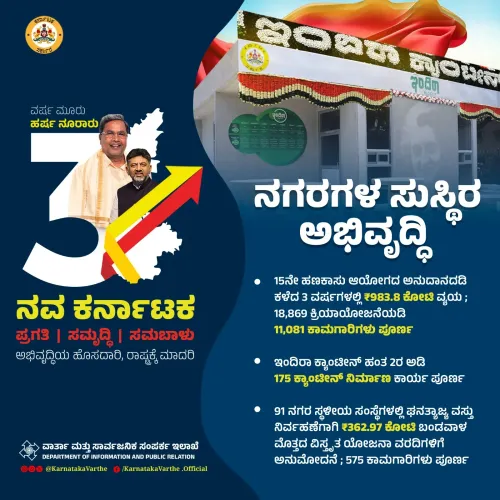
On the third anniversary of his government, Karnataka CM Siddaramaiah defended state welfare programmes as an administrative duty — not freebies — citing gains for women, children, the elderly, and labourers under the NavaKarnataka model over three years of Congress rule.
Key Takeaways
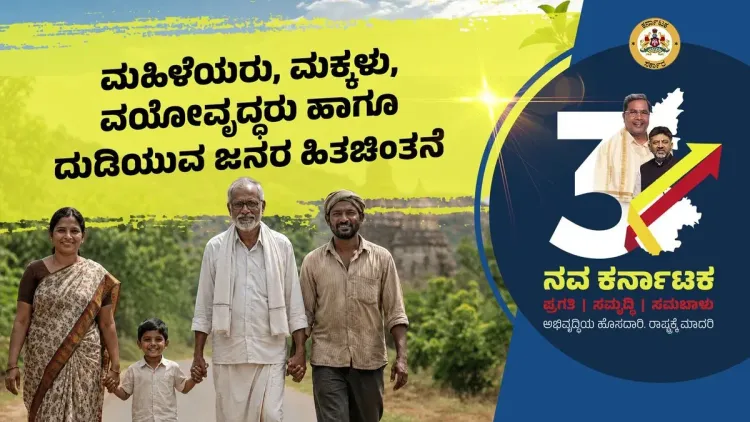
Karnataka CM Siddaramaiah marked three years of the Congress government on 22 May 2026 with a Kannada post on X.
He argued that programmes funded by taxpayers' money cannot be called 'freebies,' framing welfare as a core governance duty.
The post highlighted women as a historically neglected group and cited women-centric schemes as evidence of the government's commitment.
Welfare for children, the elderly, labourers , and healthcare for all communities were listed as ongoing priorities.
Siddaramaiah claimed the Karnataka development model has become a reference point nationally, though the extent of actual adoption elsewhere is unverified.
The anniversary post is tagged #NavaKarnataka and #GuaranteeSarkara , reinforcing the Congress government's brand identity ahead of future electoral cycles.
Karnataka Chief Minister Siddaramaiah on Friday, 22 May 2026, marked three years of his government's tenure by asserting that welfare spending is not a 'freebie' but a core administrative obligation — one that collects taxes from all sections and redistributes them according to need.
Writing in Kannada on X, the Chief Minister stated: 'ಜನರ ಹಣದಲ್ಲಿ ಜನರಿಗೆ ನೀಡುವ ಯಾವ ಕಾರ್ಯಕ್ರಮವೂ ಉಚಿತ ಭಾಗ್ಯವಾಗಲಾರದು' — 'No programme given to the people from the people's own money can be called a freebie.' He framed government as 'an administrative system that collects taxes from all classes, designs schemes suited to the needs of each class, and implements them effectively — not a profit-and-loss enterprise.'
Context
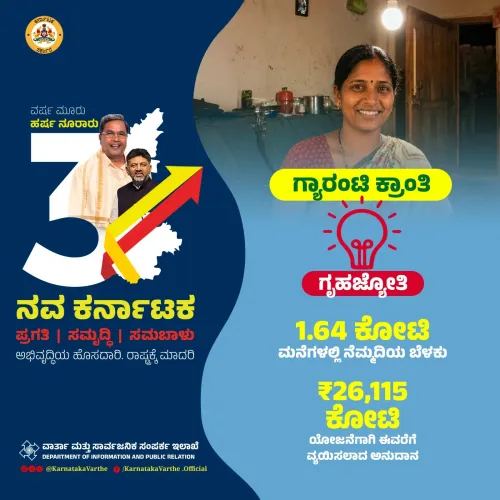
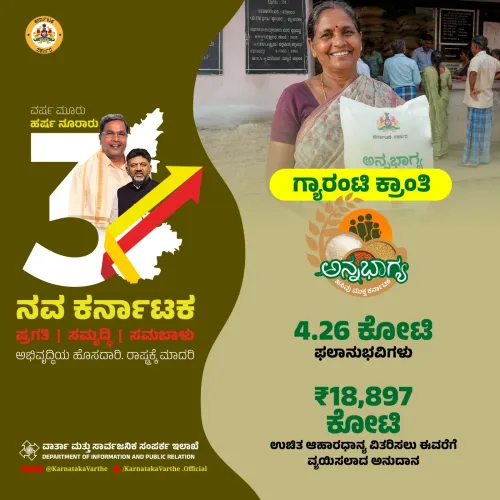
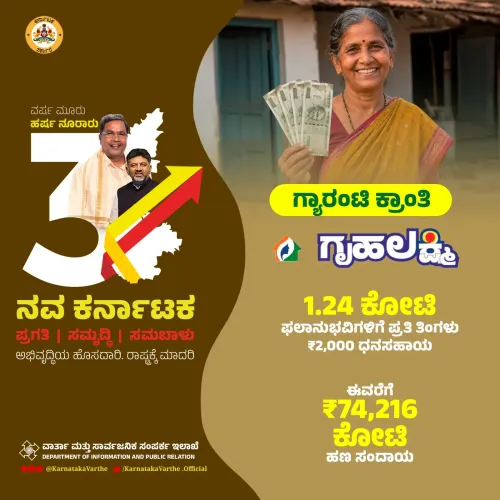
The post is timed to the third anniversary of the Congress government's return to power in Karnataka, branded under the #NavaKarnataka (#NewKarnataka) and #GuaranteeSarkara labels. The ruling party won the May 2023 Karnataka assembly elections on a platform of five flagship guarantee schemes targeting women, youth, and farmers.
Siddaramaiah's framing directly engages the national 'freebies debate' — a politically charged argument over whether state-funded welfare programmes are fiscally irresponsible gifts or legitimate public entitlements. His position is that because these programmes are funded by taxpayers, they constitute governance, not charity.
Policy Backdrop
The five guarantee schemes launched after the 2023 election victory include direct financial support for women who are heads of households and free bus travel for women across Karnataka. These build on earlier state-level initiatives such as the Bhagyalakshmi scheme from the 2000s, reflecting a longer lineage of women-centric welfare policy in the state.
In his post, Siddaramaiah specifically noted that women have been 'neglected socially, educationally, economically, and occupationally for many reasons,' and that his government has made a 'sincere effort' over the past three years to recognise and address this marginalisation. He added that welfare for children, the elderly, and labourers, as well as healthcare for all castes, religions, and classes, remains a stated priority.
The Chief Minister also claimed that three years of his administration have given rise to a new concept — the 'Karnataka development model' — which he described as being followed across the country. The research notes this claim about nationwide adoption reflects a political assertion whose actual extent cannot be independently confirmed.
Stakeholders and Impact
The primary beneficiaries of the schemes cited are women, who receive both direct cash transfers and subsidised public transport. Unorganised sector workers, children, and senior citizens are identified as additional target groups under the government's health and social protection priorities.
The broader political significance lies in Karnataka's role as a Congress-governed state that has positioned welfare redistribution as a counter-narrative to market-first development arguments. Similar guarantee-style schemes have been discussed or adopted in other opposition-ruled states, making the Karnataka model a reference point in Indian federal welfare politics.
What's Next
Attention will now turn to Karnataka's upcoming budget presentations and whether the government announces expansions to existing guarantee programmes or introduces new health coverage measures for unorganised workers. The anniversary messaging also sets the political tone ahead of any state-level electoral cycles, reinforcing the Congress narrative that welfare spending is a governance philosophy, not an electoral promise.
Point of View
Recasting redistribution as fiscal responsibility rather than populism. By anchoring the argument in tax theory — that public money returned to the public is not a gift — the Chief Minister attempts to neutralise a line of attack that has been used against welfare-oriented opposition governments. The invocation of a 'Karnataka development model' signals an ambition to project state-level policy successes onto the national Congress narrative ahead of future electoral contests. Whether the model's credibility holds will depend on forthcoming budget disclosures and independent assessments of scheme delivery on the ground.
NationPress
15 Sept 2026
Frequently Asked Questions
What did CM Siddaramaiah say about freebies?
Siddaramaiah stated that no programme given to the people from their own tax money can be called a freebie, arguing that welfare delivery is a core duty of government, not charity.
What are the Karnataka guarantee schemes?
The Karnataka guarantee schemes are five flagship welfare programmes launched after the Congress party's 2023 election victory, including direct financial support for women heads of households and free bus travel for women across the state.
What is NavaKarnataka?
NavaKarnataka, meaning 'New Karnataka,' is the branding used by the Siddaramaiah-led Congress government to describe its development and welfare agenda since coming to power in May 2023.
How long has Siddaramaiah's government been in power in Karnataka?
The Congress government under Siddaramaiah completed three years in office in May 2026, having won the Karnataka assembly elections in May 2023.
What is the Karnataka development model?
The Karnataka development model is a term Siddaramaiah uses to describe his government's welfare-oriented administrative approach, which prioritises targeted redistribution for women, children, the elderly, and labourers. He has claimed it is being followed nationally, though independent verification of that claim is not available.