CM DK Shivakumar Launches Guarantee Dashboard in Bengaluru
Synopsis
Chief Minister D.K. Shivakumar launched a real-time digital dashboard and social-media channels for Karnataka's Guarantee Implementation Committee on 28 October 2026, placing the state's five flagship welfare schemes under live public monitoring for the first time.
Key Takeaways
Shivakumar launched the Guarantee Implementation Committee dashboard at his official residence, Krishna , on 28 October 2026 .
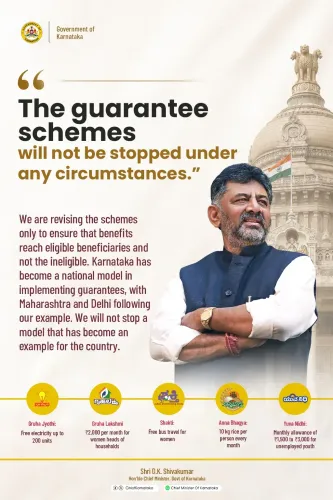
The dashboard tracks Karnataka's five Congress guarantee schemes — including free electricity, free bus travel for women, and youth cash transfers — promised in the 2023 assembly election .
Revanna chairs the Guarantee Implementation Committee; vice-chairpersons include P.T.
Parameshwara Naik , Dinesh Guligowda , and Mehroze Khan .
Krishnappa heads a parallel committee for schemes under the Greater Bengaluru Authority jurisdiction.
The platform was developed by the e-Governance Centre Karnataka and official social-media channels for the committee were also activated at the event.
Real-time performance data is expected to be published periodically, making delivery metrics publicly available for the first time.
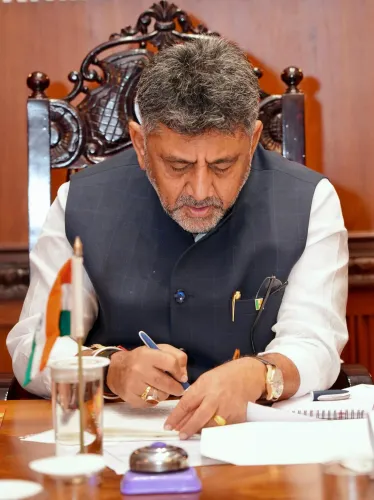
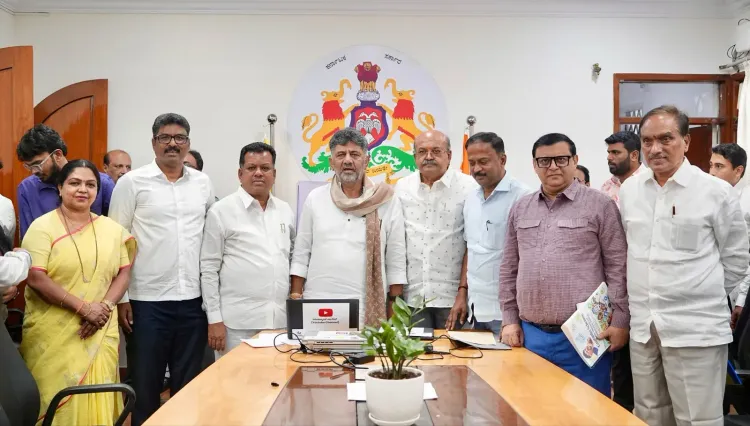
A digital command centre for Karnataka's five flagship welfare promises went live on Wednesday, 28 October 2026, as the Chief Minister's Office of Karnataka announced that Chief Minister D.K. Shivakumar launched the Guarantee Implementation Committee dashboard and its social-media channels at his official residence, Krishna, in Bengaluru — putting the state's most politically consequential welfare commitments under real-time public scrutiny.
What the dashboard tracks — and who is watching it
The new platform is the nerve centre of Karnataka's Guarantee Implementation Committee, the state body charged with monitoring the rollout of the Congress government's five major welfare guarantees. These schemes — including free electricity units, free bus travel for women, and cash transfers for women and unemployed youth — were the centrepiece of the party's 2023 Karnataka assembly election manifesto and are now the defining test of the government's delivery record.
The dashboard was built and deployed by the e-Governance Centre Karnataka, the state agency that powers digital service delivery and monitoring infrastructure across departments. Its CEO, Bhubalan, was present at the launch alongside senior committee officials.
The committee lineup assembled at Krishna
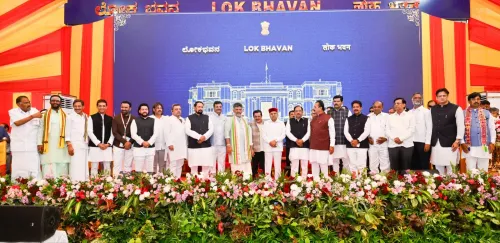
The launch brought together the full architecture of the implementation machinery. H.M. Revanna, Chairman of the Guarantee Schemes Implementation Committee, attended along with vice-chairpersons P.T. Parameshwara Naik, Dinesh Guligowda, and Mehroze Khan. G. Krishnappa, who heads the implementation committee for schemes falling under the Greater Bengaluru Authority (GBA) jurisdiction, was also present. Deepak Thimmaiah, the Chief Minister's communications adviser, rounded out the core team — a signal that the government intends to actively push dashboard data through its own social channels.
Why digital monitoring of welfare schemes matters now
Karnataka's move is part of a broader pattern taking shape across Indian states, where governments have turned to real-time dashboards to answer the hardest question in social policy: are the benefits actually reaching people? A publicly accessible tracking system raises the stakes — it creates a data trail that beneficiaries, legislators, and opposition parties can all interrogate. The simultaneous launch of official social-media channels for the committee signals that the government wants the numbers out in the open, not buried in bureaucratic reports.
The immediate test will come when the first performance reports are published — how many beneficiaries enrolled, how much disbursed, which districts are lagging. That data will either reinforce the government's narrative of delivery or hand critics a precise target.
Karnataka has drawn a digital line in the sand: the guarantee schemes will now be measured, month by month, in full public view.
Point of View
Which staked its 2023 electoral victory on five welfare guarantees and now faces the accountability test of proving delivery at scale. Making the data public cuts both ways — it positions the CM as a confident administrator, but also creates a live audit trail that will be scrutinised by the opposition ahead of future electoral cycles. The inclusion of a dedicated GBA-level implementation structure signals that urban Bengaluru, with its large and politically active voter base, is being treated as a distinct delivery challenge. Whether the dashboard shifts the political conversation from 'promises made' to 'promises kept' will depend entirely on the quality and frequency of the numbers it publishes.
NationPress
28 Oct 2026
Frequently Asked Questions
What is Karnataka's Guarantee Implementation Committee dashboard?
It is a real-time digital monitoring platform launched on 28 October 2026 to track the delivery of Karnataka's five Congress government welfare guarantee schemes — including free electricity, free bus travel for women, and financial transfers for women and youth.
Who launched the Karnataka guarantee schemes dashboard?
Chief Minister D.K. Shivakumar launched the dashboard and the committee's official social-media channels at his official residence, Krishna, in Bengaluru.
What are Karnataka's five guarantee schemes?
The five guarantees promised by the Congress party in the 2023 Karnataka assembly election include free electricity units per household, free bus travel for women, a monthly cash transfer for women heads of households, a stipend for unemployed youth, and subsidised food grains.
Who is the chairman of Karnataka's Guarantee Implementation Committee?
H.M. Revanna is the Chairman of the Karnataka Guarantee Schemes Implementation Committee, with P.T. Parameshwara Naik, Dinesh Guligowda, and Mehroze Khan serving as vice-chairpersons.
What is the role of the e-Governance Centre Karnataka in the dashboard?
The e-Governance Centre Karnataka, the state's digital public-service agency, developed and deployed the dashboard platform. Its CEO, Bhubalan, was present at the 28 October 2026 launch.