Nadda hails 3% DA hike as Diwali gift for govt staff
Synopsis
The Union Cabinet approved a 3% hike in Dearness Allowance and Dearness Relief effective 1 July 2026, benefiting 48.54 lakh central employees and 68.71 lakh pensioners. Union Minister J. P. Nadda called it a Diwali gift from PM Modi's government.
Key Takeaways
The Union Cabinet approved a 3% increase in Dearness Allowance (DA) for central government employees and Dearness Relief (DR) for pensioners.
The revision is effective from 1 July 2026 , meaning arrears will be paid out alongside revised monthly amounts.
48.54 lakh serving central government employees will benefit from the DA hike.
68.71 lakh pensioners will benefit from the DR increase, bringing the total beneficiary count to over 1.17 crore .
Nadda credited PM Narendra Modi and framed the timing as a Diwali gift to government families.
The Modi government claims 12 years of continuous decisions prioritising employee and pensioner welfare.
A 3 per cent hike in Dearness Allowance and Dearness Relief — effective 1 July 2026 — is heading to the bank accounts of nearly 1.17 crore central government employees and pensioners just in time for Diwali, after the Union Cabinet gave its approval. Union Health Minister and BJP national president J. P. Nadda welcomed the decision on Wednesday, 28 October 2026, calling it a festival gift from Prime Minister Narendra Modi's government.
What the Cabinet cleared — and who gains
The Cabinet's decision raises the DA rate for serving central government employees and the DR rate for pensioners by 3 percentage points. According to Nadda's post, 48.54 lakh central government employees and 68.71 lakh pensioners — a combined beneficiary base of over 1.17 crore people — will receive the enhanced rates, with the revision backdated to 1 July 2026. That backdating means arrears will flow alongside the revised monthly payouts.
Dearness Allowance is a cost-of-living adjustment linked to the Consumer Price Index, revised twice a year — typically in March and October — to offset inflation's bite on fixed government salaries. Dearness Relief follows the same logic for retired employees drawing pension. A 3 per cent increment, while incremental on paper, translates into a meaningful absolute rupee gain for those at higher pay-band levels and compounds across a large pensioner base.
Twelve years of welfare claims — the political framing
Nadda framed the announcement squarely within a broader BJP government narrative, stating that the Modi government has, over the past 12 years, continuously prioritised the welfare, financial security, and dignity of employees and pensioners. The post closes with a direct expression of gratitude to the Prime Minister — 'hriday se aabhaar' (heartfelt thanks) — signalling the party's intent to position the Diwali-eve timing as a deliberate gesture of care toward a voter demographic that spans every state and district in the country.
The announcement arrives days before the festival, a period when household spending surges and any income boost carries outsized emotional resonance. For a government in its third consecutive term, keeping the confidence of 1.17 crore central-payroll households — whose influence radiates outward to families and communities — remains a durable political priority.
What the numbers mean at the kitchen table
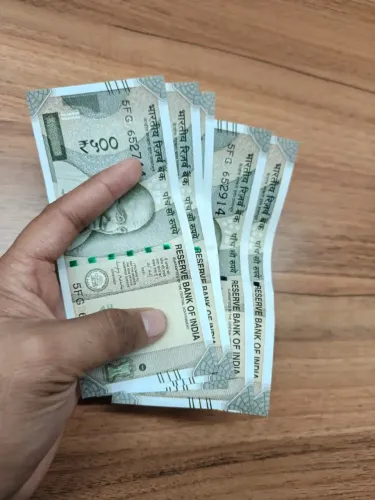
On a salary of ₹50,000 basic pay, a 3 per cent DA increase adds roughly ₹1,500 per month in hand; on a basic of ₹1 lakh, that rises to ₹3,000 per month. Multiply that across millions of households and the aggregate consumption stimulus — especially in a festive quarter — is substantial. For pensioners on fixed incomes, the DR revision offers a direct buffer against food and fuel inflation that has persisted through much of 2026.
With arrears likely to be disbursed in a lump sum from July, millions of families will see a one-time credit that could meaningfully lift festive-season retail, travel, and gifting. The government's calendar — approving the hike the week of Diwali — is rarely accidental.
Point of View
The BJP reinforces its 'pro-employee' identity to a demographic whose households number in the crores and whose votes are distributed across every constituency. Nadda's post, amplifying the decision rather than merely noting it, signals that the party wants this news in every WhatsApp group of government staff before the festival lamps are lit. The 12-year continuity claim also quietly draws a contrast with the Congress era — a reminder that the electoral dividend of keeping 1.17 crore beneficiaries satisfied is very much part of the calculus.
NationPress
28 Oct 2026
Frequently Asked Questions
What is the DA hike approved by the Cabinet in October 2026?
The Union Cabinet approved a 3 percentage point increase in Dearness Allowance for central government employees and Dearness Relief for pensioners, taking effect from 1 July 2026.
How many employees and pensioners will benefit from the DA DR hike?
A total of over 1.17 crore people will benefit — 48.54 lakh serving central government employees and 68.71 lakh pensioners.
From what date is the new DA effective?
The revised Dearness Allowance and Dearness Relief rates are effective from 1 July 2026, so eligible recipients will also receive arrears for the intervening months.
What is Dearness Allowance and why is it revised?
Dearness Allowance is a cost-of-living supplement paid to central government employees to offset inflation, calculated as a percentage of basic pay. It is typically revised twice a year — in January and July — based on Consumer Price Index data.
Why did J. P. Nadda call the DA hike a Diwali gift?
Nadda described the Cabinet's decision as a Diwali gift because the announcement came just before the Diwali festival, and the financial benefit — including arrears from July — will reach crores of government employee and pensioner families during the festive season.