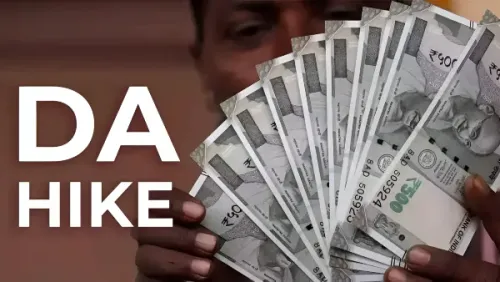
Cabinet hikes Dearness Allowance by 3% to 63%, benefits 1.17 crore govt staff
Synopsis
In a Diwali-timed relief, the Modi Cabinet has cleared a 3-percentage-point Dearness Allowance hike to 63%, pumping ₹10,016.10 crore annually into the pockets of 1.17 crore central government employees and pensioners — even as the Eighth Pay Commission works toward a far larger structural overhaul of salaries and the DA framework itself.
Key Takeaways
The Union Cabinet approved a 3% DA/DR hike on 28 October 2026 , raising the rate to 63% of Basic Pay/Pension .
The decision benefits 48.54 lakh Central Government employees and 68.71 lakh pensioners .
Annual exchequer impact: ₹10,016.10 crore ; effective date: 1 July 2026 .
The hike follows the 7th Central Pay Commission formula for inflation compensation.
The Eighth Pay Commission , chaired by former Justice Ranjana Prakash Desai , is separately consulting stakeholders on a broader pay and pension overhaul covering over one crore workers.
Employee unions are seeking a higher fitment factor and structural changes to the DA merger threshold.
The Union Cabinet, chaired by Prime Minister Narendra Modi, on Wednesday, 28 October 2026, approved an additional instalment of Dearness Allowance (DA) for Central Government employees and Dearness Relief (DR) for pensioners, raising the combined rate by 3 percentage points to 63% of Basic Pay/Pension. The decision takes effect from 1 July 2026 and will cost the exchequer ₹10,016.10 crore per annum.
Who Benefits and by How Much
The revision directly benefits approximately 48.54 lakh Central Government employees and 68.71 lakh pensioners — a combined 1.17 crore beneficiaries, according to an official Cabinet statement. The hike compensates against price rise and is calibrated to the recommendations of the 7th Central Pay Commission, the accepted formula that governs such revisions.
Festive Timing and Exchequer Impact
The announcement, timed to coincide with the Diwali festive season, translates into immediate financial relief for a large section of salaried central government workers and retirees. The ₹10,016.10 crore annual outgo represents a recurring commitment on the Union budget, though the retrospective July effective date means arrears will also be disbursed. Notably, this follows a pattern of successive DA hikes under the current pay commission cycle, with rates having risen steadily from lower levels.
Backdrop: Eighth Pay Commission in Progress
The hike comes as the Eighth Central Pay Commission — chaired by former Supreme Court Justice Ranjana Prakash Desai — holds active consultations on pay and pension matters. Its members include Pankaj Jain, a former IAS officer serving as Member-Secretary, and Pulak Ghosh, a Professor of Finance and member of the Economic Advisory Council to the Prime Minister.
The commission's eventual recommendations will cover more than one crore employees and pensioners, including defence and railway personnel. Employee unions are pushing for a higher fitment factor — the multiplier used to set base salaries under a new pay revision — as well as structural changes to the DA framework itself, including more frequent revisions and a possible merger of DA into basic pay once it crosses a specified threshold.
What Unions and Employees Are Seeking
Staff representative bodies have submitted proposals to the Eighth Pay Commission seeking reforms that go beyond a one-time salary increase. A higher fitment factor would permanently raise the base from which future increments and DA are calculated, amplifying the long-term financial impact. The feedback from ongoing consultations will feed directly into the commission's draft recommendations, which are expected to shape the financial conditions of central government service for the next pay cycle.
What Happens Next
The current DA hike is effective from 1 July 2026, with arrears expected to be paid out alongside regular salaries. Meanwhile, the Eighth Pay Commission's full recommendations — likely to reshape salaries, pensions, and the DA structure — remain pending, with consultations still underway. The outcome of those deliberations will be the more consequential event for the country's central government workforce.
Point of View
And that predictability is itself a policy signal — the government uses festive timing to maximise political dividend from an otherwise routine inflation-adjustment. What matters more is the Eighth Pay Commission's work: if unions succeed in getting a higher fitment factor and a DA-merger clause, the recurring fiscal cost will dwarf any single-year DA revision. The ₹10,016 crore annual outgo announced today looks manageable; the commission's eventual recommendations, covering over one crore beneficiaries, could run several multiples of that. The real story is not today's hike — it is what Ranjana Prakash Desai's commission recommends, and whether the Centre can absorb it without crowding out capital expenditure.
NationPress
28 Oct 2026
Frequently Asked Questions
What is the Dearness Allowance hike approved by the Cabinet on 28 October 2026?
The Cabinet approved a 3 percentage point increase in DA and DR, raising the combined rate from 60% to 63% of Basic Pay/Pension for Central Government employees and pensioners respectively. The hike is effective from 1 July 2026 and follows the 7th Central Pay Commission formula for compensating against price rise.
Who benefits from the DA and DR hike?
Approximately 48.54 lakh Central Government employees will receive the revised Dearness Allowance, while 68.71 lakh pensioners will receive the enhanced Dearness Relief — a total of around 1.17 crore beneficiaries. This includes defence and railway personnel as well as retirees.
How much will the DA hike cost the government annually?
The combined financial impact of the DA and DR increase on the exchequer is ₹10,016.10 crore per annum, according to the Cabinet statement.
When will employees and pensioners receive the revised DA and arrears?
The hike is effective from 1 July 2026, meaning arrears for July, August, September, and October will be payable. The arrears are expected to be disbursed alongside regular salary and pension payments.
What is the Eighth Central Pay Commission and how does it affect employees?
The Eighth Central Pay Commission, chaired by former Supreme Court Justice Ranjana Prakash Desai, is currently consulting stakeholders on a comprehensive revision of pay and pension structures for over one crore central government employees and pensioners. Its recommendations — which employee unions hope will include a higher fitment factor and changes to the DA framework — will shape salaries and pensions for the next pay cycle, with a potentially far larger fiscal impact than the current DA hike.