Sonowal's container scheme targets 50,000 indirect jobs
Synopsis
Union Ports and Shipping Minister Sarbananda Sonowal has backed a domestic container manufacturing scheme projected to create 3,000 direct and over 50,000 indirect jobs, aiming to establish India as a global quality shipping container hub and reduce import dependence.
Key Takeaways
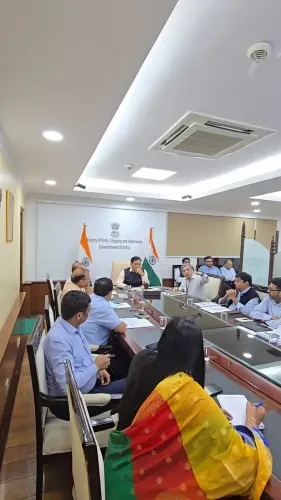
Sarbananda Sonowal , Union Minister of Ports, Shipping and Waterways, endorsed a scheme to make India a global shipping container manufacturing hub.
The scheme projects 3,000 direct jobs and over 50,000 indirect jobs across ancillary industries.
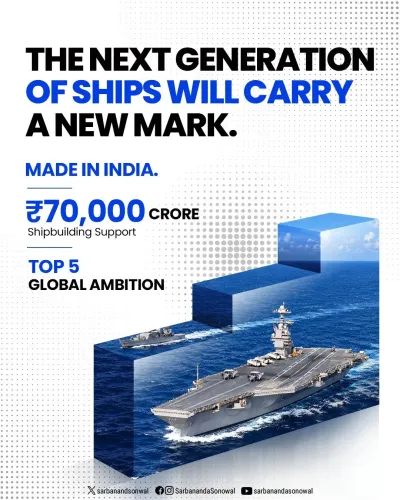
It aligns with the Sagarmala Project (2015) and Maritime India Vision 2030 (2021) , India's two flagship maritime development frameworks.
The scheme targets India's chronic dependence on imported shipping containers, exposed sharply during global supply-chain disruptions.
Key milestones to watch include rollout timelines, manufacturing unit locations, and follow-up budget or tender announcements.
A new shipping container manufacturing scheme championed by Union Ports and Shipping Minister Sarbananda Sonowal could reshape India's role in global maritime supply chains — projecting 3,000 direct jobs and over 50,000 indirect jobs while positioning the country as a potential global hub for quality shipping containers.
From import dependence to container-making powerhouse
India has long imported the bulk of its shipping containers, leaving domestic trade infrastructure exposed to global supply-chain shocks — a vulnerability that the COVID-19 pandemic and subsequent freight disruptions brought into sharp relief. The new scheme directly targets that gap. By building domestic container manufacturing capacity, it aims to reverse a decades-old dependence and anchor a new industrial ecosystem near India's ports.
The policy logic is consistent with two flagship frameworks: the Sagarmala Project, launched in 2015 to drive port-led development, and Maritime India Vision 2030, unveiled in 2021, which set out a long-term roadmap for shipping, ports, and allied manufacturing. The container scheme slots neatly into that lineage — translating vision documents into industrial output.
The 50,000-job multiplier and ancillary sector boost
The headline employment figures tell a larger story about how port-adjacent manufacturing works. The 3,000 direct jobs represent roles inside container fabrication units themselves — welders, engineers, logistics operators. The 50,000-plus indirect jobs reflect the multiplier effect across ancillary industries: steel suppliers, paint and coating manufacturers, component makers, and the transport networks that feed raw material in and finished containers out.
Such manufacturing clusters, when located near major port cities, have historically generated durable employment corridors. Sonowal's post emphasised that the scheme would 'strengthen ancillary industries across the nation' — language that signals a deliberately distributed industrial footprint rather than concentration in a single zone.
What the rollout still needs to prove
Ambition and arithmetic are two different things. The scheme's credibility will ultimately rest on rollout timelines, the identified locations of manufacturing units, and whether follow-up budget allocations or tender announcements materialise. India's infrastructure sector has no shortage of bold projections; the differentiator is always execution speed and private-sector uptake.
With global container demand still volatile — and China commanding a dominant share of container production — any serious Indian entry into the market will require competitive unit economics, quality certification pipelines, and port-side integration. Those details are the ones the shipping industry will be watching for next.
If the projections hold, this scheme could mark the moment India stopped being a container consumer and started becoming a container maker. That shift, if sustained, would quietly rewrite the economics of Indian trade for a generation.
Point of View
Rather than treating ports as mere trade gateways. Sonowal has consistently framed Sagarmala and Maritime Vision 2030 as employment generators, not just logistics upgrades — and this scheme extends that framing to a sector India has historically ceded entirely to China and South Korea. The real political test is whether the employment projections survive contact with private-sector investment cycles and global container price dynamics. If they do, this could become a template for other maritime manufacturing verticals.
NationPress
28 Oct 2026
Frequently Asked Questions
What is Sarbananda Sonowal's container manufacturing scheme about?
The scheme aims to establish India as a global hub for quality shipping container manufacturing, projecting 3,000 direct jobs and over 50,000 indirect jobs while boosting ancillary industries linked to ports and shipping.
How many jobs will India's shipping container scheme create?
The scheme is projected to generate an estimated 3,000 direct jobs in container manufacturing and over 50,000 indirect jobs in allied and ancillary industries across the country.
What is the Sagarmala Project and how does it relate to this scheme?
The Sagarmala Project, launched in 2015, promotes port-led development and modernisation of India's maritime infrastructure. The container manufacturing scheme builds on this framework to link port growth with domestic industrial capacity.
Why does India need to manufacture its own shipping containers?
India has historically imported most of its shipping containers, creating vulnerability to global supply-chain disruptions. Domestic manufacturing would reduce import dependence, lower costs, and create industrial employment near port zones.
What is Maritime India Vision 2030?
Maritime India Vision 2030 is a policy roadmap unveiled in 2021 to guide long-term growth in India's shipping, ports, and allied manufacturing sectors, providing the strategic framework within which schemes like this container initiative are designed.