Sonowal Reviews Coastal Shipping Progress, Eyes Maritime 2047
Synopsis
Union Minister Sarbananda Sonowal chaired a high-level review in New Delhi on coastal shipping, citing 120% port cargo growth over 12 years. Discussions centred on dedicated berthing, rail-port integration, and specialised cargo complexes under the Maritime Amrit Kaal Vision 2047.
Key Takeaways
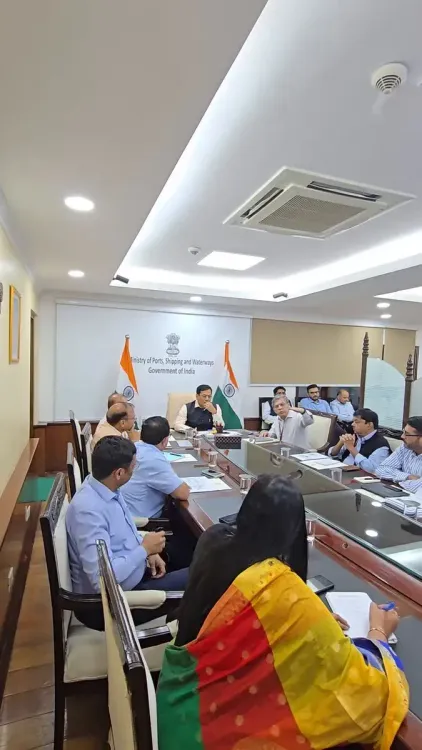
Minister Sarbananda Sonowal chaired a senior-official review meeting on coastal shipping in New Delhi on 8 July 2026 .
Port cargo throughput has surged 120% over the last 12 years , with a CAGR of approximately 9.2% since 2021, per the ministry's figures.
Key agenda items included dedicated berthing , rail-port integration , specialised cargo complexes, and improved vessel certification standards.
The review is anchored to the Maritime Amrit Kaal Vision 2047 , the government's long-term framework for a modern maritime ecosystem.
Policy lineage includes the Sagarmala Project (2015) , Maritime India Vision 2030 , and the National Logistics Policy (2022) .
Next steps include project tenders for dedicated berths and rail-port links at major ports.
Union Minister of Ports, Shipping and Waterways Sarbananda Sonowal on Wednesday, 8 July 2026, chaired a comprehensive review meeting with senior officials in New Delhi to assess the progress of coastal shipping — a sector the government has positioned as a cornerstone of India's multimodal logistics strategy.
Context
In his post, Minister Sonowal cited cargo throughput at Indian ports surging by 120% over the last 12 years, reflecting a compound annual growth rate of approximately 9.2% since 2021. He attributed the momentum to the vision of Prime Minister Narendra Modi, framing coastal shipping as a pillar of a broader maritime transformation underway in India.
The meeting's agenda covered dedicated berthing facilities, stronger rail-port integration, development of specialised cargo complexes, improved vessel certification standards, and a roadmap to address bottlenecks across the logistics value chain.
Policy Backdrop
The review sits within a layered policy architecture built over the past decade. The Sagarmala Project, launched in 2015, laid the foundation for port-led development and coastal shipping promotion. The Maritime India Vision 2030, released in 2021, set targets for expanding port capacity and growing coastal cargo's share of total freight movement.
The National Logistics Policy, notified in 2022, added a cross-sectoral dimension by targeting a reduction in India's logistics costs through deeper multimodal integration — linking ports, rail, road, and inland waterways into a unified freight network. The Maritime Amrit Kaal Vision 2047, the most recent framework, aligns these ambitions with India's centenary of independence, aiming for a modern, efficient, and commercially vibrant maritime ecosystem.
Coastal shipping has long been seen as an underutilised alternative to congested road freight corridors. Successive policy interventions have sought to shift bulk and container cargo to sea lanes, easing pressure on highways and reducing per-unit logistics costs for exporters and domestic shippers alike.
Stakeholders and Impact
Port operators, coastal shippers, and exporters stand to benefit most directly from the measures discussed. Dedicated berthing — a recurring demand from the shipping industry — would reduce vessel turnaround time and improve berth utilisation at major ports. Stronger rail-port integration addresses the 'last-mile' connectivity gap that has historically limited the competitiveness of coastal shipping against road transport.
Specialised cargo complexes, another focus of the meeting, would allow ports to handle project cargo, chemicals, and other non-standard freight more efficiently, opening new revenue streams for port trusts and private terminal operators. Improved vessel certification standards, meanwhile, are expected to raise safety benchmarks and potentially attract newer, more fuel-efficient tonnage to Indian coastal routes.
What's Next
The ministry is expected to translate the meeting's discussions into project tenders for dedicated berths and rail-port connectivity works at select major ports. Any new legislative proposals on vessel certification or coastal-shipping regulation could come up for parliamentary consideration in subsequent sessions.
With the Maritime Amrit Kaal Vision 2047 providing the long-term compass, the government's near-term challenge is converting high-level targets into time-bound, fundable projects. The pace at which dedicated berth allocations and rail-port integration works are tendered will serve as the clearest indicator of how quickly the sector's growth trajectory can be further accelerated.
Point of View
Creating accountability pressure on port trusts and state governments. Whether the outcomes translate into tendered projects within the current financial year will determine if this review is a turning point or another milestone in a long policy continuum.
NationPress
7 Oct 2026
Frequently Asked Questions
What is the Maritime Amrit Kaal Vision 2047?
The Maritime Amrit Kaal Vision 2047 is the Indian government's long-term framework for building a modern, efficient, and commercially vibrant maritime sector, aligned with India's centenary of independence in 2047. It builds on earlier frameworks such as Maritime India Vision 2030 and the Sagarmala Project.
What did Sarbananda Sonowal discuss at the coastal shipping review meeting?
Minister Sonowal's review meeting on 8 July 2026 focused on dedicated berthing facilities, stronger rail-port integration, development of specialised cargo complexes, improved vessel certification standards, and a roadmap to address bottlenecks in the coastal shipping value chain.
How much has cargo throughput grown at Indian ports?
According to the ministry, cargo throughput at Indian ports has surged by 120% over the last 12 years, reflecting a compound annual growth rate of approximately 9.2% since 2021.
What is the Sagarmala Project and how does it relate to coastal shipping?
The Sagarmala Project, launched in 2015, is the central government's flagship programme for port-led development. It includes a dedicated component for promoting coastal shipping as a cost-effective, lower-emission alternative to road freight.
What is rail-port integration and why does it matter for Indian logistics?
Rail-port integration refers to direct rail connectivity between ports and the broader freight rail network, allowing cargo to move seamlessly from ships to trains without intermediate road transport. It is a key lever for reducing India's logistics costs and improving the competitiveness of coastal shipping.