Sonowal addresses CII CEOs Roundtable on India's maritime rise
Synopsis
Union Ports Minister Sarbananda Sonowal addressed a CII CEOs Roundtable in New Delhi on 29 May 2026, outlining India's maritime growth trajectory under PM Modi and calling for industry collaboration to build a resilient logistics ecosystem under the Atmanirbhar Bharat agenda.
Key Takeaways
Sarbananda Sonowal addressed a CII CEOs Roundtable in New Delhi on 29 May 2026 , engaging directly with top industry executives on maritime sector opportunities.
The minister highlighted India's maritime rise under PM Narendra Modi and called for building a 'resilient logistics ecosystem.' The event connects to a decade-long policy architecture: Sagarmala Project (2015) , Maritime India Vision 2030 (2021) , PM Gati Shakti (2021) and the National Logistics Policy (2022) .
Key private-sector stakeholders include port operators, shipping companies, logistics firms and exporters who are expected to co-invest in capacity expansion.
Upcoming Union Budget sessions and the next Maritime India Summit are the most likely venues for concrete project announcements arising from such consultations.
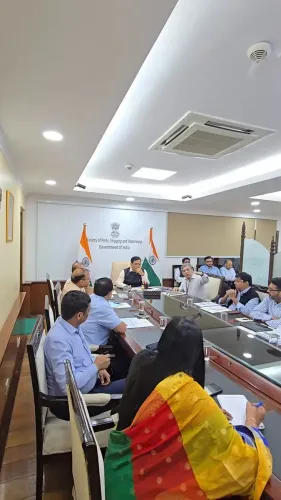
Union Minister of Ports, Shipping and Waterways Sarbananda Sonowal addressed industry leaders at a CEOs Roundtable organised by the Confederation of Indian Industry (CII) in New Delhi on Thursday, 29 May 2026, speaking on the growth of India's maritime sector and the opportunities it presents for private investment.
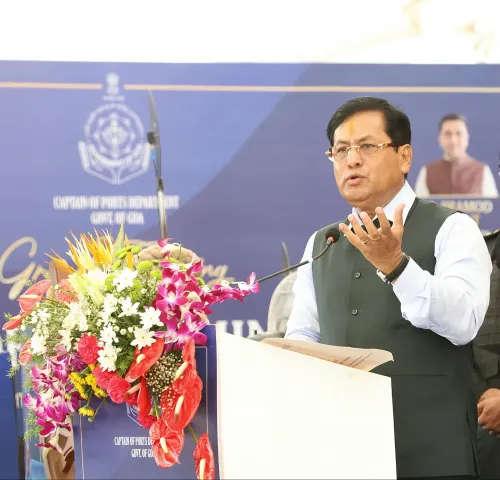
Sonowal said he was 'delighted to interact with industry leaders' and spoke about 'India's maritime rise under the leadership of Hon'ble PM Shri Narendra Modi' and the 'immense opportunities in the sector.' He added that 'through collaborative platforms like this, we will build a resilient logistics ecosystem and a prosperous, self-reliant Bharat.'
Context
The CII CEOs Roundtable is a structured dialogue platform that brings senior government officials face-to-face with top corporate executives to align policy signals with investment decisions. Sonowal has held the ports and waterways portfolio since July 2021, during which period the ministry has pursued an active agenda of port modernisation and coastal shipping promotion.
The roundtable format reflects the central government's stated preference for public-private consultation as a mechanism for accelerating infrastructure investment, particularly in capital-intensive sectors such as maritime logistics.
Policy Backdrop
The minister's remarks sit within a layered policy architecture built over the past decade. The Sagarmala Project, launched in 2015, set the template for port-led development and coastal shipping. Maritime India Vision 2030, released in 2021, extended that ambition with specific targets for port capacity, cruise tourism and India's share in global shipping tonnage.
Complementing these is the PM Gati Shakti National Master Plan, launched in October 2021, which integrates port connectivity with road, rail and inland waterway networks under a single planning framework. The National Logistics Policy, announced in September 2022, added a supply-chain efficiency dimension by targeting a reduction in India's logistics cost as a share of GDP.
Together, these schemes frame maritime infrastructure as a pillar of the Atmanirbhar Bharat agenda — reducing dependence on foreign shipping lines and building domestic tonnage capacity.
Stakeholders and Impact
The primary audience for the minister's message is the private sector: port operators, shipping companies, logistics firms and exporters who must commit capital to projects that align with government capacity targets. CEO-level engagement signals that the ministry is actively seeking investment partnerships rather than relying solely on public expenditure.
For exporters, a more efficient and lower-cost maritime logistics chain directly affects competitiveness in global markets. The emphasis on a 'resilient logistics ecosystem' also carries relevance for supply-chain planners who have recalibrated sourcing and routing strategies following global disruptions in recent years.
What's Next
Observers will watch for the translation of roundtable discussions into specific project announcements, public-private partnership bids or policy notifications aligned with Maritime India Vision 2030 milestones. The next Union Budget and any forthcoming edition of the Maritime India Summit are the most likely forums for concrete follow-through.
Sonowal's continued engagement with industry bodies suggests the ministry intends to sustain momentum on the maritime infrastructure agenda, with public-private collaboration positioned as the primary delivery mechanism for the sector's next phase of growth.
Point of View
Positioning port and shipping growth as both an infrastructure and a sovereignty project. The emphasis on a 'resilient logistics ecosystem' also signals awareness of global supply-chain vulnerabilities and India's ambition to capture a larger share of maritime trade flows. Whether roundtable engagement translates into accelerated PPP bids or fresh capacity targets will be the real test of this consultative momentum.
NationPress
19 Sept 2026
Frequently Asked Questions
What did Sarbananda Sonowal say at the CII CEOs Roundtable in May 2026?
Sonowal spoke about India's maritime rise under PM Narendra Modi, the investment opportunities in the sector, and the need to build a resilient logistics ecosystem through public-private collaboration.
What is the CII CEOs Roundtable?
It is a structured dialogue platform organised by the Confederation of Indian Industry (CII) that brings senior government ministers together with top corporate executives to discuss policy and investment priorities.
What is Maritime India Vision 2030?
Maritime India Vision 2030 is a government roadmap released in 2021 that sets targets for expanding India's port capacity, growing cruise tourism, and increasing India's share in global shipping through 2030.
What is the Sagarmala Project?
Sagarmala is a central government scheme launched in 2015 to promote port-led development, modernise India's ports, and expand coastal and inland waterway shipping.
How does PM Gati Shakti relate to India's maritime sector?
PM Gati Shakti, launched in October 2021, is a National Master Plan that integrates port connectivity with road, rail and waterway networks to improve multi-modal logistics efficiency across India.