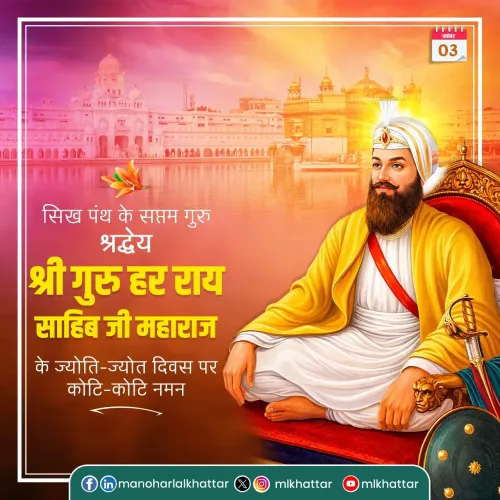
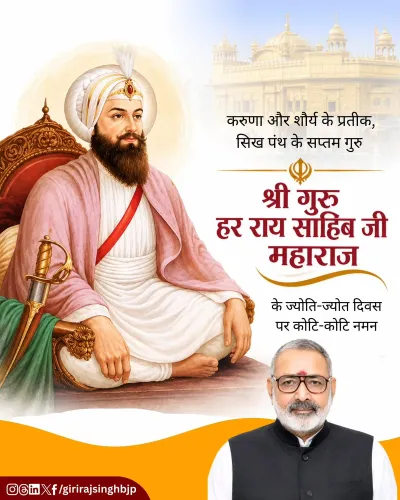
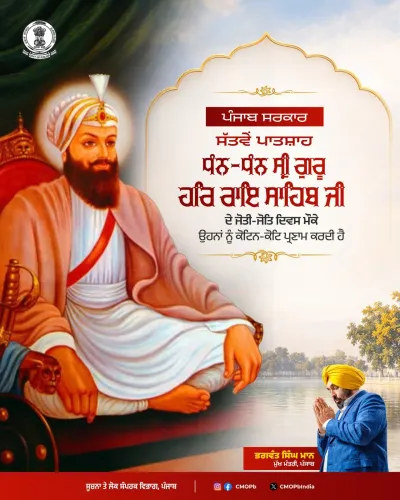
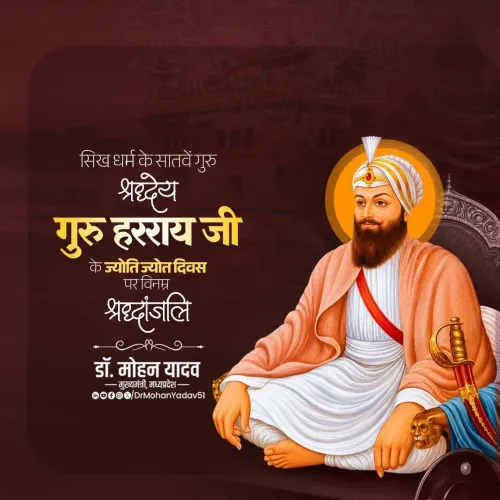
Amit Shah pays tribute to Guru Har Rai Ji on Jyoti Jyot Divas

Synopsis
Union Home Minister Amit Shah on November 3, 2026 paid tribute to Guru Har Rai Ji, the seventh Sikh Guru, on his Jyoti Jyot Divas — honouring his ideals of compassion, healing, and steadfast resistance to injustice in both Hindi and Punjabi.
Key Takeaways
Union Home Minister Amit Shah posted a tribute to Guru Har Rai Ji on his Jyoti Jyot Divas on November 3, 2026 .
Guru Har Rai Ji was the seventh Guru of Sikhism , who served from 1645 to 1661 .
The Guru is remembered for his medicinal knowledge, service to the poor and sick, and maintaining a force of 2,200 mounted soldiers to protect the community.
Shah's post was published in both Hindi and Punjabi , signalling deliberate outreach to the Sikh community in their own language and script.
The tribute highlighted three core values: protection of dharma , service to humanity, and unwavering resolve against injustice.
Senior Indian leaders routinely mark Sikh Guru anniversaries as part of the country's pluralistic public culture.
On the Jyoti Jyot Divas — the death anniversary — of Guru Har Rai Ji, the seventh Guru of Sikhism, Union Home Minister Amit Shah offered a heartfelt tribute on Tuesday, November 3, 2026, honouring a legacy built on compassion, courage, and service to humanity.
Posting in both Hindi and Punjabi, Shah wrote: 'Sikh dharm ke saatven Guru Sri Guru Har Rai Ji ke Jyoti Jyot Divas par unhe koti-koti naman' — 'Crores of salutations to Sri Guru Har Rai Ji, the seventh Guru of the Sikh faith, on his Jyoti Jyot Divas.' He described the Guru as a symbol of the protection of dharma, service to humanity, and an unwavering resolve against injustice — one who organised Sikh warriors to strengthen the spirit of courage and self-respect, and who served the poor and the sick as a living ideal of human welfare.
The Guru who healed and organised
Guru Har Rai Ji served as the seventh Sikh Guru from 1645 to 1661, a period marked by Mughal pressure on the Sikh community. He is particularly remembered for his deep knowledge of medicinal herbs and healing practices, establishing what historians regard as an early model of community healthcare. His herb garden and dispensary at Kiratpur Sahib served countless sick and destitute people, embodying the Sikh principle of seva — selfless service.
At the same time, the Guru maintained a force of 2,200 mounted soldiers, a continuation of the martial tradition established by Guru Hargobind Sahib Ji. Rather than using this force aggressively, he employed it as a shield for the community's dignity and sovereignty — a balance of the miri-piri ideal of temporal and spiritual authority.
A standard gesture with lasting political resonance
Senior Indian leaders across parties regularly mark the anniversaries of all ten Sikh Gurus — a practice that reflects both personal reverence and a broader acknowledgement of the Sikh community's foundational role in India's history and pluralistic identity. Amit Shah's tribute, issued from the national capital New Delhi, follows this tradition while echoing specific themes — courage, service, and resistance to injustice — that carry enduring relevance within Sikh theology and community memory.
The dual-language post, in Hindi and Punjabi, signals deliberate outreach to Sikh audiences in their own script and tongue — a detail that rarely goes unnoticed on occasions of religious significance.
Guru Har Rai Ji's life, Shah concluded, 'filled with devotion, compassion, and renunciation, will always remain a source of inspiration' — a reminder that the Guru's quiet revolution of healing and steadfastness still resonates, 365 years on.
Point of View
Particularly in Punjab and the diaspora, is immense. Issuing such statements on Sikh Guru anniversaries has become institutionalised across party lines, but the specific themes Shah chose to amplify — warrior organisation, self-respect, and service to the sick — resonate with contemporary conversations about Sikh identity and dignity. For the BJP, maintaining visible reverence for Sikh religious milestones is part of a broader effort to consolidate its standing among Sikh voters, especially in border states. The gesture is ceremonial in form but carefully calibrated in substance.
NationPress
3 Nov 2026
Frequently Asked Questions
Who was Guru Har Rai Ji?
Guru Har Rai Ji was the seventh Guru of Sikhism, who led the community from 1645 to 1661. He was known for his deep knowledge of medicinal herbs, service to the poor and sick, and for maintaining a trained force of soldiers to protect the Sikh community's dignity.
What is Jyoti Jyot Divas?
Jyoti Jyot Divas is the death anniversary of a Sikh Guru, marking the day the Guru's soul merged with the divine light. The term 'Jyoti Jyot' means the merging of a flame with the eternal flame.
Why did Amit Shah post a tribute to Guru Har Rai Ji?
Union Home Minister Amit Shah posted the tribute on November 3, 2026 to mark the Jyoti Jyot Divas of Guru Har Rai Ji, the seventh Sikh Guru. Indian political leaders across parties routinely honour Sikh Guru anniversaries as part of public outreach to the Sikh community.
What language did Amit Shah use in his Guru Har Rai Ji tribute post?
Amit Shah posted his tribute in both Hindi and Punjabi, making it accessible to Sikh audiences in their own script and language — a gesture seen as deliberate outreach to the community.
What values did Guru Har Rai Ji stand for according to Amit Shah's post?
According to Shah's post, Guru Har Rai Ji stood for the protection of dharma, service to humanity, and unwavering resolve against injustice. The Guru also organised Sikh warriors to instil courage and self-respect, and served the poor and sick as an ideal of human welfare.