Joshi: India Elected ISA Chair for Third Straight Term
Synopsis
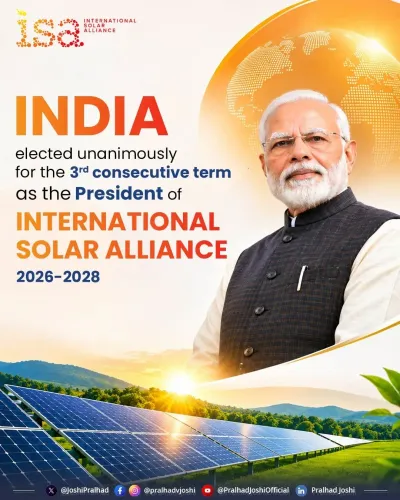
India has been re-elected to lead the International Solar Alliance for a third straight term at the 9th ISA Assembly. Union Minister Pralhad Joshi welcomed the vote, pledging to deepen global solar partnerships and extend solar energy access to Global South nations under PM Modi's leadership.
Key Takeaways
India has been elected chair of the International Solar Alliance (ISA) for a third consecutive term at the 9th ISA Assembly .
Union Minister Pralhad Joshi formally acknowledged the election on behalf of the Government of India on November 3, 2026 .
The ISA was co-founded by India and France at COP21 in Paris in 2015 , with PM Narendra Modi as a key architect.
India has pledged to prioritise Global South nations in its solar energy outreach during the new leadership term.
The announcement was made in the context of the Bharat RE Summit 2026 , a parallel domestic renewable energy showcase.
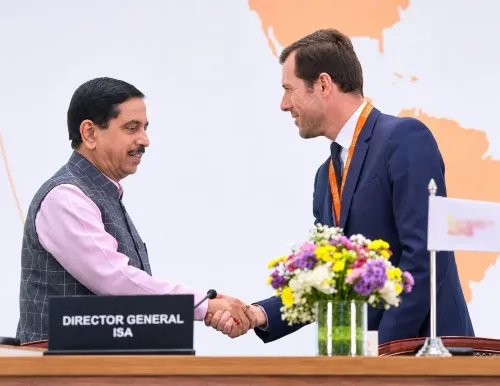
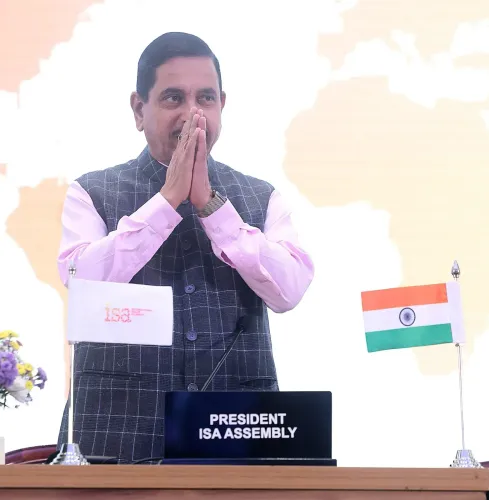
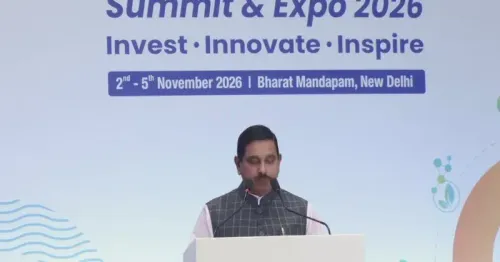
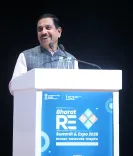
For the third consecutive time, India has been elected to lead the International Solar Alliance (ISA) — a vote of confidence by member nations that Union Minister Pralhad Joshi called 'a moment of pride for India' on Tuesday, November 3, 2026, at the sidelines of the #9ISAssembly and Bharat RE Summit 2026.
A hat-trick at the helm of global solar diplomacy
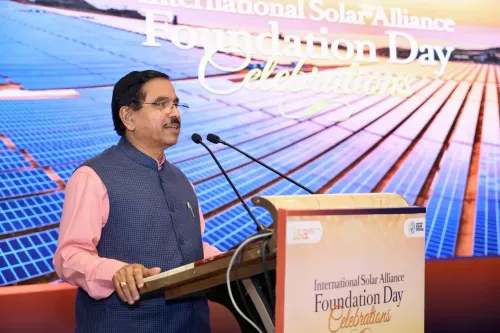
Speaking on behalf of the Government of India, Minister Joshi — who also heads the Ministry of New and Renewable Energy — expressed gratitude to all member countries for their trust. Posting in Hindi, he said: 'Bharat ke liye garv ka kshaṇ hai' — 'This is a moment of pride for India.' Three consecutive terms at the ISA's top chair is no ceremonial footnote; it signals a durable consensus among solar nations that India's diplomatic and technical leadership in this space has delivered.
The International Solar Alliance was co-launched by Prime Minister Narendra Modi and French President François Hollande at COP21 in Paris in 2015 — a treaty-based intergovernmental body designed to accelerate solar deployment worldwide, especially in sun-rich but energy-poor economies. From a fledgling idea in a Paris conference hall, it has grown into a multilateral institution with a steadily expanding membership.
Global South at the centre of India's solar pitch
Joshi's statement pointedly flagged the Global South as a priority. India's pitch to fellow developing nations is straightforward: solar energy is the fastest, cheapest path to electrification for countries that cannot afford to build coal infrastructure and cannot wait decades for grid expansion. ISA has backed financing mechanisms, technology transfer frameworks, and aggregated procurement programmes aimed squarely at these economies.
India's own record gives the pitch credibility. The country has rapidly scaled solar capacity over the past decade under PM Modi's push, making it one of the world's largest solar markets. That domestic track record — combined with consistent diplomatic outreach through South-South cooperation forums — explains why ISA member states have returned to India's candidacy three times running.
What riding another ISA presidency means for India
Chairing a multilateral body like the ISA is both a platform and a responsibility. India will be expected to drive consensus on ISA-supported solar projects in member countries, mobilise climate finance for smaller economies, and translate summit declarations into bankable installations. The Bharat RE Summit 2026 hashtag suggests a parallel domestic renewables showcase, giving India a home-stage moment to align its international leadership narrative with on-ground announcements.
Three terms. One mandate: make solar energy reach every nation. The ISA's member countries have spoken — now the delivery clock starts again.
Point of View
Whose portfolio straddles both consumer welfare and renewables, the ISA presidency is a platform to tie India's energy diplomacy directly to PM Modi's broader 'Viksit Bharat' narrative. The real test, as always, will be whether ISA-backed projects actually reach the last-mile beneficiaries that the summit rhetoric promises.
NationPress
3 Nov 2026
Frequently Asked Questions
What is the International Solar Alliance (ISA)?
The International Solar Alliance is a treaty-based intergovernmental organisation launched jointly by India and France at COP21 in Paris in 2015, aimed at accelerating solar energy deployment worldwide, especially in developing nations.
How many times has India been elected to lead the ISA?
India has now been elected to chair the ISA for three consecutive terms, with the latest re-election announced at the 9th ISA Assembly in November 2026.
Who announced India's re-election as ISA chair?
Union Minister Pralhad Joshi, who holds the portfolio of New and Renewable Energy, announced it on behalf of the Government of India on November 3, 2026.
What is the Bharat RE Summit 2026?
The Bharat RE Summit 2026 appears to be a domestic renewable energy summit held alongside the 9th ISA Assembly, providing India a platform to showcase its renewables progress alongside its international solar leadership.
What does India's ISA leadership mean for Global South countries?
India has pledged to prioritise extending solar energy access to Global South nations through ISA mechanisms, including financing, technology transfer, and aggregated procurement to make solar affordable for developing economies.