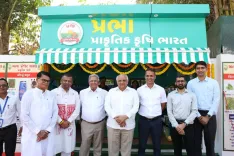
Pralhad Joshi unveils India-IEA Renewable Energy Report at India-Denmark Summit
Synopsis
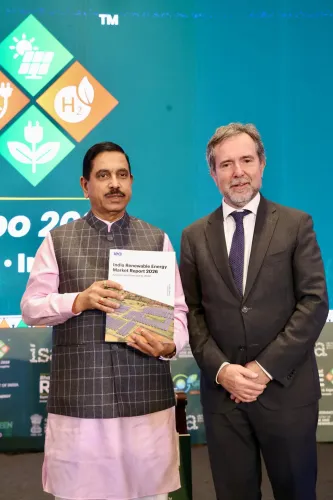
Union Minister Pralhad Joshi released the India-IEA Renewable Energy Market Report 2026 at the Bharat Renewable Energy Summit, addressing an India-Denmark country session and calling for deeper bilateral cooperation in offshore wind, green hydrogen, energy storage and smart grids under the 2020 Green Strategic Partnership.
Key Takeaways
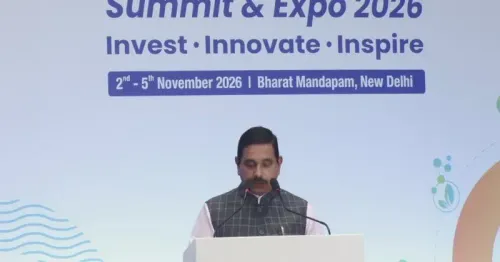
Union Minister Pralhad Joshi addressed the India-Denmark country session at the Bharat Renewable Energy Summit 2026 on 3 November 2026 .
The India Renewable Energy Market Report 2026 , co-produced with the International Energy Agency (IEA) , was released at the event.
Danish Minister Martin Lidegaard praised India's renewable energy targets and commitment to a clean-energy future.
Cooperation areas identified include offshore wind, green hydrogen, energy storage, and smart grids under the India-Denmark Green Strategic Partnership .
The Green Strategic Partnership was established in 2020 ; India's 500 GW non-fossil electricity target is set for 2030 .
The session also coincided with the #9ISAssembly of the International Solar Alliance.
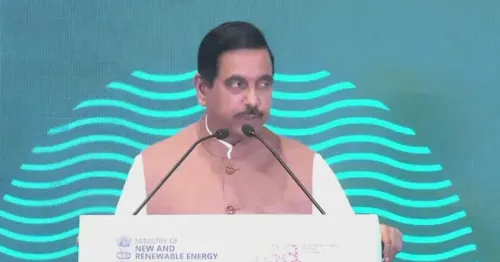
At the Bharat Renewable Energy Summit 2026, Union Minister of New and Renewable Energy Pralhad Joshi used a dedicated India-Denmark country session to spotlight what he called 'immense possibilities' for bilateral cooperation — and then put a document on the table to back it up.
Addressing the session on Tuesday, 3 November 2026, Joshi released the India Renewable Energy Market Report 2026, co-produced with the International Energy Agency (IEA). The report, he said, maps India's progress in the renewable energy sector, the emerging opportunities on the horizon, and the country's growth trajectory through 2030 — a year that carries enormous weight given India's pledge to achieve 500 GW of non-fossil electricity capacity by that deadline.
What Martin Lidegaard said — and why it matters
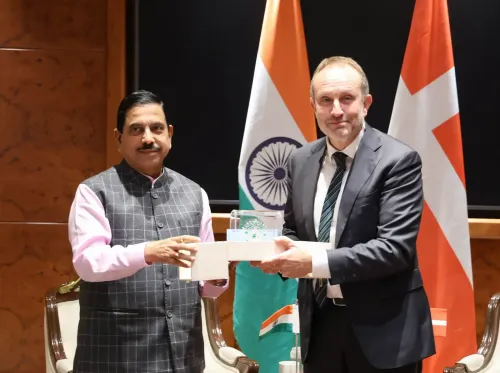
Standing across the table was Danish Minister Martin Lidegaard, whose remarks drew a candid reaction from Joshi. 'डेनमार्क के मंत्री श्री मार्टिन लिडेगार्ड द्वारा भारत के नवीकरणीय ऊर्जा लक्ष्यों की सराहना सुनकर प्रसन्नता हुई' ['It was a pleasure to hear Danish Minister Mr. Martin Lidegaard appreciate India's renewable energy targets and commitment to a clean-energy-based future'], Joshi wrote. That diplomatic affirmation matters: Denmark is one of Europe's most advanced wind-power economies, and its political endorsement strengthens India's hand in attracting Nordic technology and capital.
Green Strategic Partnership: from framework to pipeline
The two countries are not starting from scratch. The India-Denmark Green Strategic Partnership, launched in 2020, already provides the institutional architecture for collaboration. Joshi framed the partnership as a 'strong foundation' to deepen work specifically in four sectors: offshore wind energy, green hydrogen, energy storage, and smart grids — precisely the areas where India's domestic ambition currently outpaces domestic expertise.
Denmark's edge in wind-systems integration and energy transition management makes it a natural fit for India's coastal offshore-wind ambitions. Green hydrogen, meanwhile, is the bet both governments are placing on long-haul decarbonisation of industry and shipping. Joshi signalled eagerness to convert the partnership's stated goals into 'concrete cooperation and shared achievements' — diplomatic language that signals joint project announcements could follow.
The IEA report and what it signals for 2030
The release of a market report co-authored with the IEA at a high-profile bilateral session is a deliberate move. The IEA carries credibility with international investors and policymakers; an IEA imprimatur on India's renewable growth story effectively markets the sector to a global audience. India updated its nationally determined contributions in 2022-23, reaffirming the 500 GW non-fossil target — and a data-rich market report is the kind of instrument that turns political commitments into investable propositions.
The summit also runs alongside the #9ISAssembly — a reference to the International Solar Alliance's assembly — underlining that this India-Denmark exchange is one thread in a much larger diplomatic fabric India is weaving around clean energy leadership.
Four years after a bilateral framework was signed, India and Denmark are now producing joint research, exchanging ministerial endorsements, and mapping offshore wind corridors. The distance from paperwork to power plant is the only gap left to close.
Point of View
The Bharat Renewable Energy Summit appearance positions him at the intersection of India's two most ambitious sectoral bets: the 500 GW electricity target and the emerging green hydrogen economy. Denmark's role is telling — rather than defaulting to larger European partners, India is cultivating niche Nordic expertise in offshore wind and systems integration that it cannot yet replicate domestically. Watch for follow-on project announcements or joint working-group outcomes; ministerial-level summits that produce a co-authored report rarely end without a pipeline of concrete deliverables.
NationPress
3 Nov 2026
Frequently Asked Questions
What is the India Renewable Energy Market Report 2026?
The India Renewable Energy Market Report 2026 is a joint publication produced by India and the International Energy Agency (IEA), released at the Bharat Renewable Energy Summit 2026. It maps India's progress in renewable energy, highlights emerging opportunities, and outlines growth prospects through 2030.
What is the India-Denmark Green Strategic Partnership?
The India-Denmark Green Strategic Partnership is a bilateral framework launched in 2020 that covers cooperation in renewable energy, green hydrogen, energy storage, smart grids, and related clean technologies.
Who is Martin Lidegaard?
Martin Lidegaard is a Danish government minister who participated in the India-Denmark country session at the Bharat Renewable Energy Summit 2026 and commended India's renewable energy targets.
What is India's renewable energy target for 2030?
India has committed to achieving 500 GW of non-fossil electricity capacity by 2030, a target reaffirmed in its updated nationally determined contributions in 2022-23.
What is the Bharat Renewable Energy Summit 2026?
The Bharat Renewable Energy Summit 2026 is a major platform for India's renewable energy sector, hosting bilateral country sessions — including one with Denmark — and coinciding with the 9th Assembly of the International Solar Alliance.