Pralhad Joshi Launches India-IEA Renewables Report at India-Denmark Summit
Synopsis
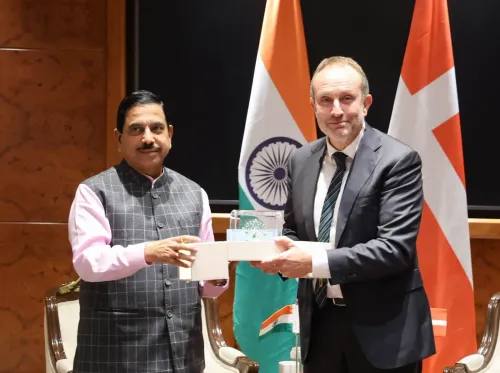
Union Minister Pralhad Joshi addressed the India-Denmark Country Session at Bharat Renewable Energy Summit 2026, released the IEA-co-authored India Renewable Energy Market Report 2026, and reaffirmed the bilateral Green Strategic Partnership across offshore wind, green hydrogen, energy storage, and smart grids.
Key Takeaways
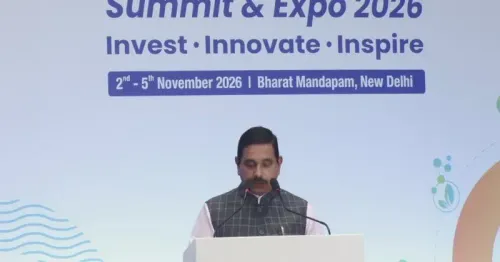
Pralhad Joshi addressed the India-Denmark Country Session at Bharat Renewable Energy Summit 2026 on 3 November 2026 .
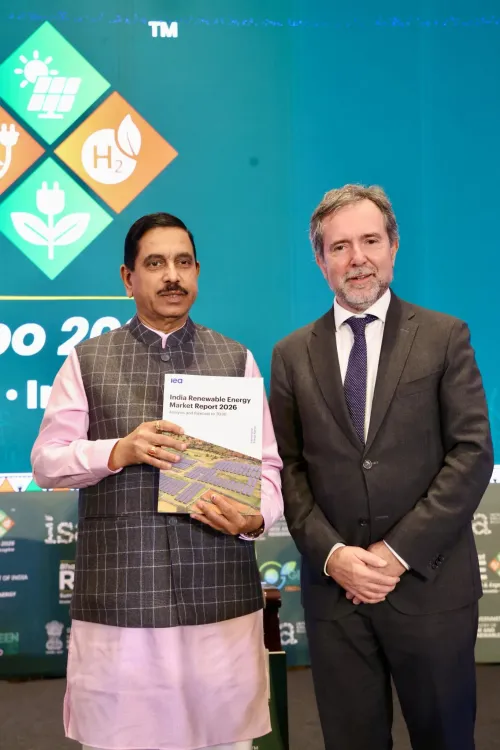
The India Renewable Energy Market Report 2026 , co-produced with the IEA , was released at the event, covering progress and growth prospects to 2030 .
Danish Minister Martin Lidegaard praised India's renewable energy ambitions and clean energy commitment.
The India-Denmark Green Strategic Partnership , launched in 2020 , forms the framework for deepened cooperation in offshore wind, green hydrogen, energy storage, and smart grids.
India has committed to 500 GW of non-fossil fuel capacity by 2030 under its updated NDCs.
Both sides expressed intent to advance the partnership through 'concrete collaborations and shared outcomes.'
A major bilateral energy session and a landmark market report arrived together on Tuesday, 3 November 2026, as Union Minister for New and Renewable Energy Pralhad Joshi addressed the India-Denmark Country Session at the Bharat Renewable Energy Summit 2026, underscoring the enormous collaborative opportunity between the two nations in renewable energy, green hydrogen, and clean technologies.
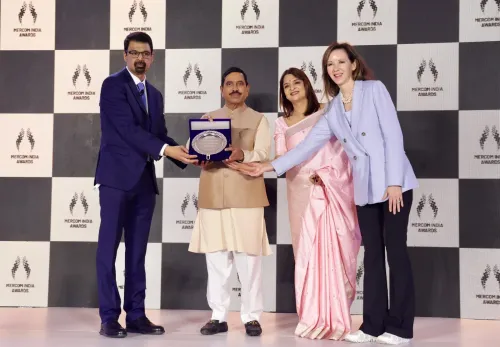
At the session, Joshi released the India Renewable Energy Market Report 2026, prepared in collaboration with the International Energy Agency (IEA). The report maps India's renewable energy progress, charts emerging opportunities, and projects growth prospects through 2030 — the year India has pledged to achieve 500 GW of non-fossil fuel power capacity as part of its updated Nationally Determined Contributions.
Martin Lidegaard's Praise and What It Signals
Joshi noted that Danish Minister Martin Lidegaard commended India's renewable energy ambitions and its commitment to a clean energy-powered future — a diplomatic endorsement that carries weight given Denmark's global standing as a pioneer in offshore wind and grid integration. 'It was encouraging to hear Danish Minister Mr. Martin Lidegaard commend India's renewable energy ambitions and its commitment to a clean energy-powered future,' Joshi said.
Denmark's expertise is not merely academic. The country is home to some of the world's leading wind turbine manufacturers and grid-management institutions, making its engagement with India — which has the deployment scale and manufacturing muscle — a genuinely complementary pairing. The bilateral endorsement at a high-profile summit reinforces that the partnership is active, not ceremonial.
The Green Strategic Partnership: From 2020 Framework to 2026 Momentum
The foundation for this cooperation is the India-Denmark Green Strategic Partnership, launched in 2020, which created a structured framework for joint work on renewables, climate, and sustainability. Six years on, Joshi pointed to four concrete verticals where the partnership is deepening: offshore wind, green hydrogen, energy storage, and smart grids.
Each of these is a strategic gap India is actively trying to close. Offshore wind remains nascent on India's coasts despite enormous potential along its 7,500-km coastline. Green hydrogen is central to India's industrial decarbonisation plans. Energy storage and smart grids are the connective tissue that will determine whether India's renewable surge translates into reliable, dispatchable power at scale.
The IEA Report: A Credibility Signal for Global Investors
The joint release of the India Renewable Energy Market Report 2026 with the IEA is more than a publishing exercise. An IEA-stamped assessment of India's market trajectory — covering progress, opportunities, and projections to 2030 — functions as an independent, internationally credible signal to developers, financiers, and technology partners evaluating India exposure.
India has pursued an increasingly sophisticated strategy of using multilateral and bilateral forums to attract not just investment, but technology transfer and knowledge partnerships. The IEA collaboration fits squarely within that playbook — combining India's policy ambition with a globally trusted analytical voice.
With concrete collaborations and 'shared outcomes' now the stated goal, the next test is whether the Bharat Renewable Energy Summit's bilateral goodwill translates into signed MoUs and project pipelines — particularly in offshore wind and green hydrogen, where the gap between ambition and execution remains the largest.
Point of View
Now in its sixth year, is evolving from a framework document into an operational channel, with offshore wind and green hydrogen emerging as the key test verticals. For Joshi, whose ministerial remit spans both new and renewable energy and consumer affairs, anchoring India's energy diplomacy at a flagship summit reinforces the BJP government's positioning of clean energy as a geopolitical and economic asset, not merely an environmental commitment. The real watchpoint is whether summit momentum converts into bankable project announcements before the 2030 NDC deadline closes in.
NationPress
3 Nov 2026
Frequently Asked Questions
What is the Bharat Renewable Energy Summit 2026?
The Bharat Renewable Energy Summit 2026 is a major platform hosting country sessions and high-level discussions on renewable energy collaboration, technology, and investment between India and partner nations.
What is the India-Denmark Green Strategic Partnership?
The India-Denmark Green Strategic Partnership was launched in 2020 to structure bilateral cooperation on renewable energy, climate, and clean technology, covering areas like offshore wind, green hydrogen, energy storage, and smart grids.
What is the India Renewable Energy Market Report 2026?
It is a joint report prepared by India's Ministry of New and Renewable Energy in collaboration with the International Energy Agency (IEA) , offering insights into India's renewable energy progress, emerging opportunities, and growth prospects up to 2030 .
What is India's renewable energy target for 2030?
India has committed to achieving 500 GW of non-fossil fuel power capacity by 2030 as part of its updated Nationally Determined Contributions under the Paris Agreement.
Who is Martin Lidegaard and why did he praise India?
Martin Lidegaard is a Danish minister who participated in the India-Denmark bilateral session at the Bharat Renewable Energy Summit 2026. He commended India's renewable energy ambitions and its commitment to a clean energy-powered future during the session.