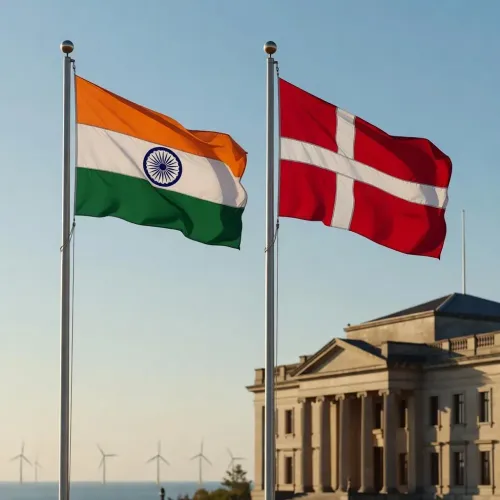
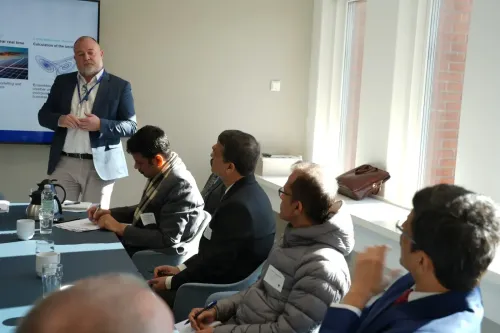
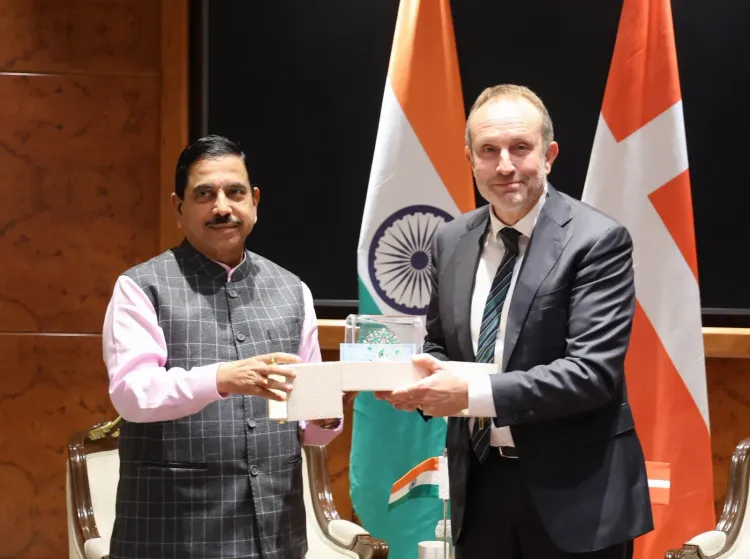
Pralhad Joshi meets Denmark minister at Bharat Renewable Energy Summit 2026
Synopsis
Union Minister Pralhad Joshi met Denmark's Business Minister Martin Lidegaard at the Bharat Renewable Energy Summit 2026, discussing offshore wind, green hydrogen, battery storage and local manufacturing under the India-Denmark Green Strategic Partnership framework launched in 2020.
Key Takeaways
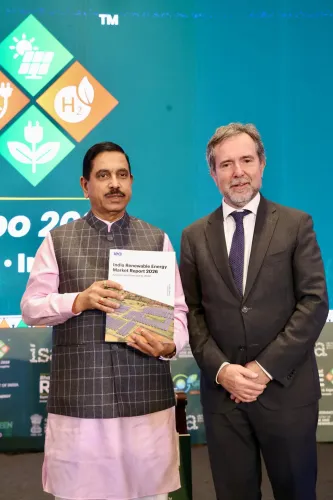
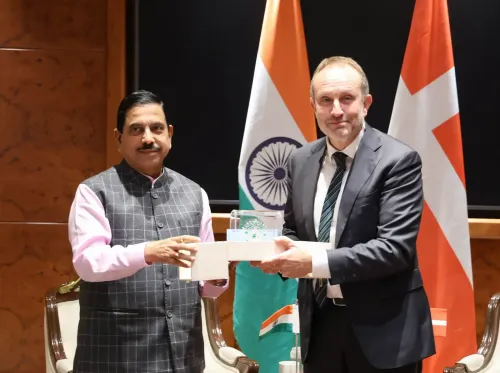
Pralhad Joshi held a bilateral meeting with Denmark's Minister for Business and Competitiveness Martin Lidegaard on the sidelines of the Bharat Renewable Energy Summit 2026 on 3 November 2026 .
Talks covered offshore wind, green hydrogen, battery storage , and renewable energy grid integration.
The minister invited greater Danish participation through technology partnerships, joint ventures, and local manufacturing in India.
Both sides reaffirmed the India-Denmark Green Strategic Partnership , a bilateral clean-energy framework established in 2020 .
India is targeting 500 GW of non-fossil energy capacity by 2030 and has a net-zero 2070 commitment, making technology-rich partners like Denmark strategically critical.
On the sidelines of the Bharat Renewable Energy Summit 2026, Union Minister for New and Renewable Energy Pralhad Joshi sat down with Denmark's Minister for Business and Competitiveness, H.E. Martin Lidegaard, for a bilateral meeting that put offshore wind, green hydrogen, and battery storage squarely on the agenda. The conversation reaffirmed a partnership that both nations have been quietly deepening since 2020 — and signalled that India is now ready to move from framework to deal flow.
What the two ministers put on the table
Joshi and Lidegaard discussed deepening the India-Denmark Green Strategic Partnership, the bilateral framework launched in 2020 to advance cooperation on clean energy, climate action, and sustainable technologies. The minister emphasised India's 'vast investment opportunities' in the renewable energy sector and formally welcomed greater Danish participation — specifically through technology partnerships, joint ventures, and local manufacturing. Three sectors anchored the discussion: offshore wind, green hydrogen, and battery storage integration into India's expanding grid.
Why Denmark is a natural fit for India's 500 GW ambition
Denmark is not a casual partner in this space. The Nordic country is a global leader in offshore wind technology and deployment, with domestic firms that have helped build gigawatt-scale projects across Europe and Asia. India, the world's third-largest energy consumer, has set a target of 500 GW of non-fossil capacity by 2030 — a goal that requires not just capital but cutting-edge turbine, grid, and storage technology that Danish industry can supply.
The pitch for 'local manufacturing' is particularly pointed: it speaks directly to India's push to build domestic supply chains under its clean-energy industrial policy, turning foreign expertise into homegrown capacity rather than pure import dependency.
Green hydrogen and battery storage: the next frontier
Beyond wind — where the two countries already have established channels — the bilateral conversation's explicit mention of green hydrogen and battery storage marks a broadening of scope. India has rolled out an ambitious National Green Hydrogen Mission, and Denmark's electrolyser and power-to-X expertise makes it a logical technology partner. Battery storage, critical for grid stability as intermittent renewables scale up, is the third leg of a triangle that defines energy transition at industrial scale.
Together, these three verticals — offshore wind, green hydrogen, and storage — represent exactly the package India needs to make its net-zero 2070 commitment credible in the medium term.
From the summit floor to signed agreements
The Bharat Renewable Energy Summit 2026 provided the stage; what the market will now watch for is whether the ministerial-level intent translates into announced joint ventures or formal technology agreements in the weeks ahead. The emphasis Joshi placed on 'reaffirming shared commitment' suggests the groundwork for follow-on announcements is already being laid — and Denmark's presence at the summit through a minister of competitiveness-and-business rank signals that Copenhagen is treating this as more than a diplomatic courtesy call.
For India's clean-energy transition, every bilateral partnership that converts ambition into bankable projects matters. This one has both the institutional architecture and the political attention to deliver.
Point of View
But anchor it on Indian soil. Denmark's presence at ministerial level suggests Copenhagen sees strategic value in being an early, deep partner as India scales its offshore wind and green hydrogen ecosystems. The watch item is whether the Green Strategic Partnership, now six years old, produces a new tranche of signed commercial agreements that can be pointed to as evidence of delivery.
NationPress
3 Nov 2026
Frequently Asked Questions
What is the India-Denmark Green Strategic Partnership?
The India-Denmark Green Strategic Partnership is a bilateral framework launched in 2020 to deepen cooperation on renewable energy, climate action, and sustainable technologies, with a particular focus on wind energy, green hydrogen, and grid modernisation.
What did Pralhad Joshi discuss with Denmark's minister at the Bharat Renewable Energy Summit 2026?
Pralhad Joshi and Denmark's Martin Lidegaard discussed strengthening cooperation in offshore wind, green hydrogen, battery storage , and renewable energy integration, as well as inviting Danish investment through technology partnerships, joint ventures, and local manufacturing in India.
Why is Denmark an important partner for India's renewable energy goals?
Denmark is a global leader in offshore wind technology and deployment. India, as the world's third-largest energy consumer targeting 500 GW of non-fossil capacity by 2030 , needs advanced turbine, grid, and storage technology that Danish firms can provide.
What is the Bharat Renewable Energy Summit 2026?
The Bharat Renewable Energy Summit 2026 is a major clean-energy conclave where Indian ministers and global counterparts are meeting to advance India's renewable energy agenda, including bilateral meetings on offshore wind, green hydrogen, and battery storage partnerships.
What is India's renewable energy target and net-zero goal?
India has set a target of 500 GW of non-fossil energy capacity by 2030 and has committed to achieving net-zero emissions by 2070 , requiring large-scale investment in wind, solar, green hydrogen, and grid storage infrastructure.