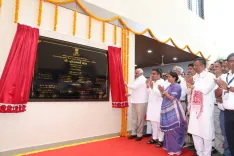
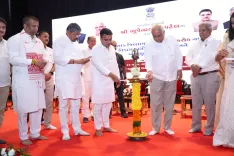
CM Bhupendra Patel Opens Natural Farming Sales Hub in Valsad
Synopsis
Gujarat CM Bhupendra Patel inaugurated a new natural-farming direct-sales kiosk in Valsad on 3 November 2026, giving over 16,000 district farmers a chemical-free produce outlet and advancing PM Modi's nationwide natural-farming movement.
Key Takeaways
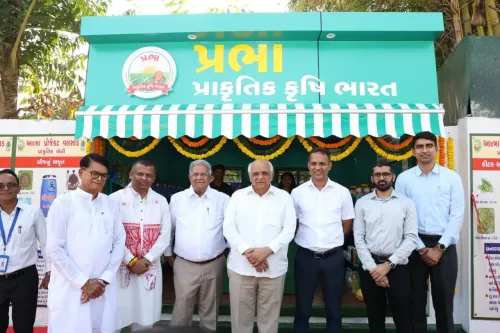
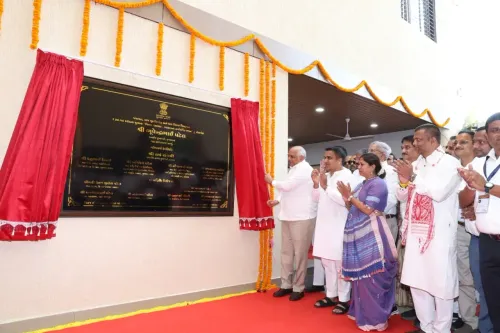
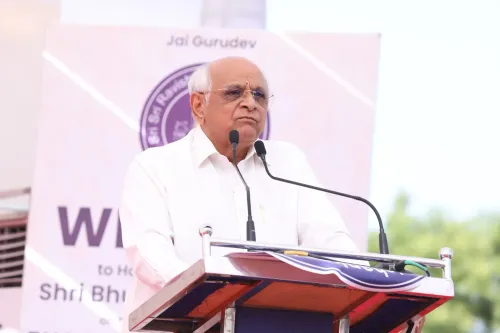
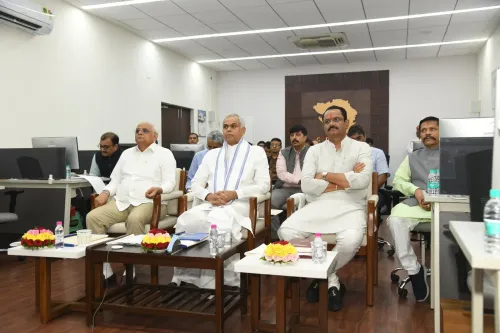
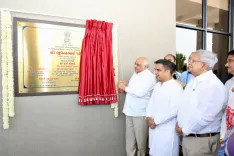
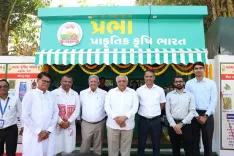
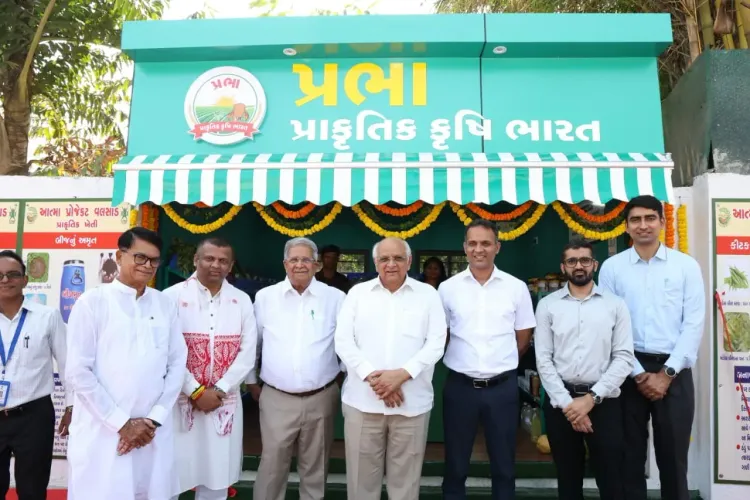
Gujarat CM Bhupendra Patel inaugurated the Prabha Prakrutik Krishi Khet Utpadan Vachan Kendra on Tithal Road, Valsad on 3 November 2026 .
The centre allows natural farmers to sell fresh vegetables, fruits, grains, pulses, and value-added products directly to consumers, bypassing middlemen.
More than 16,000 farmers in Valsad district practise natural farming and will benefit from improved market access through the new outlet.
The initiative aligns with the Paramparagat Krishi Vikas Yojana (launched 2015 ) and PM Modi's personal advocacy for chemical-free agriculture nationwide.
The kiosk model is designed to be replicable across other Gujarat districts, with budget allocations for natural-farming support being watched closely.
From field to front door — without a single synthetic chemical in between. Gujarat Chief Minister Bhupendra Patel on Tuesday, 3 November 2026 inaugurated the 'Prabha Prakrutik Krishi Khet Utpadan Vachan Kendra' on Tithal Road, Valsad, a newly built direct-to-consumer outlet designed to connect natural farmers in the district with health-conscious buyers — and to give Prime Minister Narendra Modi's nationwide natural-farming call a physical address in south Gujarat.
What Valsad's new farming kiosk actually does
The centre is built on a straightforward premise: cut out the middleman, protect the premium. Farmers practising natural agriculture in Valsad district will use the outlet to sell fresh vegetables, fruits, grains, pulses, and value-added products directly to consumers — no wholesale aggregator, no chemical-treated cold-chain blending. CM Patel, who visited the facility after the ribbon-cutting, described the mission in Gujarati as getting produce 'ખેતરથી સીધું તમારા ઘર સુધી' (from the farm straight to your home), pure and natural.
The state government says more than 16,000 farmers across Valsad district are already practising natural farming. For them, the chronic problem has not been production — it has been market access. A certified natural-produce kiosk with a fixed location changes that calculus, offering a premium shelf and a trust signal to urban and peri-urban consumers willing to pay for chemical-free food.
How this fits Gujarat's broader natural-farming push
Gujarat has spent the past several years aligning state infrastructure with the central government's drive toward chemical-free agriculture. The policy lineage traces back to the Paramparagat Krishi Vikas Yojana, launched by the Centre in 2015, which pushed states to formalise organic and natural-farming clusters. Gujarat moved early and moved hard — building certification pipelines, farmer-producer organisations, and now direct-sales infrastructure.
CM Patel explicitly framed Tuesday's inauguration as part of PM Modi's personal advocacy for natural farming, urging citizens to turn the Prime Minister's call into a 'જનઅભિયાન' — a people's movement. The political messaging is deliberate: it positions state-level delivery as the execution arm of a nationally resonant idea, rather than a standalone scheme.
The supply-chain logic — and what comes next
Direct-to-consumer outlets for natural produce shorten the supply chain in two directions simultaneously: farmers capture a larger share of the sale price, and consumers get traceable, fresher produce. The Valsad model — a physical kiosk anchored to a specific geography and a verified farmer base — is replicable. The question now is whether Gujarat rolls out comparable centres across other districts, and whether the state budget follows with subsidies for certification, cold storage, or transport support for natural-farming clusters.
Valsad is a telling choice of location. The district sits in Gujarat's tribal and coastal south, where smallholder farming dominates and the transition away from chemical inputs has been quicker than in high-intensity agricultural belts. If the kiosk model generates measurable income lift for those 16,000-plus natural farmers, it becomes a template — and a campaign talking point — for every Gujarat district that follows.
Point of View
Maximising political credit flow upward while demonstrating administrative follow-through. Gujarat's early alignment with Paramparagat Krishi Vikas Yojana gave it a head-start in building certified natural-farming clusters, and direct-sales infrastructure is the logical next layer. The real test, however, is whether market uptake at the kiosk level actually shifts farmer incomes, or whether the outlet remains a symbolic gesture without the cold-chain, certification, and logistics backbone needed to scale. If Valsad's farmer numbers hold and the model replicates, it could become Gujarat's most visible agricultural-reform story ahead of the next state election cycle.
NationPress
3 Nov 2026
Frequently Asked Questions
What is the Prabha Prakrutik Krishi Khet Utpadan Vachan Kendra in Valsad?
It is a newly built direct-to-consumer sales outlet on Tithal Road, Valsad, inaugurated by Gujarat CM Bhupendra Patel on 3 November 2026, where natural farmers sell chemical-free vegetables, fruits, grains, and value-added products directly to the public.
How many farmers in Valsad district practise natural farming?
According to CM Patel's post at the inauguration, more than 16,000 farmers in Valsad district are currently engaged in natural farming.
What is natural farming and how is India promoting it?
Natural farming avoids synthetic chemicals and external inputs, relying on locally available biological resources. The central government has promoted it through the Paramparagat Krishi Vikas Yojana since 2015, and PM Modi has publicly called for it to become a nationwide people's movement.
What benefit does the Valsad kiosk give to natural farmers?
It gives natural farmers a dedicated market with direct access to consumers, allowing them to sell produce at better prices without middlemen, while offering buyers traceable, chemical-free food.
Will similar natural farming sales centres open in other Gujarat districts?
No official announcement has been made yet, but the Valsad model is designed to be replicable, and observers are watching for rollout plans in other districts and related state budget allocations.