CM Bhupendrabhai Patel Closes Viksit Gujarat 2047 Higher Education Meet

Synopsis
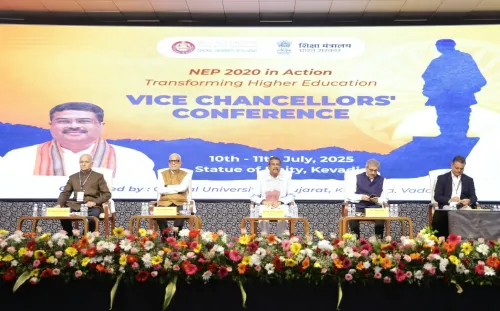
Chief Minister Bhupendrabhai Patel closed the Viksit Gujarat 2047 Higher Education for Future Workforce Readiness conference at the Knowledge Consortium of Gujarat in Ahmedabad on 3 November 2026, marking a key step in Gujarat's push to align university education with long-range economic goals.
Key Takeaways
CM Bhupendrabhai Patel presided over the valedictory of the Viksit Gujarat 2047 – Higher Education for Future Workforce Readiness conference on 3 November 2026 .
The event was held at the Knowledge Consortium of Gujarat, Ahmedabad , the state's apex body for higher-education coordination.
The conference is part of a series of sector-specific conclaves under the Viksit Gujarat 2047 umbrella, mirroring the national Viksit Bharat 2047 framework.
Discussions centred on curriculum reform, industry-academia linkages, and apprenticeship pathways aligned with National Education Policy 2020 .
Stakeholders included higher-education institutions, faculty, and industry partners aiming to shape a future-ready graduate workforce.
State government follow-up on conference recommendations for policy reform is expected in coming months.
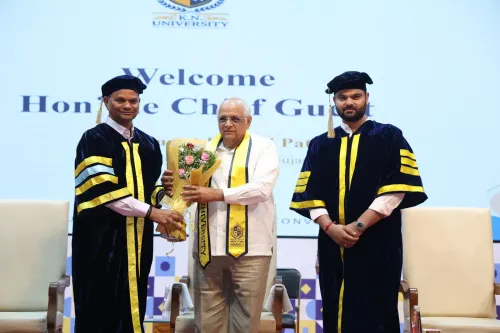
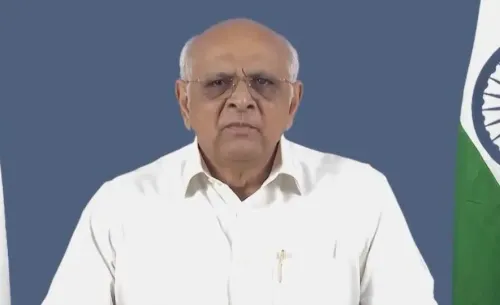
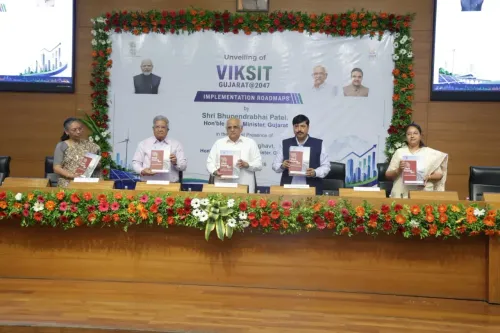
A blueprint for Gujarat's graduate workforce in 2047 reached its closing act on Tuesday, 3 November 2026, as Chief Minister Bhupendrabhai Patel presided over the valedictory ceremony of the Viksit Gujarat 2047 – Higher Education for Future Workforce Readiness conference at the Knowledge Consortium of Gujarat, Ahmedabad. The event marks the culmination of a state-driven effort to align university curricula, industry demands, and long-range economic ambitions under one roof.
What the Viksit Gujarat 2047 Higher Education Conference Set Out to Do
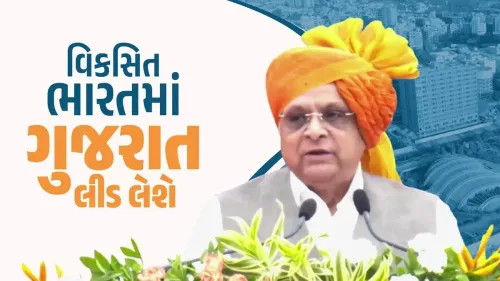
The conference belongs to a series of sector-specific conclaves that Gujarat has organised under the Viksit Gujarat 2047 umbrella — the state's own articulation of the national Viksit Bharat 2047 vision. The overarching question driving the series: what kind of skilled, adaptable graduates does a developed Gujarat need, and how must its higher-education system be rewired to produce them?
The Knowledge Consortium of Gujarat, the Ahmedabad-based body that coordinated the event, serves as the state's nerve centre for higher-education policy. Bringing universities, technical institutes, and industry partners into a single conversation, it has been the natural host for a summit that explicitly targets 'future workforce readiness' — language that signals a shift from degree-counting to outcome-mapping.
NEP 2020, Industry Linkages, and the Curriculum Reform Agenda
The conference sits squarely within Gujarat's implementation of the National Education Policy 2020, which pushes multidisciplinary learning, credit-transfer flexibility, and tighter industry-academia integration. Gujarat has been among the more proactive states in operationalising NEP 2020 at the institutional level, and events like this one translate that national mandate into ground-level reform conversations.
Higher-education institutions, faculty bodies, and corporate partners form the core stakeholder triangle the conference addressed. The discussions — spanning curriculum redesign, apprenticeship pathways, and research commercialisation — are expected to feed into policy recommendations that the state government will take up in the months ahead.
CM Patel's Role in Gujarat's Knowledge-Economy Push
Chief Minister Bhupendrabhai Patel has consistently flagged education and skill development as twin pillars of Gujarat's growth story. His presence at the closing ceremony — not merely as a ceremonial figurehead but as the political authority accountable for follow-through — signals that the conference outcomes are meant to travel beyond the seminar hall into actual policy corridors.
Gujarat's positioning as a knowledge-economy hub has gathered momentum through a string of such conclaves, each targeting a different sector under the 2047 horizon. Together they form a rolling consultation exercise: broad enough to canvas diverse voices, specific enough to produce actionable curriculum and industry-linkage recommendations.
The real test arrives in the months after the hall empties — whether the recommendations on curriculum reform and academia-industry bridges make it into university syllabi and government orders, or remain conference proceedings on a shelf.
Point of View
The government signals political ownership — not just bureaucratic stewardship — of the education reform agenda. The explicit 'workforce readiness' framing aligns Gujarat with a national trend of repositioning higher education as an economic input rather than a social entitlement. Whether the conference produces durable curriculum and industry-linkage changes, or fades into the archive of well-attended but under-implemented conclaves, will be the true measure of this initiative.
NationPress
3 Nov 2026
Frequently Asked Questions
What is the Viksit Gujarat 2047 Higher Education conference?
It is a state-level policy conference organised under Gujarat's Viksit Gujarat 2047 vision, focusing on aligning higher education with future workforce needs. The closing ceremony was held on 3 November 2026 at the Knowledge Consortium of Gujarat in Ahmedabad.
Who is Bhupendrabhai Patel?
Bhupendrabhai Patel is the Chief Minister of Gujarat, responsible for overseeing state development, policy, and education initiatives including the Viksit Gujarat 2047 series of conferences.
What is the Knowledge Consortium of Gujarat?
The Knowledge Consortium of Gujarat is a state-level body based in Ahmedabad that coordinates higher education policy, knowledge dissemination, and industry-academia linkages across Gujarat.
How does Viksit Gujarat 2047 relate to Viksit Bharat 2047?
Viksit Gujarat 2047 is Gujarat's state-level adaptation of the national Viksit Bharat 2047 framework, targeting a fully developed Gujarat by India's centenary of independence through sector-specific planning including education, infrastructure, and economy.
What is the role of NEP 2020 in Gujarat's higher education reform?
The National Education Policy 2020 underpins Gujarat's higher-education reform agenda by promoting multidisciplinary learning, credit-transfer flexibility, and stronger industry-academia integration, all of which were central themes at the Viksit Gujarat 2047 education conference.