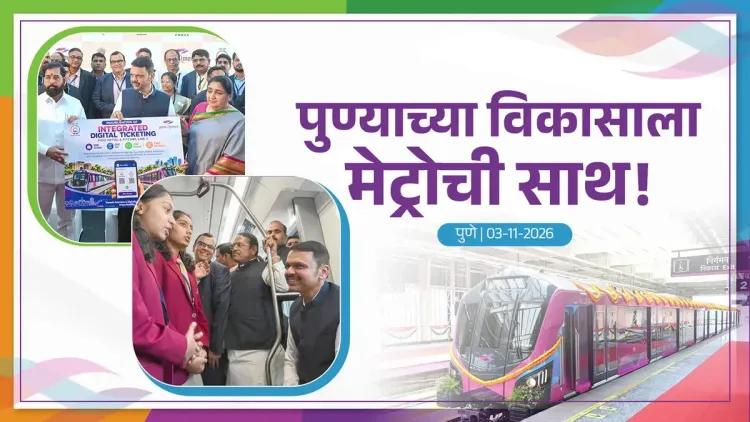
CM Fadnavis: Pune Metro Line 3 Inaugurated, ₹22,000 Cr Invested
Synopsis
PM Modi inaugurated Pune Metro Line 3, the Maan–Hinjewadi–Shivajinagar corridor, India's first Centre-backed PPP metro project, with a ₹22,000 crore investment. CM Fadnavis highlighted 90 women train operators, a 50% female workforce, and a ₹5,000 crore central fund to make Pune a major mobility hub by 2030.
Key Takeaways
Pune Metro Line 3 (Maan–Hinjewadi–Shivajinagar) was inaugurated by PM Narendra Modi on 3 November 2026 .
The corridor is India's first metro project under the Centre's PPP policy for urban rail.
Total project investment stands at ₹22,000 crore ; PM Modi also performed the bhoomipujan of Pune Metro Phase 2 online.
The Pink Line employs 90 women train operators with women comprising 50% of the project workforce .
The Centre has committed ₹5,000 crore for urban development to make Pune, PMR, and Pimpri-Chinchwad integrated mobility hubs by 2030 .
Broader Pune infrastructure push includes electric buses, ring roads, HCMTR, tunnels, and a new airport.
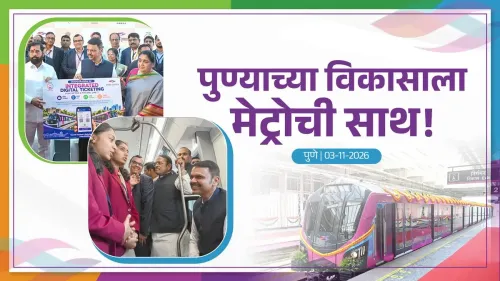
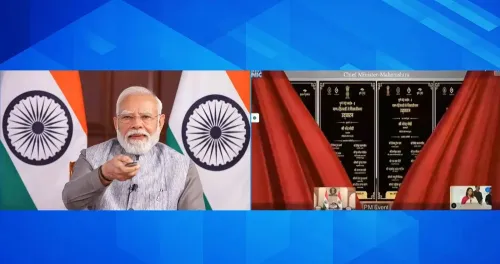
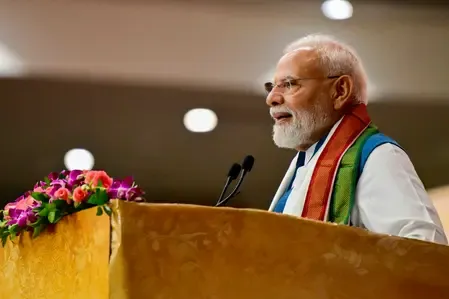
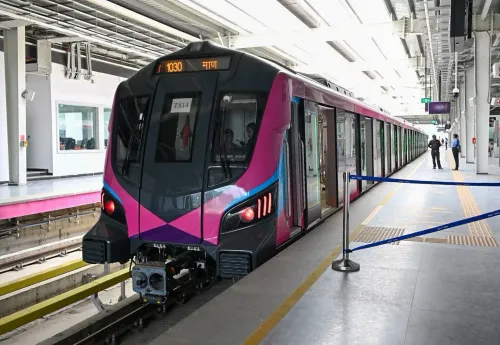
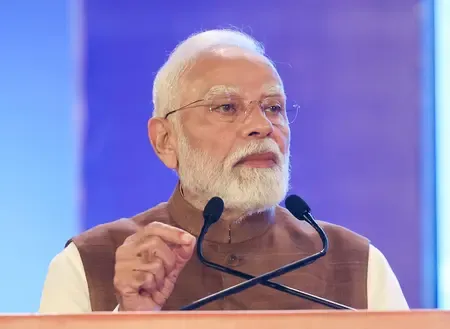
Pune's long-awaited link between its sprawling Hinjewadi IT corridor and the city's historic heart at Shivajinagar is now a reality. Maharashtra Chief Minister Devendra Fadnavis announced on Tuesday, 3 November 2026 that Prime Minister Narendra Modi inaugurated Pune Metro Line 3 — the Maan–Hinjewadi–Shivajinagar corridor — and simultaneously performed the bhoomipujan (ground-breaking ceremony) of Pune Metro Phase 2 online, committing a total investment of ₹22,000 crore to transform daily mobility for millions of Pune residents.
India's first Centre-backed PPP metro takes the tracks
The Shivajinagar–Hinjewadi corridor is not just another metro line — it is the first metro project executed under the Central government's Public-Private Partnership (PPP) policy for urban rail, a framework introduced from 2017 onwards to pull private capital into city transit. That distinction matters: it sets a template the Centre wants replicated in second-tier cities across India. For the tens of thousands of software engineers and support staff who crawl through Hinjewadi's notorious peak-hour gridlock every morning, the line represents something far simpler — a seat, a schedule, and an on-time arrival.
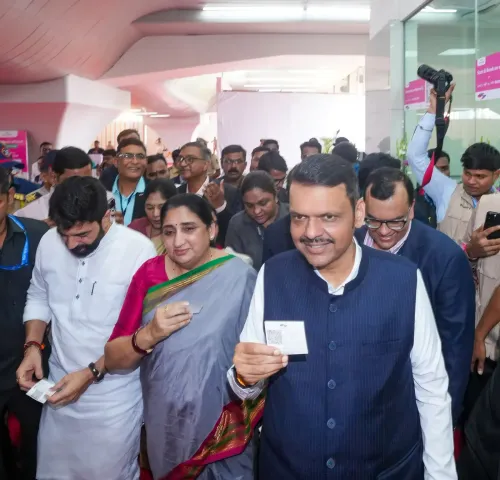
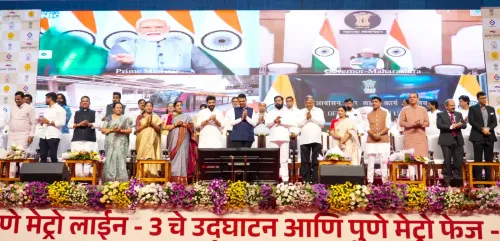
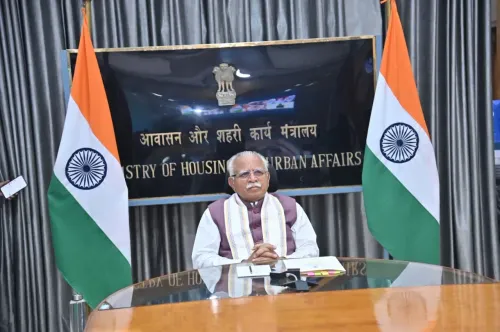
Union Minister Manohar Lal Khattar, who holds the urban development and housing portfolio, was present at the event alongside Deputy Chief Minister Eknath Shinde, Deputy Chief Minister Sunetra Pawar, Union MoS Murlidhar Mohol, Pune Mayor Manjusha Nagpure, Pimpri-Chinchwad Mayor Ravi Landge, and a full complement of state ministers and parliamentarians. Governor Jishnu Dev Varma joined the ceremony online.
The Pink Line's 'Pink Power' — women on every rung
CM Fadnavis specifically highlighted what he called the line's 'Pink Power' dimension. The metro's operational crew includes 90 women train operators, and women made up 50% of the total project workforce — from construction through to daily operations. In an infrastructure sector that has historically struggled with gender diversity, those figures are a deliberate signal. The corridor's branding as the 'Pink Line' is designed to make that signal visible every time a train pulls into a station.
₹5,000 crore Centre push and the 2030 mobility vision
The inauguration arrived alongside a broader funding commitment: the Centre will channel ₹5,000 crore into urban development for the Pune Metropolitan Region (PMR), with the goal of positioning Pune, PMR, and Pimpri-Chinchwad as integrated major mobility hubs by 2030. That money is meant to accelerate the wider infrastructure stack Fadnavis outlined — electric buses, ring roads, the High Capacity Mass Transit Route (HCMTR), road tunnels, and a new airport — all converging on a multimodal network that mirrors the direction of national schemes like AMRUT and Smart Cities.
The PM also extended Diwali wishes to Maharashtra and, with the state facing a drought situation, reassured farmers of continued central support — a gesture Fadnavis framed as proof of Modi's consistent commitment to the state's prosperity and the broader Viksit Bharat (Developed India) agenda.
What Pune's commuters and investors watch next
Ridership numbers on Line 3 in its first weeks will be the earliest stress-test of the corridor's real-world impact on Hinjewadi's congestion. Phase 2's civil works timeline and the drawdown of the ₹5,000 crore central urban development fund will determine whether 2030's mobility-hub ambition stays on schedule. For a city that has grown faster than its roads for two decades, the metro's first rake out of Hinjewadi is not the finish line — it is the starting gun.
Point of View
The event is a showcase moment that bundles infrastructure delivery, gender-inclusion optics, and central-state partnership into a single frame ahead of the region's continued political cycle. The 'Pink Power' branding and the 50% women-workforce figure are not incidental — they signal a deliberate effort to attach social equity metrics to hard infrastructure, a combination that resonates with both urban professional voters and central government scheme criteria. Whether ridership on the Hinjewadi corridor meets projections will ultimately determine whether the PPP metro template travels beyond Pune.
NationPress
3 Nov 2026
Frequently Asked Questions
When was Pune Metro Line 3 inaugurated?
Pune Metro Line 3 was inaugurated on 3 November 2026 by Prime Minister Narendra Modi in an event attended by Maharashtra CM Devendra Fadnavis and other senior officials.
Which stations does Pune Metro Line 3 connect?
Pune Metro Line 3 connects Maan to Shivajinagar via Hinjewadi , linking the city's major IT and software hub directly to its historic commercial centre.
What is the investment for Pune Metro Line 3?
The total investment for the Pune Metro Line 3 project is ₹22,000 crore , as announced by CM Devendra Fadnavis. The Centre has separately committed ₹5,000 crore for broader urban development in the Pune Metropolitan Region.
Why is Pune Metro Line 3 called the Pink Line?
The corridor is branded the Pink Line to celebrate 'Pink Power' — women's contribution across the project, including 90 women train operators and women making up 50% of the total project workforce .
What is Pune Metro Phase 2?
Pune Metro Phase 2 is the next expansion of the city's metro network, for which PM Modi performed the bhoomipujan (ground-breaking ceremony) online on 3 November 2026 , as part of the same ₹22,000 crore investment announcement.