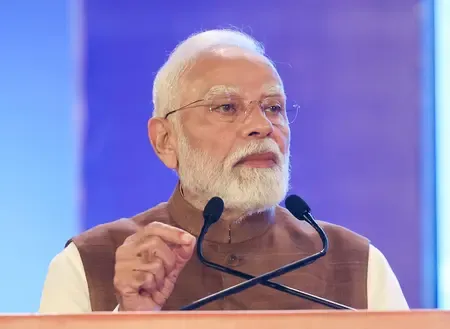
PM Modi inaugurates Pune Metro Line-3: 23 km Pink Line connects Hinjawadi to Shivajinagar
Synopsis
Modi's virtual inauguration of Pune's 23-km Pink Line is more than a ribbon-cutting — it connects Hinjawadi's massive IT workforce directly to Shivajinagar for the first time via metro, at a cost of ₹8,313 crore. With 100 women at the controls and solar power covering 30% of energy needs, the Pink Line is being positioned as both a traffic solution and a gender-inclusion statement.
Key Takeaways
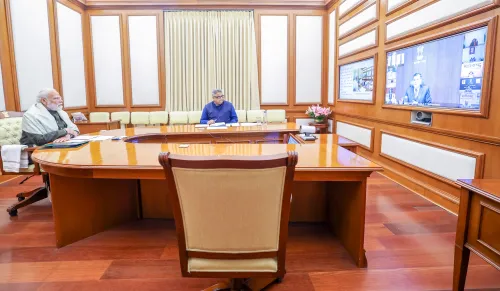
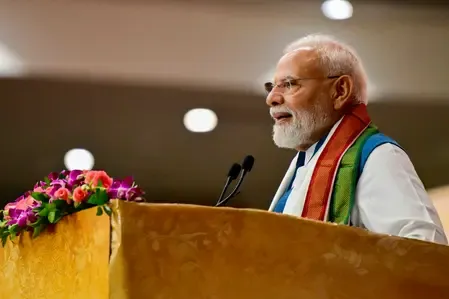
PM Narendra Modi virtually inaugurated Pune Metro Line-3 on 3 November 2026 via videoconferencing.
The 23.203-km fully elevated Pink Line runs from Maan-Hinjawadi to Shivajinagar ; passenger services begin at 6:00 am on 4 November 2026 .
Of 23 stations , 17 open to the public from 3 November ; seven will initially operate with a single staircase.
Total project cost is ₹8,313 crore , executed on a DBFOT PPP model under the National Metro Rail Policy, 2017.
All trains will be operated by approximately 100 women train pilots ; around 50 per cent of station staff will also be women.
Solar capacity of 7.60 MW installed, expected to meet nearly 30 per cent of the line's power needs.
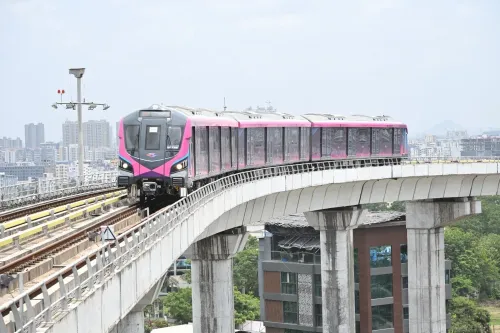
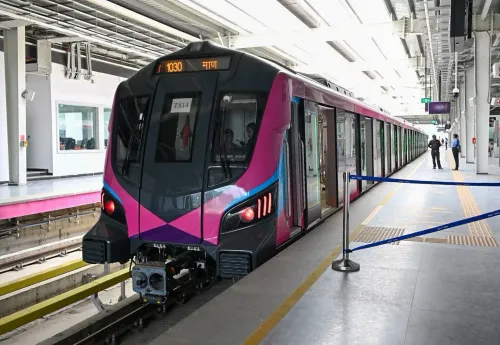
Prime Minister Narendra Modi on 3 November 2026 virtually inaugurated Pune Metro Line-3 — the 23.203-kilometre fully elevated corridor connecting Maan-Hinjawadi to Shivajinagar — via videoconferencing, marking a milestone for the city's public transport network. Passenger services on the new line, popularly called the 'Pink Line' or 'Puneri Metro', are set to begin at 6:00 am on 4 November 2026.
Inauguration Ceremony Details
The ceremony was held at 10:30 am at the Badminton Hall, Shree Shiv Chhatrapati Sports Complex in Mhalunge-Balewadi, Pune. Maharashtra Chief Minister Devendra Fadnavis, Deputy Chief Minister Eknath Shinde, and Sunetra Ajit Pawar attended as chief guests. Modi joined the event remotely via videoconferencing.
Route, Stations and Phased Opening
The Pink Line originates at Maan, passes through Rajiv Gandhi Infotech Park in Hinjawadi — Pune's primary IT hub — and terminates at Shivajinagar, a key administrative and commercial centre. Of the total 23 stations on this line, 17 stations will be thrown open to the public from 3 November 2026. Notably, seven of these stations will initially operate with a single staircase, with full infrastructure to follow in subsequent phases.
Project Cost and PPP Structure
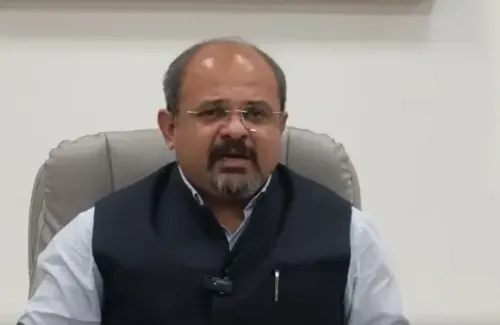
The project's total estimated cost — inclusive of land acquisition and utility shifting — stands at ₹8,313 crore. It has been executed under a DBFOT (Design, Build, Finance, Operate, and Transfer) Public-Private Partnership model, in conformity with the Central Government's National Metro Rail Policy, 2017. According to Pune Metropolitan Region Development Authority (PMRDA) Commissioner Dr Abhijit Chaudhari, multi-modal integration has been built into the design to ensure seamless onward connectivity for commuters after they exit the metro.
Green Energy and Sustainability Push
A total solar power generation capacity of 7.60 MW has been installed under the project — 6.10 MW across metro stations and 1.50 MW at the car depot. This renewable capacity is projected to meet nearly 30 per cent of the line's overall power requirements, making it one of the greener metro corridors in the country. Dedicated cycle tracks, wide footpaths, pedestrian crossings, and foot overbridges are also being developed to prioritise non-motorised travel and ease traffic congestion, particularly in the Hinjawadi area.
Women Empowerment at the Forefront
In a notable commitment to gender inclusion, all trains on Pune Metro Line-3 will be operated by approximately 100 women train pilots. Additionally, around 50 per cent of total station staff — covering station controllers, ticketing personnel, and station attendants — will be women. Dr Chaudhari described this as a deliberate effort to advance women's empowerment, gender equality, and female participation in modern urban transport. This comes amid a broader national push to increase women's workforce participation in infrastructure-linked roles.
With the Pink Line operational, Pune's metro network takes a significant step toward easing the city's chronic traffic gridlock, and all eyes will be on ridership figures in the weeks ahead.
Point of View
313 crore project in Maharashtra. The 100-women-pilots pledge is a striking optic, but the harder test is whether the corridor actually dents Hinjawadi's legendary gridlock, which has worsened as IT campuses expanded faster than road capacity. Metro ridership in Indian cities has repeatedly disappointed early projections; the Pink Line's first-month numbers will be the real verdict. The phased opening — 17 of 23 stations, some with a single staircase — also signals that the project is not fully complete, even as the inauguration implies otherwise.
NationPress
3 Nov 2026
Frequently Asked Questions
What is Pune Metro Line-3 and where does it run?
Pune Metro Line-3, also called the Pink Line or Puneri Metro, is a 23.203-kilometre fully elevated metro corridor connecting Maan-Hinjawadi to Shivajinagar in Pune. It passes through Rajiv Gandhi Infotech Park in Hinjawadi, linking the city's largest IT hub to its main administrative and commercial centre.
When will passenger services on Pune Metro Line-3 begin?
Passenger services on Pune Metro Line-3 will officially begin at 6:00 am on 4 November 2026, the day after Prime Minister Modi's virtual inauguration on 3 November 2026.
How much did Pune Metro Line-3 cost and how was it funded?
The total estimated project cost, including land acquisition and utility shifting, is ₹8,313 crore. The project was executed under a DBFOT (Design, Build, Finance, Operate, and Transfer) Public-Private Partnership model in line with the Central Government's National Metro Rail Policy, 2017.
How many stations will open initially on the Pink Line?
Of the 23 total stations on Pune Metro Line-3, 17 stations will be open to passengers from 3 November 2026. Seven of these will initially operate with only a single staircase, with fuller access expected in later phases.
What is significant about the staffing on Pune Metro Line-3?
All trains on Pune Metro Line-3 will be operated by approximately 100 women train pilots, and around 50 per cent of total station staff — including controllers, ticketing staff, and attendants — will be women. PMRDA Commissioner Dr Abhijit Chaudhari described this as a commitment to women's empowerment and gender equality in modern urban transport.