Pralhad Joshi quotes PM Modi: Solar future hinges on innovation
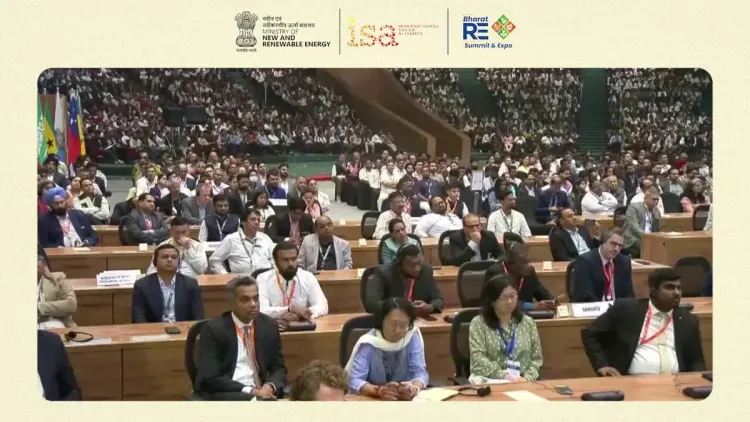
Synopsis
Union Minister Pralhad Joshi quoted PM Modi at the BharatRE Summit 2026, declaring India's solar revolution must now be driven by innovation — not adoption alone — signalling a policy shift toward domestic R&D and manufacturing in the renewable energy sector.
Key Takeaways
PM Modi stated at BharatRE Summit 2026 that India's new solar phase 'hinges on innovation,' not just adoption.
Union Minister Pralhad Joshi amplified the message on November 3, 2026 , underscoring the government's renewable energy push.
India's Production Linked Incentive scheme for solar manufacturing (2021) was designed to reduce import dependence and boost domestic innovation.
India has committed to 500 GW of non-fossil fuel capacity by 2030 under its updated Nationally Determined Contributions at COP26.
The PM Surya Ghar Muft Bijli Yojana (2024) extended the solar push to household rooftops, adding complexity that demands technological solutions.
Policy watchers will monitor whether R&D funding and innovation incentives follow from the summit's messaging in upcoming budgets.
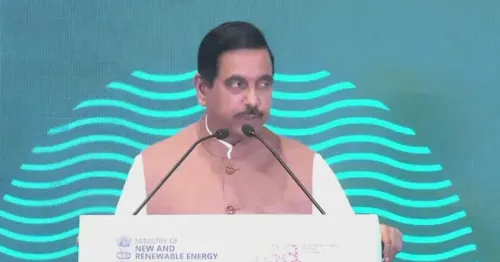
India's renewable energy ambitions got a sharp rhetorical push on Tuesday, November 3, 2026, when Union Minister Pralhad Joshi — holding charge of both Consumer Affairs and New and Renewable Energy — shared a pointed line from Prime Minister Narendra Modi at the BharatRE Summit 2026: 'This new phase of the solar revolution is not just about adoption; it also hinges on innovation.'
The shift from megawatts to mind-power
For years, India's solar story was told in one currency: gigawatts installed. But the Prime Minister's framing at #BRESummit signals a deliberate pivot — deployment alone is no longer enough. The argument is that the next competitive edge lies in who builds the technology, not just who buys it.
That argument has policy teeth. The Production Linked Incentive (PLI) scheme for solar manufacturing, announced in 2021, was designed precisely to wean the sector off import dependence and seed domestic R&D. The message from the summit doubles down on that logic: scale without innovation is a vulnerability, not a victory.
India's solar policy ladder — from mission to moonshot
The architecture behind this ambition has been built in stages. The National Solar Mission, launched in 2010 under the National Action Plan on Climate Change, laid the foundation for large-scale grid integration. At COP26 in 2021, India's updated Nationally Determined Contributions committed to 500 GW of non-fossil fuel capacity by 2030 — a target that requires both rapid deployment and technological breakthroughs in storage and efficiency.
More recently, the PM Surya Ghar Muft Bijli Yojana, launched in 2024, brought the solar push to household rooftops, broadening the base beyond utility-scale plants. Each layer adds complexity — and each complexity demands innovation to resolve.
What the BharatRE Summit signals for policy watchers
Industry summits in India rarely end without downstream policy signals — budget provisions, R&D funding calls, or regulatory tweaks. With the Prime Minister himself setting 'innovation' as the north star of this solar phase, observers will now track whether parliamentary sessions or forthcoming budget discussions translate that rhetoric into ring-fenced incentives for solar technology development.
India's membership of the International Solar Alliance — the treaty-based body co-launched with France in 2015 — also gives this framing an international dimension: a country that leads on solar innovation exports both energy security and diplomatic influence.
The gigawatts will keep climbing. The real question now is whether India's solar panels will increasingly say 'Made in India' — and whether the algorithms powering them will too.
Point of View
Aligning with the PLI scheme's domestic manufacturing logic and India's net-zero-by-2070 commitment. It positions India's renewable push as a technology-sovereignty play, not just a climate compliance exercise. For Minister Joshi, amplifying this at a major industry summit reinforces his dual portfolio's coherence: energy security and consumer welfare are linked when affordable, Indian-made solar technology drives down electricity costs. The open question is whether the rhetoric at BharatRE Summit 2026 translates into budgetary muscle for solar R&D in the near term.
NationPress
3 Nov 2026
Frequently Asked Questions
What did PM Modi say at BharatRE Summit 2026 about solar energy?
PM Modi stated that India's new phase of the solar revolution is not just about adoption but also hinges on innovation, signalling a shift in focus toward domestic technology development.
What is BharatRE Summit 2026?
BharatRE Summit 2026 is a renewable energy industry summit in India where government leaders and industry stakeholders discuss policy direction and technology trends in clean energy.
What is India's solar energy target by 2030?
India has committed to achieving 500 GW of non-fossil fuel capacity by 2030 under its updated Nationally Determined Contributions pledged at COP26 in 2021.
What is the PLI scheme for solar manufacturing in India?
The Production Linked Incentive (PLI) scheme for solar manufacturing, announced in 2021, provides financial incentives to domestic producers to reduce India's dependence on imported solar components and encourage local R&D.
What is PM Surya Ghar Muft Bijli Yojana?
Launched in 2024, PM Surya Ghar Muft Bijli Yojana is a central government scheme that provides financial support to households for installing rooftop solar panels, broadening solar adoption beyond large utility-scale projects.