CM Fadnavis Flags 12 Years of Rail Growth in Maharashtra
Synopsis
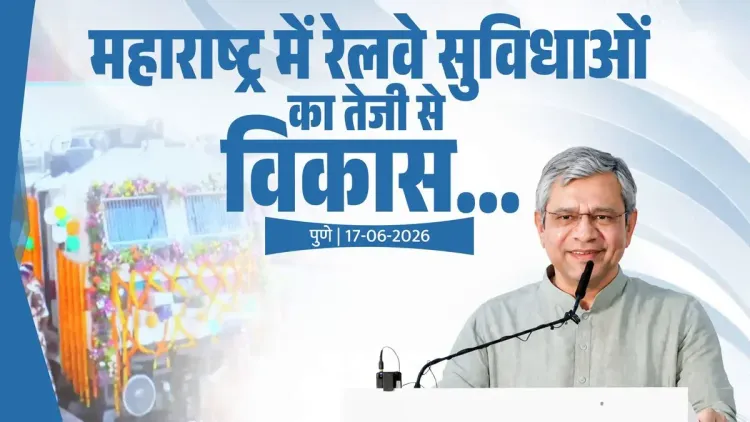
Maharashtra CM Devendra Fadnavis on 17 June 2026 inaugurated the Pune–Sainagar Shirdi Express and launched the Pune Railway Station yard remodelling, attributing 12 years of unprecedented rail infrastructure growth in the state to PM Modi's leadership.
Key Takeaways
Devendra Fadnavis attended a railway event in Pune on 17 June 2026 , crediting 12 years of rail infrastructure growth to PM Narendra Modi's leadership.
The Pune–Sainagar Shirdi Express was inaugurated, creating a direct rail link between Pune and the pilgrimage town of Shirdi .
A foundation-laying ceremony for yard remodelling at Pune Railway Station was held to address congestion and improve capacity.
Union Railway Minister Ashwini Vaishnaw was tagged in the post, indicating central government coordination on the projects.
The new train is expected to boost the Shirdi pilgrimage economy and improve connectivity for passengers in western Maharashtra.
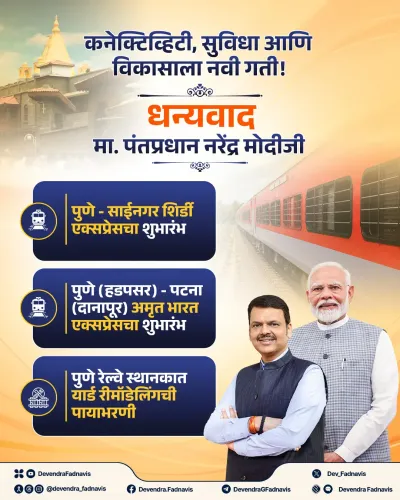
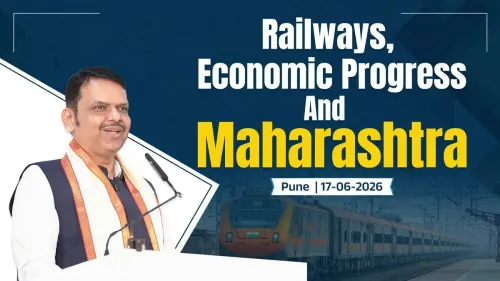
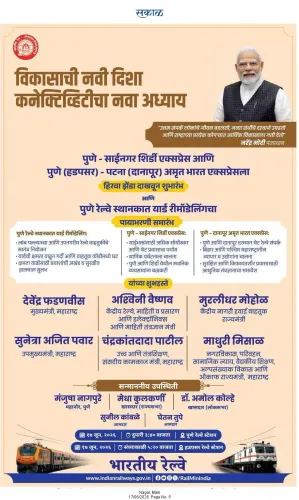
Maharashtra Chief Minister Devendra Fadnavis on Wednesday, 17 June 2026, highlighted the accelerated development of railway infrastructure across Maharashtra over the past 12 years, crediting the leadership of Prime Minister Narendra Modi. The remarks came at the inauguration of the Pune–Sainagar Shirdi Express and the foundation-laying ceremony for yard remodelling at Pune Railway Station, held in Pune.
Context
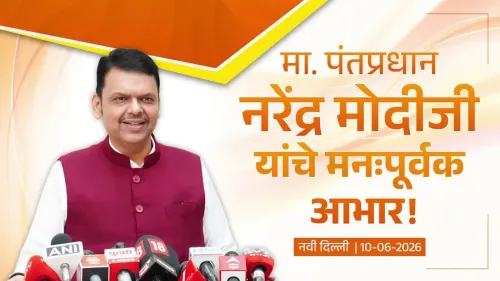
Posting in Marathi and Hindi, Fadnavis wrote: 'मा. पंतप्रधान नरेंद्र मोदीजी यांच्या मार्गदर्शनाखाली गेल्या 12 वर्षांत महाराष्ट्रातील रेल्वे पायाभूत सुविधांच्या विकासाला अभूतपूर्व गती मिळाली आहे' — 'Under the guidance of Prime Minister Narendra Modi, railway infrastructure development in Maharashtra has received unprecedented momentum over the past 12 years.' The post tagged Prime Minister Modi and Union Railway Minister Ashwini Vaishnaw, signalling coordination between the state and central governments on the projects.
The dual-language post underscores the political messaging directed at both Marathi-speaking audiences and a broader Hindi-speaking national base, a common communication strategy for BJP leaders on infrastructure milestones.
Policy Backdrop
Since 2014, successive Union Rail Budgets have sanctioned a range of Maharashtra-specific projects including track doubling, electrification drives, and new express services connecting major urban centres with religious and tourist destinations. The Pune–Sainagar Shirdi Express adds a direct link between Pune, Maharashtra's second-largest city, and Shirdi, one of the most visited pilgrimage towns in western India.
The Pune Railway Station yard remodelling is aimed at easing chronic congestion at one of the busiest junctions in the region, improving train throughput and reducing delays. Such yard upgrades are part of a broader national push to modernise ageing station infrastructure at high-traffic nodes.
Stakeholders and Impact
The most immediate beneficiaries are rail passengers in western Maharashtra, particularly the large volume of pilgrims and tourists travelling to Shirdi from Pune and surrounding districts. A dedicated express service reduces dependence on indirect routes and cuts travel time for this corridor.
The Shirdi pilgrimage economy — encompassing hotels, transport operators, and local traders — stands to gain from improved rail access that could increase footfall. For Pune, the yard remodelling promises longer-term operational benefits as the city's rail traffic continues to grow alongside its expanding population and industrial base.
What's Next
Attention will now turn to the operationalisation schedule of the Pune–Sainagar Shirdi Express, including its regular timetable and frequency of service. The completion milestones of the Pune yard remodelling project will be closely tracked, as such civil works typically unfold over multiple phases.
Further announcements on additional connectivity projects linking Pune or Shirdi to other parts of Maharashtra remain possible, given the political momentum around the event. The involvement of Railway Minister Ashwini Vaishnaw in the ceremony suggests the Centre is likely to follow up with project-specific progress communications.
Point of View
Reinforcing the political dividend of infrastructure spending ahead of future electoral cycles. By tagging both PM Modi and Railway Minister Vaishnaw, Fadnavis positions Maharashtra as a model recipient of the Centre's rail modernisation push, strengthening the state-Centre alliance narrative. The choice of Shirdi as the destination for the new express is strategically significant — pilgrim-route connectivity projects carry high visibility and broad cross-community appeal. This inauguration also fits the broader national arc of using railway milestones to signal governance delivery, a messaging tool the BJP has deployed consistently since 2014.
NationPress
16 Sept 2026
Frequently Asked Questions
What is the Pune Sainagar Shirdi Express?
The Pune–Sainagar Shirdi Express is a new train service inaugurated on 17 June 2026 to provide direct rail connectivity between Pune and Shirdi , a major pilgrimage destination in Maharashtra.
What is the Pune Railway Station yard remodelling project?
The Pune Railway Station yard remodelling is an infrastructure project aimed at increasing track capacity, reducing congestion, and improving the operational efficiency of one of Maharashtra's busiest rail junctions.
Why did CM Fadnavis credit PM Modi for Maharashtra's railway development?
Devendra Fadnavis stated that under PM Narendra Modi's guidance, Maharashtra's railway infrastructure has received 'unprecedented momentum' over the past 12 years , reflecting the BJP's practice of attributing central rail investments to Prime Ministerial leadership.
Who is Ashwini Vaishnaw and what is his role in this event?
Ashwini Vaishnaw is the Union Minister of Railways and was tagged by CM Fadnavis in the post, indicating his involvement in approving or overseeing the Pune railway projects announced on 17 June 2026 .
How does the Shirdi Express benefit passengers in western Maharashtra?
The new express provides a direct, dedicated rail link for pilgrims and tourists travelling between Pune and Shirdi , reducing reliance on indirect routes and potentially cutting travel time for a high-demand corridor.