CM Fadnavis: Mumbai-Pune Rail Corridor to Boost India's Tech Sector
Synopsis
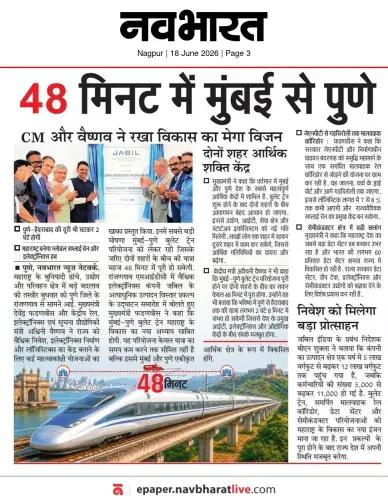
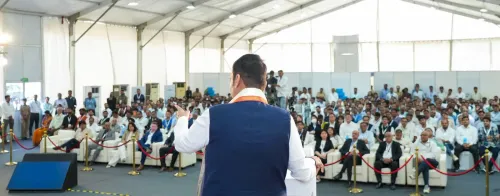
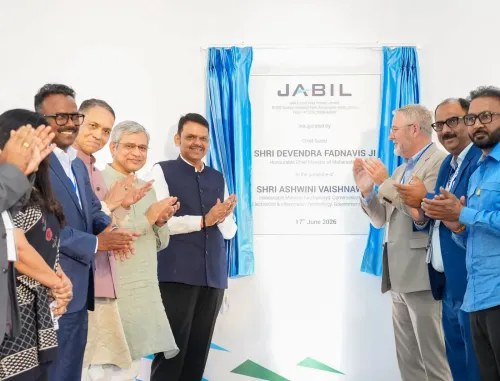
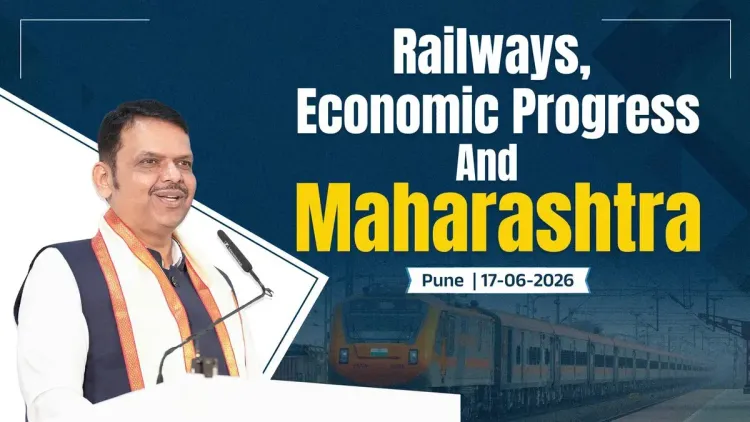
Maharashtra CM Devendra Fadnavis, at the inauguration of Jabil's new Pune manufacturing facility on 17 June 2026, declared that a high-speed rail-connected Mumbai-Pune economic corridor will strengthen India's technology sector, tagging PM Modi and Union Minister Ashwini Vaishnaw.
Key Takeaways
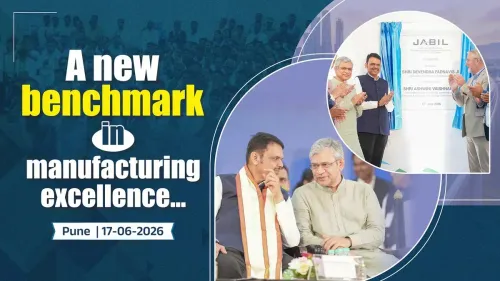
Maharashtra CM Devendra Fadnavis made the remarks on 17 June 2026 at the inauguration of Jabil's new manufacturing facility in Pune .
Fadnavis stated the Mumbai-Pune economic corridor , connected by high-speed rail, will contribute to India's entire technology sector.
The statement was addressed to Prime Minister Narendra Modi and Union Minister Ashwini Vaishnaw , signalling a push for central-government coordination.
Jabil is a US-headquartered electronics manufacturing services firm expanding operations in India.
The corridor vision aligns with the PM Gati Shakti framework and India's National Infrastructure Pipeline .
Pune is being positioned as an emerging electronics and technology manufacturing hub alongside established centres like Bengaluru and Chennai.
Maharashtra Chief Minister Devendra Fadnavis on Wednesday, 17 June 2026, declared that a high-speed rail link between Mumbai and Pune will significantly contribute to India's technology sector, speaking at the inauguration of a new manufacturing facility by global electronics firm Jabil in Pune. The remarks, addressed to Prime Minister Narendra Modi and Union Minister Ashwini Vaishnaw, signal the state government's intent to position the Mumbai-Pune corridor as an integrated industrial and technology belt.
Context
Fadnavis stated at the event: 'हाय-स्पीड रेल्वेने जोडलेला मुंबई-पुणे इकोनॉमिक कॉरिडोर भारताच्या तंत्रज्ञान क्षेत्रात योगदान देईल' — 'Connected by high-speed rail, the Mumbai-Pune economic corridor will contribute to the entire tech space of India.' The statement came at the inauguration of Jabil's new manufacturing facility in Pune, underscoring the convergence of infrastructure ambition and electronics manufacturing growth in the region. Jabil is a US-headquartered electronics manufacturing services company that has been expanding its footprint in India.
Policy Backdrop
The proposed Mumbai-Pune high-speed rail corridor is part of a broader national push to integrate economic zones through rapid transit, aligned with the PM Gati Shakti framework and India's National Infrastructure Pipeline. Maharashtra's industrial policy, updated between 2019 and 2020, had already emphasised multi-modal transport linkages for the Mumbai-Pune stretch to attract high-value manufacturing. India's first high-speed rail project — the Mumbai-Ahmedabad bullet train corridor — received cabinet approval in 2015, setting a precedent for linking rail infrastructure to industrial development.
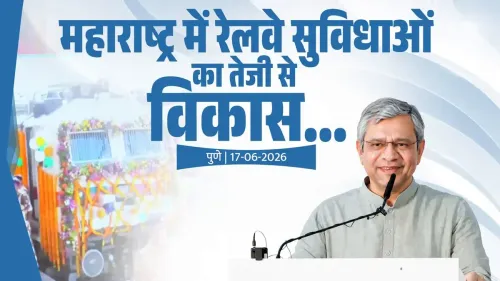
Union Minister Ashwini Vaishnaw, who oversees Railways, Communications, and Electronics and IT, was directly tagged by Fadnavis, signalling a call for central-government coordination on both the rail and the electronics manufacturing dimensions of this vision. The tagging of Prime Minister Modi reinforces that the corridor is being positioned as a project of national significance, not merely a state initiative.
Stakeholders and Impact
Pune has steadily emerged as a node for electronics manufacturing services and semiconductor-adjacent industries, complementing established tech clusters in Bengaluru and Chennai. The presence of a firm like Jabil — a global electronics manufacturing services leader — signals that international manufacturers are already acting on this potential, even as the high-speed rail project remains in planning stages. Maharashtra's IT and automotive clusters along the corridor stand to benefit from reduced transit times and improved logistics if the rail link materialises.
The broader strategy reflects a deliberate effort to decentralise technology manufacturing away from southern metros and towards Maharashtra's inland industrial centres, distributing economic growth more evenly across the country's western region.
What's Next
Attention will now turn to concrete progress on land acquisition and tendering for the Mumbai-Pune high-speed rail alignment, as the Chief Minister's public statements raise the political stakes for delivery. Follow-on investment announcements from electronics manufacturing services or semiconductor firms in the Pune region will be closely watched as indicators of whether the corridor vision is translating into ground-level momentum. The direct outreach to Vaishnaw and Modi suggests Fadnavis is seeking central government acceleration on both the rail and the industrial policy fronts simultaneously.
Point of View
Not just policy documents. By directly tagging the Railways and IT minister alongside the Prime Minister, the Chief Minister is publicly applying pressure on New Delhi to accelerate the Mumbai-Pune high-speed rail project, using Jabil's arrival as proof-of-concept for the corridor's industrial logic. This fits a pattern where state governments leverage marquee foreign investments to extract faster central clearances on connectivity projects. The broader arc points to an intensifying competition among Indian states to attract electronics manufacturing services capacity, with infrastructure pledges serving as the primary differentiator.
NationPress
16 Sept 2026
Frequently Asked Questions
What did CM Devendra Fadnavis say about the Mumbai-Pune corridor?
Fadnavis said that the Mumbai-Pune economic corridor, connected by high-speed rail, will contribute to the entire technology sector of India, speaking at Jabil's new Pune facility inauguration on 17 June 2026.
What is the Mumbai-Pune high-speed rail project?
The Mumbai-Pune high-speed rail is a proposed corridor intended to integrate the two cities into a single economic region, aligned with India's National Infrastructure Pipeline and the PM Gati Shakti framework.
What is Jabil and why is it significant for Pune?
Jabil is a US-headquartered electronics manufacturing services company that inaugurated a new facility in Pune on 17 June 2026, reinforcing Pune's emergence as a node for electronics and technology manufacturing in India.
Why did Fadnavis tag Ashwini Vaishnaw and Narendra Modi in his post?
Fadnavis tagged Union Minister Ashwini Vaishnaw, who oversees Railways and Electronics and IT, and Prime Minister Narendra Modi to signal a call for central-government coordination on both the high-speed rail project and electronics manufacturing policy.
How does the Mumbai-Pune corridor fit into India's infrastructure policy?
The corridor aligns with the PM Gati Shakti framework and India's National Infrastructure Pipeline, which seek to link high-speed rail with designated economic corridors to attract electronics and technology investments and decentralise growth from southern metros.