CM Fadnavis Inaugurates Jabil Facility in Pune, Eyes Electronics Hub
Synopsis
Maharashtra CM Devendra Fadnavis inaugurated Jabil's new electronics manufacturing facility in Ranjangaon, Pune, on June 17, 2026, alongside Union Minister Ashwini Vaishnaw, reinforcing the state's bid to become India's data centre and electronics manufacturing capital.
Key Takeaways
CM Devendra Fadnavis and Union Minister Ashwini Vaishnaw jointly inaugurated Jabil's new manufacturing facility in Ranjangaon, Pune on June 17, 2026 .
Maharashtra is positioning itself as 'India's Data centre capital,' with state policy backing for data centres, deep tech, and electronics manufacturing.
The facility is part of an electronics cluster granted to Pune under central government approvals credited to PM Narendra Modi and Union Minister Vaishnaw .
India's PLI scheme for electronics (notified April 2020 ) and Maharashtra's State Data Centre Policy (2022) form the policy backbone attracting investments like Jabil's .
Jabil's EVP and COO Andy Priestley and MD B.
Shukla were present, alongside MLAs Dilip Walse Patil and Dnyaneshwar Katke .
Maharashtra plans to re-engineer business processes to create a seamless experience for industrial partners in the high-tech sector.
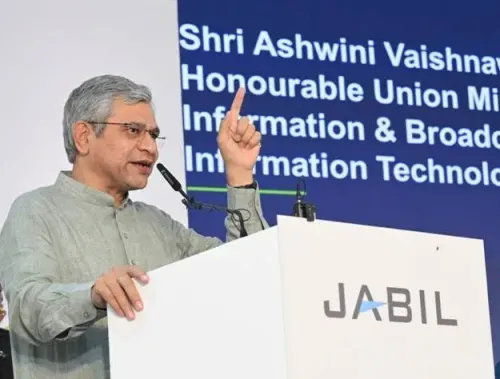
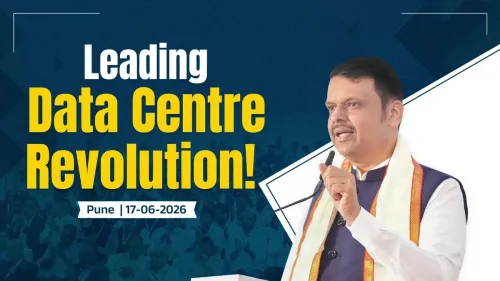
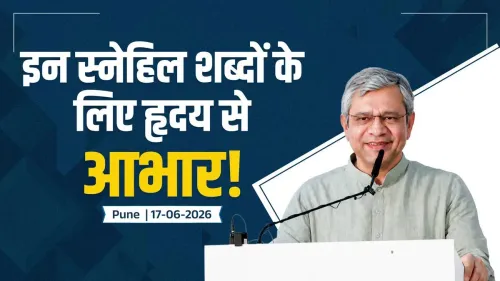
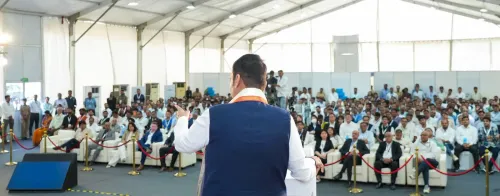
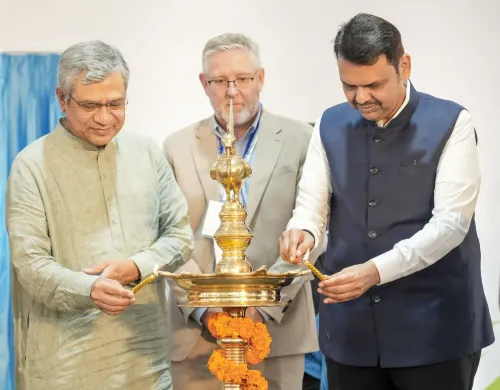
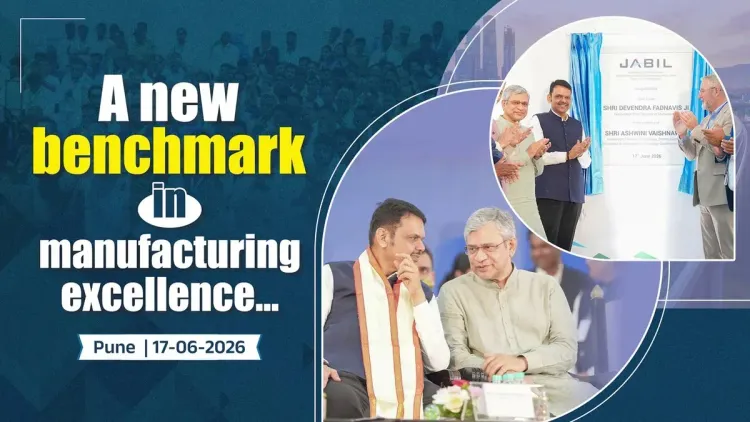
Maharashtra Chief Minister Devendra Fadnavis on Wednesday, June 17, 2026, inaugurated Jabil's new electronics manufacturing facility at Ranjangaon, Pune, alongside Union Minister for Electronics and IT Ashwini Vaishnaw, positioning Maharashtra as a national leader in high-tech manufacturing and data centre infrastructure.
Context
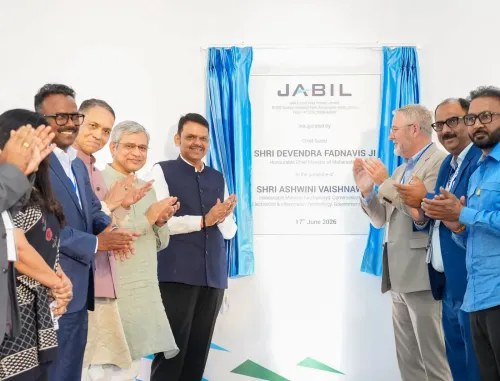
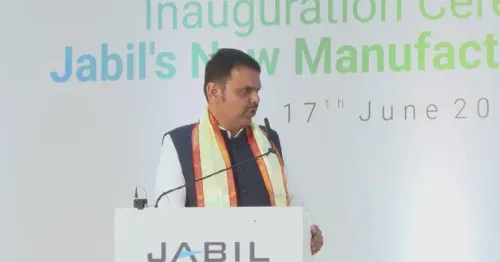
The inauguration ceremony saw CM Fadnavis unveil the stone plaque of the new facility, which he described as embodying 'the transformation happening in Maharashtra.' Speaking at the event, he said the state is 'emerging as India's Data centre capital' and that the government is 'determined to ensure that the entire ecosystem around data centres, deep tech and electronics flourishes in the state.'
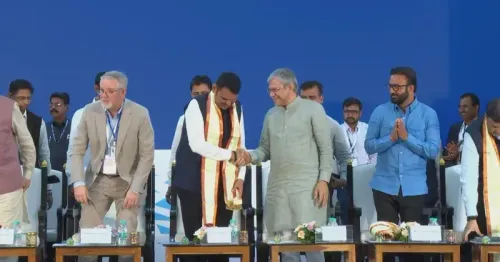
Also present at the event were MLA Dilip Walse Patil, MLA Dnyaneshwar Katke, Jabil's Executive Vice President and COO Andy Priestley, and Jabil Circuit India Pvt. Ltd.'s Managing Director B. N. Shukla, along with other dignitaries.
Policy Backdrop
Jabil, the US-headquartered electronics manufacturing services firm, has been expanding its India footprint with a focus on high-precision assembly and global supply chain integration. The Ranjangaon facility sits within an established MIDC industrial zone near Pune that has historically hosted automotive manufacturing and is now pivoting toward electronics.
The inauguration aligns with India's Production Linked Incentive (PLI) scheme for large-scale electronics manufacturing, notified in April 2020, which was designed to attract anchor investments and build domestic component ecosystems. Maharashtra's own State Data Centre Policy, released in 2022, offers incentives for hyperscale facilities and associated electronics manufacturing, giving the state a structured framework to court firms like Jabil.
CM Fadnavis credited Prime Minister Narendra Modi and Union Minister Ashwini Vaishnaw for 'giving the electronics cluster to Pune, which is set to revolutionise the nation's technology and manufacturing landscape.'
Stakeholders and Impact
The Ranjangaon facility is expected to benefit the broader Pune industrial workforce and deepen the city's credentials as a node for electronics and deep-tech investment. Maharashtra has been competing with Tamil Nadu and Gujarat as a preferred electronics manufacturing destination, leveraging central cluster approvals and state-level single-window clearances to attract global partners.
CM Fadnavis underscored the state's intent to 're-engineer business processes to create a seamless experience' for industrial partners, signalling continued administrative reforms aimed at ease of doing business in the high-tech sector.
What's Next
Maharashtra's ambition to serve as 'the powerhouse of India's growth story' in electronics will be tested by the pace of further state-level approvals for data-centre-linked electronics parks and the disbursement of central PLI incentives to anchor firms in the Pune cluster during 2026-27. The government's stated goal is to build a self-sustaining ecosystem connecting data centres, deep tech, and electronics manufacturing under one regional umbrella. Whether Pune's infrastructure and talent pipeline can absorb the scale of investment being channelled into the cluster will be the key variable to watch.
Point of View
A race that pits it directly against Tamil Nadu and Gujarat. CM Fadnavis's framing of the state as 'India's Data centre capital' is as much a branding exercise for future investors as it is a policy statement. The explicit gratitude toward the Centre for the Pune electronics cluster signals a cooperative Centre-state dynamic that Maharashtra's ruling alliance is keen to publicise ahead of further industrial announcements. The real test will be whether downstream supplier ecosystems and skilled-workforce pipelines develop fast enough to sustain anchor investments like Jabil's at scale.
NationPress
16 Sept 2026
Frequently Asked Questions
What is the Jabil facility inaugurated in Pune?
Jabil's new electronics manufacturing facility in Ranjangaon, Pune was inaugurated on June 17, 2026, by Maharashtra CM Devendra Fadnavis and Union Minister Ashwini Vaishnaw. It is a high-precision electronics assembly plant that forms part of the Pune electronics cluster approved by the central government.
Why is Maharashtra called India's data centre capital?
Maharashtra has positioned itself as India's data centre capital through its 2022 State Data Centre Policy, which offers incentives for hyperscale data centre facilities and associated electronics manufacturing, attracting significant investment to the state.
What is the PLI scheme for electronics in India?
India's Production Linked Incentive (PLI) scheme for large-scale electronics manufacturing was notified in April 2020 to attract anchor investments, reduce import dependence, and build a domestic component ecosystem by offering financial incentives linked to incremental production.
Who attended the Jabil facility inauguration in Ranjangaon?
The inauguration was attended by CM Devendra Fadnavis, Union Minister Ashwini Vaishnaw, MLA Dilip Walse Patil, MLA Dnyaneshwar Katke, Jabil's EVP and COO Andy Priestley, and Jabil Circuit India Pvt. Ltd.'s Managing Director B. N. Shukla.
What is Ranjangaon MIDC and why is it significant for electronics?
Ranjangaon MIDC is an established industrial zone near Pune that historically hosted automotive manufacturing. It is now emerging as a key electronics manufacturing hub following central government approvals for an electronics cluster in the Pune region.