Rahul Gandhi Calls 2024 Election 'Illegitimate' Over Voter Deletions
Synopsis
Leader of Opposition Rahul Gandhi declared the 2024 Lok Sabha election 'illegitimate,' alleging the Election Commission deleted one in every seven voters from rolls. He named an individual called Gyanesh, accusing him and associates of treason and vowing accountability.
Key Takeaways
Rahul Gandhi posted on 31 October 2026 accusing the Election Commission of India of deleting one in every seven voters from electoral rolls.
Gandhi called the 2024 Lok Sabha election 'illegitimate' on the basis of these alleged deletions.
He named an individual referred to as Gyanesh , accusing him and associates of treason ( deshdroh ) and promising action.
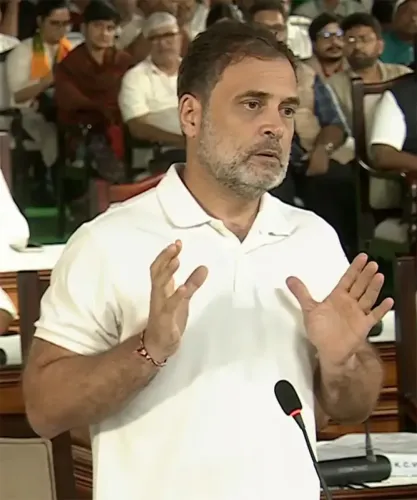
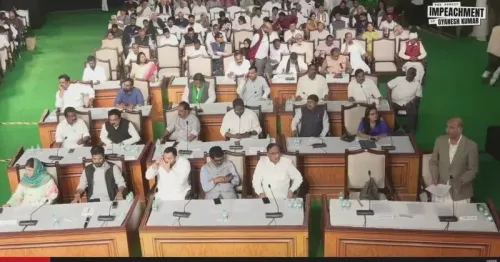
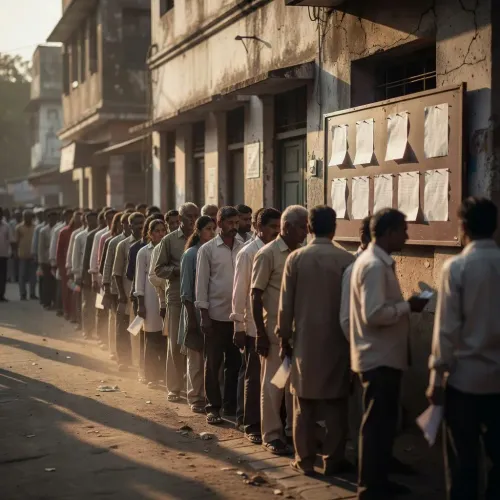
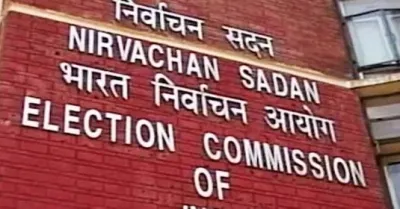
The post was accompanied by four images , suggesting documentary evidence was being cited.
The Election Commission had not issued a public response as of the time of publication.
Opposition scrutiny of electoral roll accuracy has been a recurring pattern since at least the 2019 general elections .
A charge as blunt as it gets: Congress leader Rahul Gandhi, Leader of the Opposition in the Lok Sabha, declared on Saturday, 31 October 2026 that the Election Commission of India has effectively admitted the 2024 general election was illegitimate — by erasing the names of one in every seven voters from electoral rolls.
In a pointed Hindi-language post on X, Gandhi wrote: 'हर 7 में से 1 वोटर मिटा कर चुनाव आयोग ने कबूल लिया है कि 2024 का चुनाव illegitimate था' — 'By deleting one in every seven voters, the Election Commission has admitted that the 2024 election was illegitimate.' He went further, naming an individual he referred to as Gyanesh, accusing him and unnamed associates of conspiracy and treason, and vowing that action against them 'will certainly happen.'
The Voter-Roll Allegation at the Centre of the Storm
The claim Gandhi is pressing — that a mass deletion of voter names from electoral rolls calls into question the legitimacy of the 2024 Lok Sabha elections — is among the most serious accusations an opposition leader can level at a constitutional body. Those elections, held across multiple phases between April and June 2024, returned the BJP-led NDA to power with a reduced majority. The result itself energised the opposition, which has since sought every institutional lever to contest the mandate's foundations.
Electoral roll accuracy has been a live grievance for Indian opposition parties stretching back at least to the 2019 general elections, when concerns over phantom deletions and additions first gained significant political traction. What Gandhi's post does today is escalate that grievance from procedural complaint to outright criminal allegation — using the word deshdroh (देशद्रोह), meaning treason.
Gyanesh, the Named Target — and What That Signals
Gandhi's explicit naming of 'Gyanesh' as a conspirator — without further elaboration in the post — is a calculated political signal. In Indian opposition discourse, naming an individual official in a public accusation of treason is designed to force either a denial, a clarification, or official silence, all of which carry political cost. The post was accompanied by four images, suggesting documentary or data-based evidence is being presented to back the voter-deletion claim.
The Election Commission has not, as of publication, issued a formal public response to this specific post. Under its constitutional mandate, the ECI is responsible for the preparation, publication, and continuous revision of electoral rolls — a process that involves both additions and deletions based on migration, death, and duplication audits.
A Pattern India's Democracy Watchers Know Well
This is not the first time the opposition has fired a broadside at the poll body in the aftermath of a national election. What makes Gandhi's framing distinctive this time is the leap from 'the rolls are inaccurate' to 'the election was therefore illegitimate' — a constitutional claim, not merely a political one. If pursued formally, it would likely invite parliamentary debate, possible legal challenges, and demands for an independent audit of voter list revisions in the lead-up to and following the 2024 poll.
The use of the word 'treason' raises the stakes considerably. Whether Gandhi's party intends to translate this social-media salvo into a formal parliamentary privilege motion, a petition before the Supreme Court, or a public campaign ahead of the next election cycle will determine whether this moment is a flash point or a turning point.
The Election Commission's response — or its absence — will be the next domino to watch.
Point of View
Congress is signalling it intends to pursue this beyond social media. The recurring nature of opposition-ECI friction post-election suggests this will likely become a parliamentary battleground, potentially shaping the narrative around electoral reform ahead of the next major poll cycle. The constitutional weight of calling an election 'illegitimate' means the charge cannot be quietly absorbed; it demands either a credible rebuttal or a formal inquiry.
NationPress
31 Oct 2026
Frequently Asked Questions
What did Rahul Gandhi claim about the 2024 election?
Rahul Gandhi claimed the Election Commission deleted one in every seven voters from electoral rolls, which he said amounts to an admission that the 2024 Lok Sabha election was illegitimate.
Who is Gyanesh that Rahul Gandhi mentioned?
Gandhi referred to an individual named Gyanesh in his post, accusing him and unnamed associates of conspiracy and treason in connection with alleged voter deletions, though further details were not elaborated in the post itself.
What is the Election Commission's role in managing voter lists?
The Election Commission of India is the constitutional body responsible for preparing and continuously revising electoral rolls, including additions and deletions based on migration, death, and deduplication audits.
Has the opposition raised voter roll concerns before?
Yes. Indian opposition parties have raised concerns about the accuracy of electoral rolls since at least the 2019 general elections , making it a recurring point of dispute between political parties and the poll body.
What could happen next after Rahul Gandhi's post?
Possible follow-up actions include a formal response from the Election Commission , parliamentary debate on electoral roll management, or legal challenges demanding an independent audit of voter list revisions around the 2024 elections.