Ramaswamy Eyes Ohio Governor's Race, Vows Property Tax and Energy Bill Cuts

Synopsis
Entrepreneur Vivek Ramaswamy posted on X signalling an Ohio gubernatorial bid, promising immediate property tax cuts and lower electric bills, framing both as executive-level deliverables that only require 'a competent leader' to achieve.
Key Takeaways
Vivek Ramaswamy publicly pledged on October 31, 2026 to deliver property tax relief and lower electric bills as governor of Ohio .
He framed both as immediately actionable at the state level, requiring no federal intervention — only executive competence.
No formal gubernatorial filing has been confirmed; detailed policy proposals have not yet been released.
Ramaswamy previously served as co-lead of the DOGE advisory effort and ran in the 2024 Republican presidential primary .
The post marks his sharpest pivot yet from national governance to Ohio statehouse politics , anchoring his pitch on household economic relief.
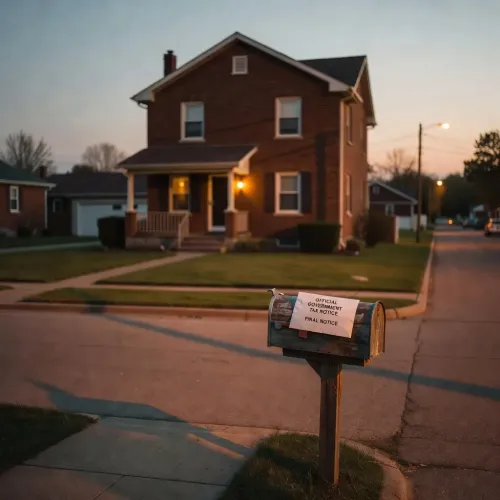
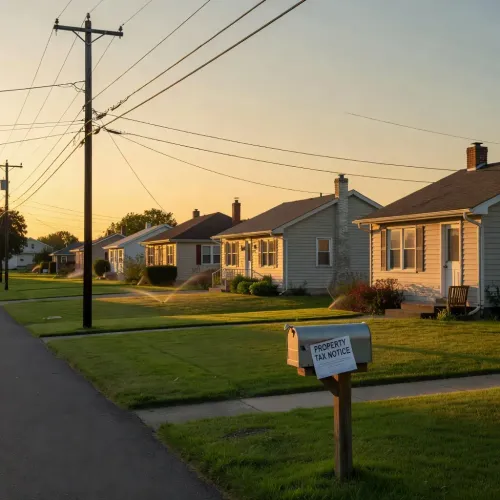
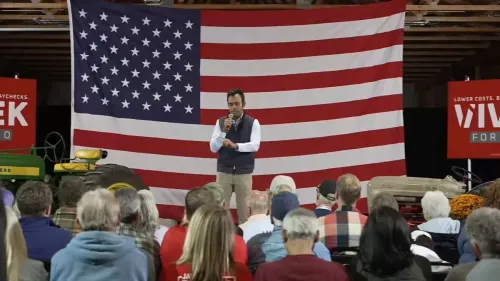
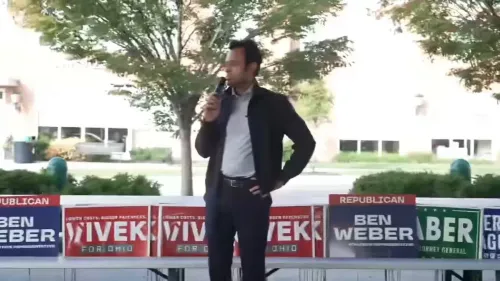
Two kitchen-table issues — property taxes and electric bills — are now the centrepiece of entrepreneur Vivek Ramaswamy's clearest signal yet that he intends to run for Governor of Ohio. In a post on X on Saturday, October 31, 2026, Ramaswamy declared that both forms of relief are 'absolutely' within a governor's reach — and that he would deliver them 'immediately.'
The Two Promises and Why Ohio Voters Are Listening
Ramaswamy's pitch is deliberately simple: a governor does not need congressional approval or federal funding to move on property tax relief and lower electric bills. Both are governed substantially at the state level — through the Ohio General Assembly, the Public Utilities Commission of Ohio, and the governor's own executive authority. The implication is that inaction has been a choice, not a constraint.
Ohio has seen persistent pressure on household budgets from rising property assessments and utility rates, dynamics that track closely with national trends hitting Midwestern homeowners hard. For voters in a state where manufacturing employment and fixed-income retirees loom large, those two line items on a monthly bill are as politically potent as any national debate.
From DOGE Co-Lead to Columbus — The Ramaswamy Trajectory
The post is the sharpest geographic and policy pivot Ramaswamy has made since exiting his role as co-lead of the Department of Government Efficiency (DOGE) advisory effort in Washington. Having built his national profile on fiscal efficiency and regulatory rollback at the federal level, he is now translating that brand directly into the language of Ohio statehouse politics — lower bills, faster action, competent execution.
His framing — 'all it takes is a competent leader' — is a pointed contrast with incumbents and rivals without naming them. It is the same rhetorical architecture he deployed during his 2024 Republican presidential campaign: define the problem as a leadership failure, position himself as the corrective. The difference now is the stakes are state-sized, and the voters he needs to convince live in Columbus, Cleveland, and Cincinnati, not Iowa caucus halls.
What a Formal Candidacy Would Actually Require
No formal gubernatorial filing has been confirmed, and Ramaswamy has not yet published detailed tax or utility reform proposals. The credibility test will come quickly: Ohio's property tax system involves county auditors, the state legislature, and homestead exemption structures, while utility rate-setting runs through a regulatory commission — none of which a governor can rewrite by executive order alone. Translating the pledge into policy architecture will define whether this is a campaign platform or a political positioning exercise.
What is already clear is that Ramaswamy is staking his opening argument on economic relief, not culture-war terrain — a calibration that could broaden his coalition in a competitive swing state.
If Ohio taxpayers were waiting for a candidate to put their monthly bills at the top of the agenda, they now have one raising his hand. The next question is whether the hand comes with a plan.
Frequently Asked Questions
Is Vivek Ramaswamy running for Governor of Ohio in 2026?
Ramaswamy has not filed a formal candidacy as of October 31, 2026, but his post pledging immediate property tax and electric bill relief as governor is his strongest public signal yet of an intended run.
What is Vivek Ramaswamy's plan for Ohio property taxes?
Ramaswamy has pledged to deliver property tax relief as one of two immediate affordability priorities if elected governor, though detailed proposals have not yet been published.
Can an Ohio governor lower electric bills without the legislature?
The governor of Ohio has significant influence over the Public Utilities Commission of Ohio and can use executive appointments and regulatory priorities to press for rate relief, but major structural changes typically require legislative action.
What is Vivek Ramaswamy's political background?
Ramaswamy is the founder of Strive Asset Management, ran in the 2024 Republican presidential primary, and served as co-lead of the Department of Government Efficiency advisory effort under the incoming Trump administration.
Why is Ohio a competitive state for a Republican gubernatorial race?
Ohio is a Midwestern swing state with a large working-class and suburban electorate; issues like property taxes, manufacturing jobs, and utility costs carry outsized political weight there, making economic-relief messaging particularly potent.