CM Himanta Shares Tiwa Ancestor Ritual on Social Media
Synopsis
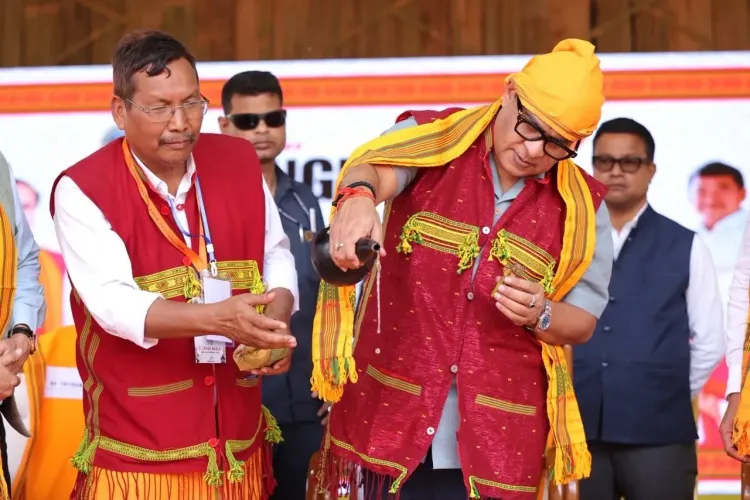
Assam CM Himanta Biswa Sarma spotlighted a sacred Tiwa community ritual on 31 October 2026, describing offerings of local rice wine, Chula, and food to ancestor deity Ramsa Devota — calling it a proud act of carrying indigenous traditions forward.
Key Takeaways
Assam CM Himanta Biswa Sarma shared details of a sacred Tiwa community offering on 31 October 2026 .
The ritual involves offering local rice wine, Chula , and food to honour ancestors and guardian deity Ramsa Devota .
The Tiwa (also known as Lalung ) are an indigenous tribe in Assam with distinct animist traditions.
Sarma described the act as 'proud to carry our indigenous traditions forward,' indicating personal participation.
The post aligns with Assam's broader state-level efforts to document and promote smaller indigenous communities.
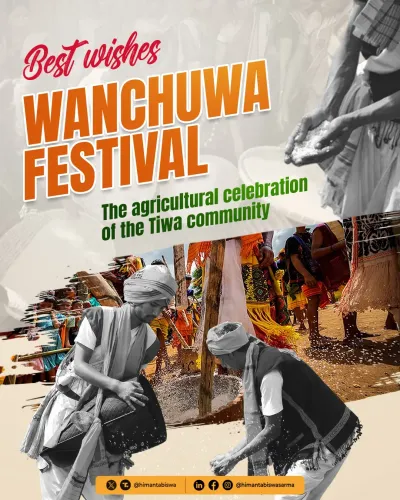
An ancient ritual of rice wine, fire, and reverence — Assam Chief Minister Himanta Biswa Sarma on Saturday, 31 October 2026, shared a glimpse of a sacred offering practised by the Tiwa community, one of Assam's most distinct indigenous tribes, drawing attention to a living tradition that rarely makes it to mainstream discourse.
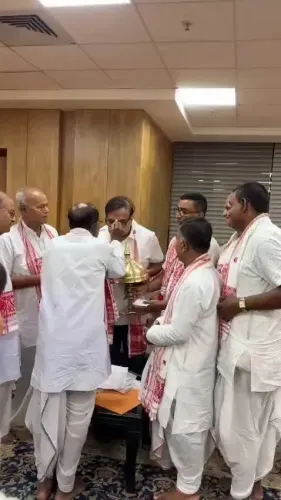
In the post, Sarma described a ceremonial practice in which local rice wine, Chula, and food are offered to honour ancestors and guardian deities — most notably Ramsa Devota — to seek their blessings. 'Proud to carry our indigenous traditions forward,' he wrote, positioning himself not merely as an observer but as a participant in the custom.
Who are the Tiwa, and what makes this ritual significant?
The Tiwa — also known as the Lalung — are an indigenous tribal community concentrated primarily in Assam, with a distinct social fabric, oral tradition, and cosmology centred on nature and ancestral spirits. Their ritual practices, including offerings to guardian deities like Ramsa Devota, form the spiritual backbone of community life, marking the passage of seasons, harvests, and familial milestones.
The offering described — rice wine, Chula, and food placed before the deity — is a form of propitiation that bridges the living and the ancestral, a practice that anthropologists would recognise as deeply embedded in the animist traditions of Assam's hill and plains tribes. It is not performative ceremony. It is community memory, enacted.
Assam's tribal heritage and the politics of cultural visibility
Assam is home to dozens of indigenous communities, each with a constellation of rituals, languages, and belief systems. State leaders have increasingly turned to social media to spotlight these traditions — a dual act of cultural pride and political outreach to tribal constituencies that collectively wield significant electoral weight in the state.
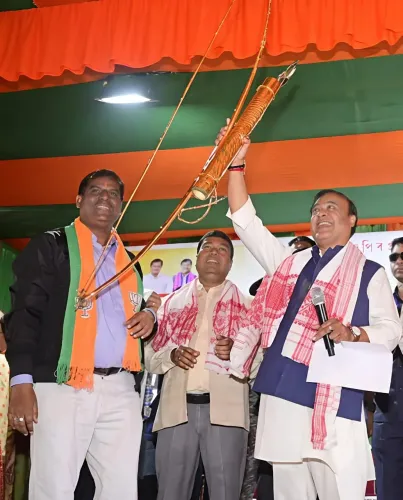
Sarma, as both Chief Minister and convenor of the North-East Democratic Alliance (NEDA), has consistently framed Assam's identity around the coexistence of its many ethnic and tribal communities. Highlighting Tiwa customs fits a broader pattern of state-level efforts to document and promote indigenous practices among smaller, often under-represented communities.
For the Tiwa, visibility on a platform like this — shared by the Chief Minister to a national audience — is both recognition and record: a small but meaningful act of preservation in an era when many such traditions are quietly fading.
Traditions that survive in practice rarely need to be rescued — but they always need to be seen.
Point of View
Cultural visibility for tribal communities serves both symbolic and electoral purposes — Tiwa constituencies across Assam's plains and hills are not insignificant. At a deeper level, such posts contribute to a digital archive of living traditions that formal cultural institutions have been slow to build. The real test will be whether this visibility translates into tangible heritage documentation or community-welfare policy.
NationPress
31 Oct 2026
Frequently Asked Questions
Who are the Tiwa community in Assam?
The Tiwa — also known as the Lalung — are an indigenous tribal group primarily based in Assam, with their own distinct language, customs, and animist spiritual practices centred on ancestor veneration and guardian deities.
What is the Tiwa offering ritual that CM Himanta described?
The ritual involves placing local rice wine, Chula, and food before ancestors and guardian deities such as Ramsa Devota to seek their blessings — a form of propitiation that is central to Tiwa spiritual life.
Who is Ramsa Devota in Tiwa tradition?
Ramsa Devota is a guardian deity in Tiwa belief. Offerings are made to this deity alongside ancestor spirits during sacred community ceremonies to seek protection and blessings.
Why did Himanta Biswa Sarma post about Tiwa traditions?
Sarma shared the post to highlight Assam's indigenous heritage and express pride in carrying forward Tiwa customs, in line with his broader positioning of Assam's identity as rooted in its many ethnic and tribal communities.
What is Chula in the Tiwa ritual context?
In the context of Sarma's post, Chula refers to an item offered alongside local rice wine and food during the sacred Tiwa community ceremony honouring ancestors and guardian deities.