CM Himanta greets Tiwa community on Wanchuwa Festival
Synopsis
Assam Chief Minister Himanta Biswa Sarma greeted the Tiwa community on the Wanchuwa harvest festival on 11 July 2026, highlighting the state's Indigenous and Tribal Faith and Culture Department as the vehicle for preserving the region's tribal legacies.
Key Takeaways
Assam CM Himanta Biswa Sarma extended greetings to the Tiwa community on Wanchuwa Festival on 11 July 2026 .
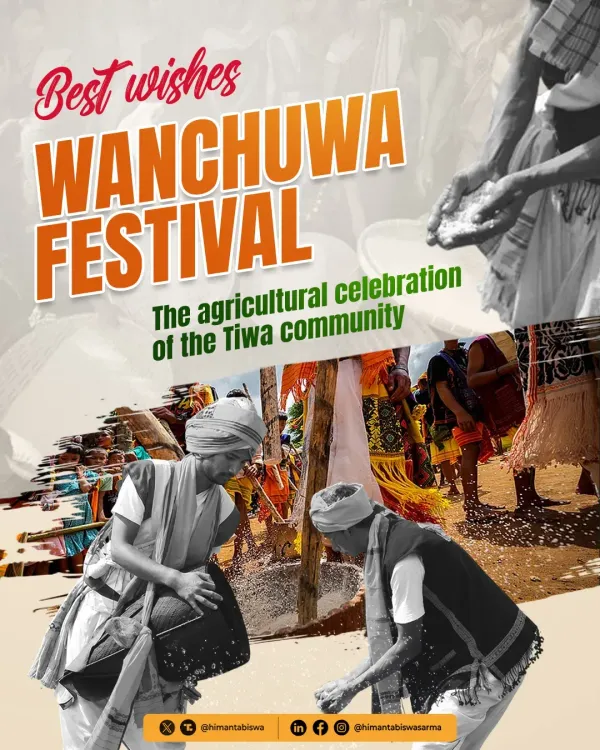
The Wanchuwa Festival is a traditional harvest celebration of the Tiwa (Lalung) community of central Assam , marking gratitude to nature and community bonding.
The Assam government's Indigenous and Tribal Faith and Culture Department , restructured around 2021 , is the nodal body for preserving tribal festivals and customs.
Similar state outreach has been extended to Bodo , Karbi , and Mising communities as part of a broader Northeast cultural preservation drive.
The next round of departmental grants and potential new festival recognitions are expected ahead of the 2026-27 Assam budget session.
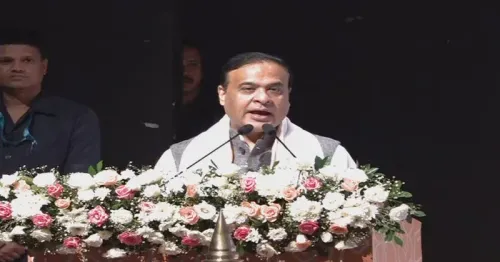
Assam Chief Minister Himanta Biswa Sarma on Saturday, 11 July 2026, extended greetings to the Tiwa community on the occasion of the Wanchuwa Festival, describing the harvest celebration as 'a beautiful reflection of our region's rich heritage' and reaffirming his government's commitment to preserving indigenous cultural traditions through a dedicated state department.
Context
The Wanchuwa Festival is a traditional harvest festival observed by the Tiwa — also known as the Lalung — an indigenous tribal community concentrated in the central districts of Assam. The festival centres on gratitude for a bountiful crop season, community bonding, and rituals honouring nature. It is among the several distinct tribal celebrations that mark the cultural calendar of Northeast India.
The Tiwa community maintains a distinct language and set of customs, and the festival serves as a living expression of oral traditions and agrarian identity that have been passed down across generations in the region.
Policy Backdrop
The Assam government established and restructured the Indigenous and Tribal Faith and Culture Department around 2021 — coinciding with CM Sarma's assumption of office — with a mandate to document and promote tribal festivals, languages, and customary practices across the state.
In his post, CM Sarma specifically cited this department as the institutional vehicle through which the government is working to 'preserve these glorious legacies of our State.' The broader policy approach in Assam since 2016 has involved extending similar recognition and outreach to communities including the Bodo, Karbi, and Mising peoples, integrating tribal festivals into state tourism and education frameworks.
Stakeholders and Impact
The Tiwa community stands as the primary stakeholder in this acknowledgement, with the Chief Minister's public greeting lending official visibility to a festival that might otherwise remain confined to community-level observance. For indigenous groups across Assam, state recognition of their festivals carries significance for cultural confidence and resource access.
The Indigenous and Tribal Faith and Culture Department functions as the nodal body connecting community cultural practitioners with government support, including documentation initiatives and grants for tribal cultural events. Advocacy groups working on tribal rights and heritage preservation in the Northeast have broadly welcomed such institutional attention to non-mainstream faiths and customs.
What's Next
Observers will watch for the next round of departmental grants for tribal cultural documentation and any new festival recognitions that may be announced ahead of the 2026-27 Assam budget session. The government's sustained engagement with the cultural calendar of diverse tribal communities will be a marker of how the department's mandate translates into on-ground support beyond ceremonial greetings.
With Assam home to dozens of distinct indigenous communities, the pattern of official outreach during harvest and seasonal festivals is likely to continue as a visible thread in the state's cultural governance strategy.
Point of View
Using the Indigenous and Tribal Faith and Culture Department as institutional proof of intent rather than mere symbolism. For the BJP-led government, extending official recognition to harvest festivals of communities like the Tiwa serves a dual purpose: reinforcing cultural nationalism at the grassroots and consolidating electoral goodwill among indigenous voter blocs in central Assam. The broader Northeast cultural preservation drive also carries a strategic dimension, as NEDA's convener seeks to deepen the alliance's social base across the region's diverse tribal constituencies. Whether departmental resources match the rhetorical commitment will be the real test as the 2026-27 budget session approaches.
NationPress
10 Oct 2026
Frequently Asked Questions
What is the Wanchuwa Festival?
The Wanchuwa Festival is a traditional harvest festival of the Tiwa (Lalung) community of Assam, celebrating a bountiful crop season through rituals, community bonding, and expressions of gratitude to nature.
Who are the Tiwa or Lalung people of Assam?
The Tiwa, also known as Lalung, are an indigenous tribal community primarily settled in the central districts of Assam. They have a distinct language and cultural customs, including the Wanchuwa harvest festival.
What is Assam's Indigenous and Tribal Faith and Culture Department?
It is an Assam government department, restructured around 2021, tasked with documenting and promoting the tribal festivals, languages, and customary practices of the state's indigenous communities.
What did CM Himanta Biswa Sarma say about Wanchuwa Festival?
CM Sarma described Wanchuwa as 'a beautiful reflection of our region's rich heritage' and said the government is working through the Indigenous and Tribal Faith and Culture Department to preserve such legacies.
Which tribal communities does the Assam government support culturally?
Beyond the Tiwa community, the Assam government has extended similar cultural recognition and outreach to Bodo, Karbi, and Mising communities as part of a broader Northeast cultural preservation drive.