CM Himanta Reaffirms Assam Govt's Push for Indigenous Development
Synopsis
Assam Chief Minister Himanta Biswa Sarma on 3 July 2026 pledged his government's commitment to developing all indigenous communities in the state, reinforcing a core BJP governance plank ahead of the 2026 assembly elections and continuing a policy lineage rooted in the 1985 Assam Accord.
Key Takeaways
Himanta Biswa Sarma publicly reaffirmed the Assam government's commitment to the development of all indigenous communities on 3 July 2026 .
The statement builds on a dual-track BJP approach since 2016 : anti-infiltration measures alongside targeted development packages for native groups.
The Assam Accord of 1985 remains the foundational policy framework for protecting indigenous Assamese interests in the state.
The updated National Register of Citizens (NRC) , published in 2019 , was a landmark step in addressing indigenous demographic concerns.
With 2026 Assam assembly elections approaching, the statement carries clear electoral significance, as indigenous communities form a key voter bloc.
As NEDA convenor, Sarma's stance on indigenous rights shapes the political conversation across the broader Northeast region.
Assam Chief Minister Himanta Biswa Sarma on Friday, 3 July 2026, reaffirmed his government's commitment to the development of the state's indigenous communities, signalling continued policy focus on tribal and native Assamese populations ahead of the 2026 state assembly elections. The statement, shared on his official X account, comes as Assam's BJP-led administration has increasingly tied its governance narrative to the protection and upliftment of indigenous groups.
Context
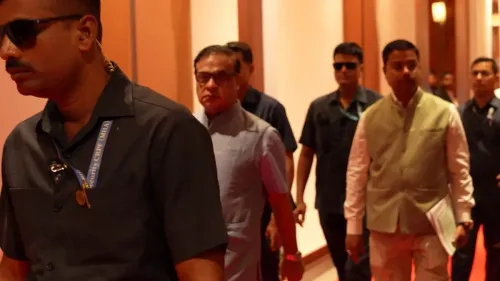
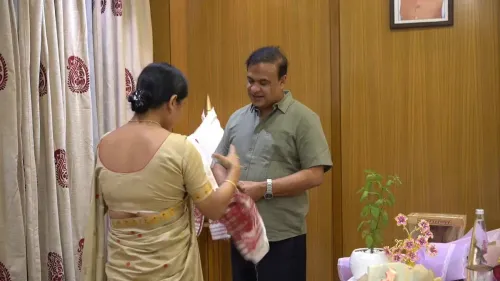
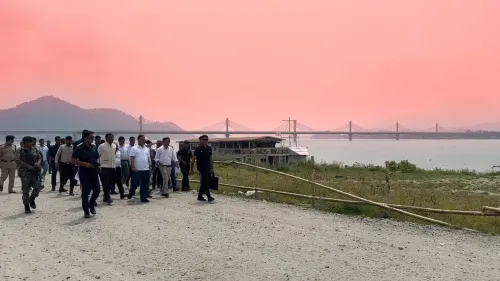
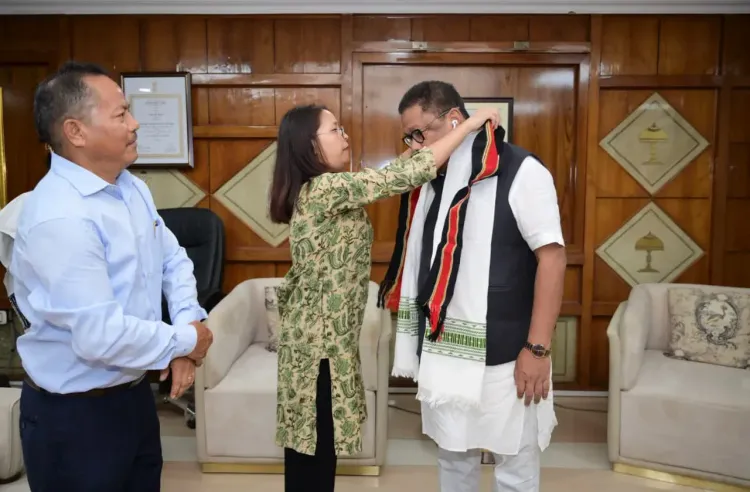
In his post, Sarma wrote: 'Our Govt is committed to ensure the development of all our indigenous communities and fulfill their growth aspirations.' The message was accompanied by three images, underscoring what appears to be a ground-level engagement or scheme-related event, though the specific occasion was not detailed in the post. The Chief Minister's assertion places indigenous welfare at the centre of the government's public communication at a politically sensitive juncture.
Assam is home to a diverse mosaic of indigenous communities — including plains tribes such as the Bodos, hill tribes, and the broader Assamese-speaking population — each with distinct land, cultural, and economic concerns. The state has a long history of tensions over identity and demographic change, making any commitment to indigenous development a politically resonant signal.
Policy Backdrop
The roots of indigenous protection policy in Assam trace back to the Assam Accord of 1985, a landmark agreement between the central government and leaders of the Assam agitation that established a framework for detecting and deporting post-1971 illegal immigrants and safeguarding the interests of native communities. The accord remains a touchstone in Assam's political discourse.
Since 2016, the BJP-led government in Assam has pursued a dual-track approach: stringent anti-infiltration measures on one hand, and targeted development packages for indigenous communities on the other. The publication of the updated National Register of Citizens (NRC) in 2019 was a key milestone in this broader effort to address indigenous demographic concerns. Sarma, who became Chief Minister in 2021, has continued and deepened this policy orientation, framing development spending for native groups as both a rights issue and a governance priority.
Stakeholders and Impact
The primary beneficiaries of this policy direction are Assam's indigenous Assamese communities, plains tribal groups, and hill tribes, whose demands range from land rights and cultural preservation to employment and educational access. Advocacy organisations representing these groups have long called for dedicated budgetary allocations and legislative protections, and the Chief Minister's statement is likely to be read as a response to those expectations.
The commitment also carries electoral weight. With the 2026 Assam assembly elections on the horizon, consolidating support among native populations — who form a decisive voter bloc in numerous constituencies — is a strategic imperative for the ruling BJP. As convenor of the North-East Democratic Alliance (NEDA), Sarma also shapes the broader regional political conversation around indigenous identity across Northeast India, giving statements of this nature an influence that extends beyond Assam's borders.
What's Next
Observers will watch closely for concrete policy announcements that follow this public commitment — particularly any new indigenous development schemes in the Assam state budget or legislative measures tied to land and cultural rights. The government's ability to translate stated commitment into measurable outcomes — in employment, infrastructure, and social indicators for tribal and indigenous populations — will be a key benchmark by which communities and political opponents alike will assess its record ahead of the elections.
Any fresh scheme rollouts or intergovernmental agreements targeting indigenous welfare in the coming weeks would be seen as a direct follow-through on the Chief Minister's renewed pledge, and could set the tone for the BJP's campaign narrative in Assam through 2026.
Point of View
Sarma is also speaking to a wider Northeast audience where demographic anxiety and indigenous rights are dominant political themes. The real test will be whether concrete scheme announcements follow, or whether the pledge remains at the level of political signalling.
NationPress
2 Oct 2026
Frequently Asked Questions
What did Assam CM Himanta Biswa Sarma say about indigenous communities?
On 3 July 2026, Sarma stated that his government is committed to ensuring the development of all indigenous communities in Assam and fulfilling their growth aspirations.
Which indigenous communities live in Assam?
Assam is home to a diverse range of indigenous communities including plains tribes such as the Bodos, various hill tribes, and the broader indigenous Assamese-speaking population, each with distinct cultural, land, and economic concerns.
What is the Assam Accord and how does it relate to indigenous rights?
The Assam Accord of 1985 is a landmark agreement between the central government and Assam agitation leaders that established a framework for detecting and deporting post-1971 illegal immigrants and safeguarding the interests of indigenous communities.
How has the BJP government in Assam approached indigenous development?
Since 2016, the BJP-led government in Assam has pursued a dual-track approach — stringent anti-infiltration measures alongside targeted development packages for indigenous communities — to consolidate electoral support among native populations.
What is NEDA and what is Himanta Biswa Sarma's role in it?
NEDA, the North-East Democratic Alliance, is a BJP-led political alliance of regional parties across Northeast India. Himanta Biswa Sarma serves as its convenor, giving him significant influence over the region's political direction.