Tamil Nadu CM Vijay Makes Surprise Inspection of Coimbatore Police Station
Synopsis
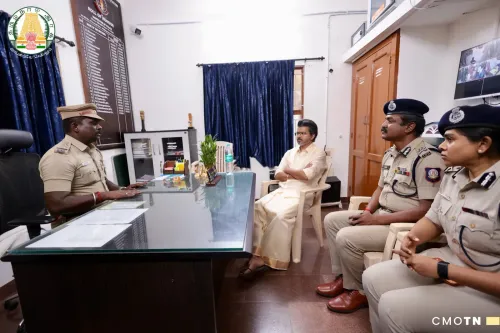
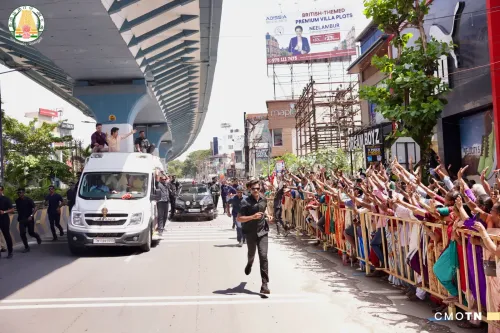
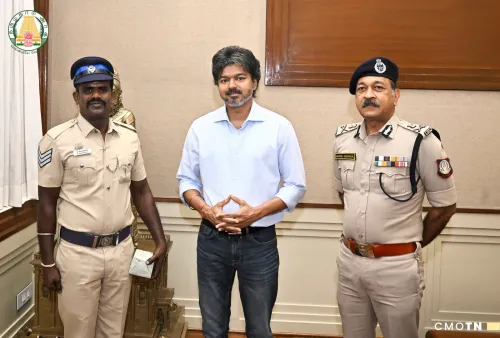
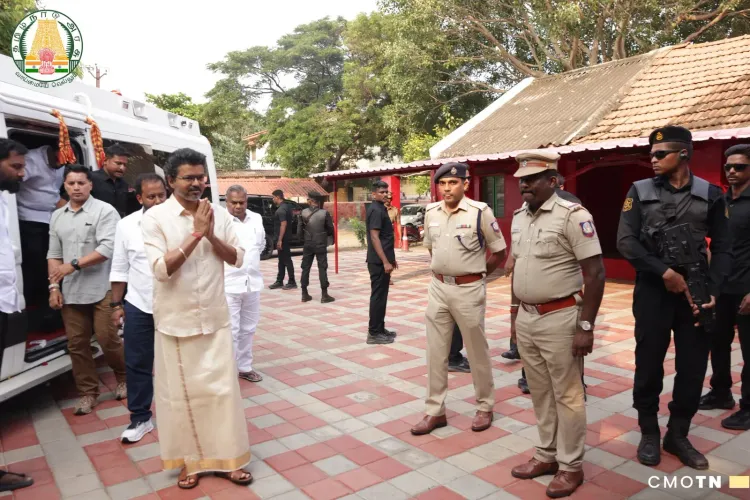
Tamil Nadu Chief Minister C. Joseph Vijay made an unannounced inspection of Karumathampatti Police Station in Coimbatore district on 3 November 2026, diverting en route to the airport after a government function in Perundurai, Erode district, to review station operations firsthand.
Key Takeaways
Joseph Vijay conducted a surprise inspection of Karumathampatti Police Station, Coimbatore on 3 November 2026 .
The visit was unannounced and took place while the CM was travelling from a government event in Perundurai, Erode district to Coimbatore Airport .
The CM personally reviewed the station's operations and conducted an on-the-spot assessment of its functioning.
Karumathampatti is a rapidly growing industrial-residential locality on Coimbatore's outskirts, placing significant demands on local policing.
Surprise inspections of police stations and government offices are a standard administrative practice used by Tamil Nadu chief ministers across party lines.
Coimbatore and Erode form a key economic corridor in western Tamil Nadu, making governance attention to the region strategically significant.
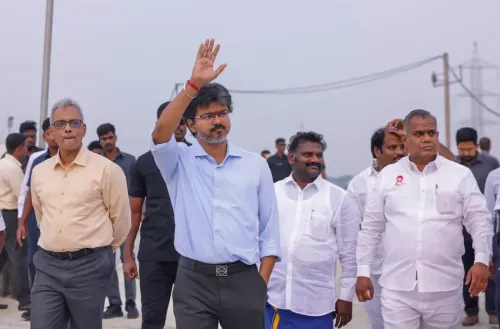
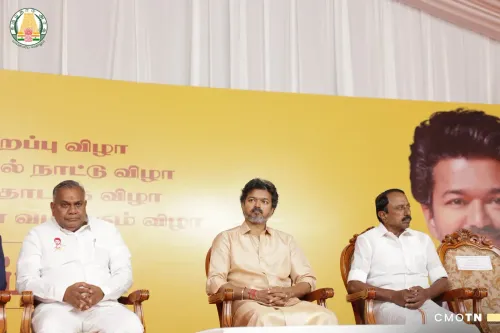
A chief minister who had just attended an official ceremony did not head straight to the airport. Instead, he stopped — unannounced — at a neighbourhood police station. The Chief Minister's Office of Tamil Nadu announced on 3 November 2026 that Chief Minister Thiru C. Joseph Vijay conducted a surprise inspection of Karumathampatti Police Station in Coimbatore district while en route to Coimbatore Airport after a government function in Perundurai, Erode district.
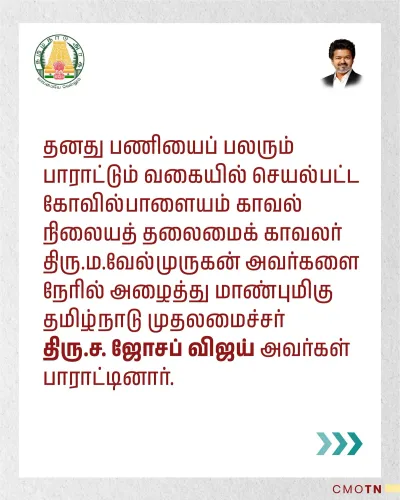
The unscheduled stop, confirmed by the CMO's official X handle, saw the Chief Minister personally visit the station, review its operations, and conduct an on-the-spot assessment — a move that signals direct executive attention to ground-level law-enforcement infrastructure in one of Tamil Nadu's largest industrial corridors.
A detour through Karumathampatti
Karumathampatti is a rapidly urbanising locality on Coimbatore's outskirts, sitting at the intersection of industrial expansion and rising residential density. A police station in this zone handles a complex mix of factory-area policing, traffic management, and community law-and-order demands. That the CM chose to stop here — without prior notice — rather than at a high-profile urban precinct underscores the administrative intent: see conditions as they actually are, not as they are staged to appear. Such surprise inspections are a recognised governance instrument deployed by chief ministers across Tamil Nadu irrespective of the ruling dispensation. The logic is straightforward — unannounced visits reveal staffing levels, record-keeping, infrastructure upkeep, and the general readiness of a station without the benefit of advance preparation.Erode to Coimbatore: the western Tamil Nadu circuit
The day's itinerary itself tells a governance story. Perundurai in Erode district — where the Chief Minister attended the earlier government function — is a major industrial township, home to one of Tamil Nadu's prominent SIPCOT industrial estates. The route from Perundurai to Coimbatore Airport cuts through a belt where industrial growth, cross-border trade with Karnataka, and urban sprawl place sustained pressure on local administration and policing. Coimbatore and Erode districts together form a critical economic arc in western Tamil Nadu, accounting for significant share of the state's textile, engineering, and agricultural output. Administrative attention to this corridor — including police infrastructure — carries both economic and security dimensions.What follows a surprise inspection
The immediate question after any such unannounced visit is what it triggers. Standard practice following a CM-level inspection includes a district administration review, possible directives on staffing or infrastructure gaps, and a follow-up report to the Chief Minister's Office. Whether today's stop at Karumathampatti results in specific orders — on station facilities, personnel deployment, or local law-and-order issues — will be the real measure of its administrative weight. One unscheduled stop, one public signal: in Tamil Nadu's western districts, the Chief Minister is watching.Point of View
Particularly useful in the early or mid-term phase of a government. For the western Tamil Nadu corridor, which blends industrial clout with complex policing demands, a CM-level visit to a local police station elevates the issue of ground-level law enforcement into the political discourse. The choice of Karumathampatti — an expanding peri-urban zone rather than a central city precinct — suggests either intelligence-driven targeting or a deliberate pivot toward infrastructure gaps in high-growth localities. The real governance dividend depends entirely on what directives, if any, emerge from the CMO in the days that follow.
NationPress
4 Nov 2026
Frequently Asked Questions
Where did Tamil Nadu CM Vijay conduct a surprise inspection on 3 November 2026?
Chief Minister C. Joseph Vijay made an unannounced inspection of Karumathampatti Police Station in Coimbatore district on 3 November 2026 while travelling to Coimbatore Airport.
Why did Tamil Nadu CM visit Karumathampatti Police Station?
The Chief Minister conducted an on-the-spot review of the police station's operations and functioning. Such surprise inspections are a standard administrative tool used to assess ground-level law-enforcement readiness without advance preparation.
What government event did CM Vijay attend in Erode before the Coimbatore inspection?
The Chief Minister attended a government function in Perundurai, Erode district, before proceeding to Coimbatore Airport and making the unscheduled stop at Karumathampatti Police Station.
Is Karumathampatti part of Coimbatore city?
Karumathampatti is a fast-growing locality on the outskirts of Coimbatore, situated within Coimbatore district, characterised by industrial expansion and rising residential density.
What happens after a Chief Minister inspects a police station in Tamil Nadu?
Typically, such visits are followed by a district administration review, possible directives on staffing or infrastructure, and a follow-up report to the Chief Minister's Office, though specific outcomes depend on what the CM observed during the visit.