CM Vijay Orders High-Level Panel to Overhaul Tamil Nadu Prison Security
Synopsis
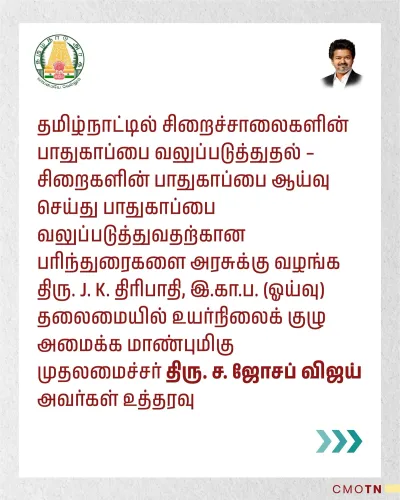
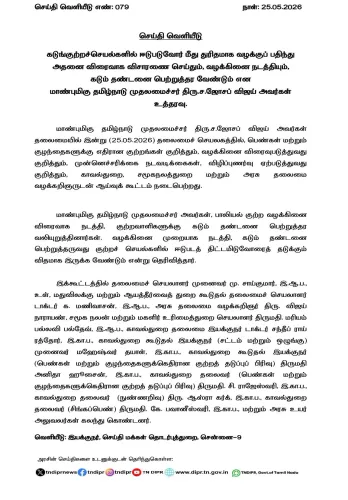
Tamil Nadu Chief Minister C. Joseph Vijay has constituted a High-Level Committee chaired by retired IPS officer J.K. Tripathy to review prison security statewide and submit recommendations for strengthening it.
Key Takeaways
Joseph Vijay ordered the formation of a High-Level Committee to review prison security in Tamil Nadu on 2 November 2026 .
Retired IPS officer J.K.
Tripathy , former Chennai City Police Commissioner, will chair the committee.
The committee is tasked with reviewing current prison security and submitting recommendations for improvement.
The Tamil Nadu Prisons Department and its facilities across the state fall within the committee's scope of review.
Key stakeholders include prison staff, inmates , and the Tamil Nadu Police .
The committee's eventual report could trigger fresh government orders, infrastructure upgrades, or budget allocations for Tamil Nadu's correctional system.
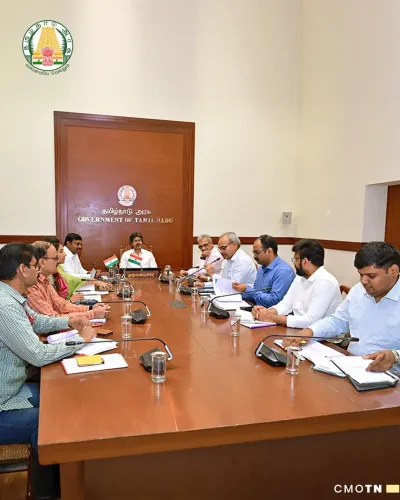
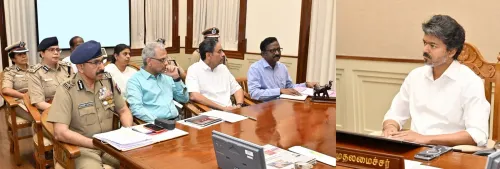
A retired IPS heavyweight is now at the helm of Tamil Nadu's most consequential prison-reform exercise in years. On Monday, 2 November 2026, the Chief Minister's Office of Tamil Nadu announced that Chief Minister C. Joseph Vijay has ordered the constitution of a High-Level Committee to conduct a thorough review of prison security across the state — and named Thiru J.K. Tripathy IPS (Retd) as its chairman.
Tripathy's brief: review, assess, recommend
The committee's mandate is clear — review existing prison security arrangements and submit concrete recommendations to strengthen them. J.K. Tripathy, a retired IPS officer who previously served as Chennai City Police Commissioner and held several other senior posts within Tamil Nadu Police, brings direct operational knowledge of the state's law-enforcement ecosystem to the assignment. His appointment signals that the government wants institutional depth, not just a bureaucratic checkbox exercise.
Why Tamil Nadu prisons are under the spotlight
Across India, state governments periodically convene expert panels to audit prison infrastructure and internal procedures — often prompted by escapes, riots, or the need to incorporate newer surveillance and biometric standards. The Tamil Nadu Prisons Department, which administers custody and security across the state's correctional facilities, operates under mounting pressure to modernise ageing infrastructure while managing overcrowding. Tamil Nadu has a track record of law-and-order modernisation across successive administrations, and this committee sits within that longer arc.
What prison staff, inmates and police can expect
Three groups are most immediately affected: prison staff, who may see revised protocols and training mandates; inmates, whose safety and rights depend directly on how well security systems function; and Tamil Nadu Police, whose coordination with the Prisons Department will likely come under the committee's lens. The panel's eventual recommendations could translate into government orders, infrastructure upgrades, or fresh budget allocations — depending on how urgently the findings are acted upon.
The clock is now on Tripathy's committee. When its report lands, the real test will be whether recommendations move from paper to policy — and how quickly.
Point of View
But the quality of outcomes depends almost entirely on political will to implement findings — a variable this committee cannot control. For CM Vijay, the move also signals an early-tenure emphasis on law-and-order credibility, an arena where Tamil Nadu governments have historically invested in visible institutional gestures. Whether the panel's report drives real change or quietly shelves will be the measure of that signal's worth.
NationPress
2 Nov 2026
Frequently Asked Questions
Why has Tamil Nadu formed a High-Level Committee on prison security?
Chief Minister C. Joseph Vijay ordered the committee to review existing prison security arrangements across Tamil Nadu and submit recommendations to strengthen them, reflecting a broader state focus on law-and-order modernisation.
Who is J.K. Tripathy and why was he chosen to chair the committee?
J.K. Tripathy is a retired IPS officer who previously served as Chennai City Police Commissioner and held other senior Tamil Nadu Police positions; his direct operational experience in the state made him a natural choice to lead the review.
What will the High-Level Committee on Tamil Nadu prisons actually do?
The committee will review the current security setup in Tamil Nadu's prisons and submit concrete recommendations to the government on how to strengthen security measures.
Who are the main stakeholders affected by this prison security review?
Prison staff, inmates, and the Tamil Nadu Police are the primary stakeholders, as any new protocols, infrastructure upgrades or inter-departmental coordination changes will directly affect them.
What happens after the committee submits its report?
The government is expected to issue follow-up orders based on the committee's findings, which could include infrastructure upgrades, revised security protocols, or new budget allocations for Tamil Nadu's prisons.