CM Bhupendra Patel on Teachers: Conduct Is True Identity
Synopsis
Gujarat Chief Minister Bhupendra Patel stated on November 2, 2026, that a teacher's conduct, language, and behaviour — not just knowledge — define their true identity and bring pride to their family and the broader education community.
Key Takeaways
Gujarat CM Bhupendra Patel posted on November 2, 2026 emphasising teacher conduct as a core professional value.
Patel stated that a teacher's behaviour, language, and conduct are their 'true identity' alongside their knowledge.
He framed excellent teacher conduct as a source of pride for the teacher's family and the entire education world.
The message aligns with a broader national pattern of state leaders reinforcing teacher accountability and professional standards.
No specific policy announcement or event was attached to the post, but it signals potential focus on teacher training in Gujarat.
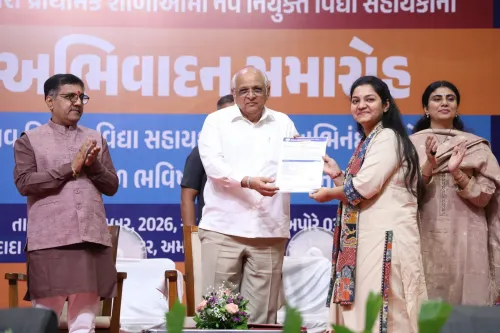
A teacher's worth, Gujarat Chief Minister Bhupendra Patel argued on Monday, November 2, 2026, is not measured by knowledge alone — it is written in every word spoken, every gesture made, and every value lived. In a post on X, Patel offered a pointed reminder to Gujarat's education community that a teacher's behaviour is a mirror held up to their family and the entire world of learning.
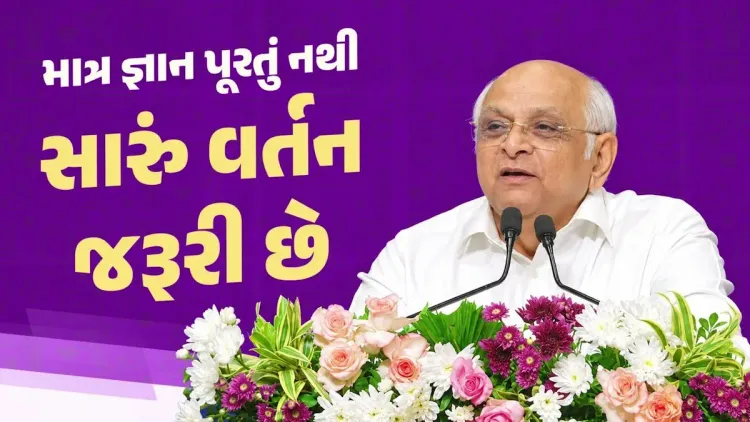
Posted in Gujarati, CM Patel's message reads: 'A teacher's conduct, language, and behaviour — alongside their knowledge — are their true identity. A teacher's excellent conduct is not just their own pride, but the pride of their family and the entire education world.'The idea at the heart of the message
The post draws a clear line between what a teacher knows and who a teacher is. Knowledge, Patel implies, is the foundation — but character is the structure built on top of it. It is a distinction that sits at the centre of long-running debates in Indian education policy: that teacher quality cannot be reduced to subject expertise or test scores, but must include professional demeanour, language, and ethical conduct.
Indian state governments have periodically reinforced this idea through teacher-training frameworks and conduct guidelines, particularly since national education policy discussions in the early 2010s placed renewed emphasis on teacher accountability. Gujarat, one of India's more administratively active states in the education space, has been no exception to that broader pattern.
Why a Chief Minister's words carry institutional weight
When a sitting Chief Minister addresses teachers not on pay scales or infrastructure, but on vyavahar — conduct and manner — the signal travels quickly through a state's school administration. Department heads, principals, and district education officers tend to treat such public statements as a soft policy steer, one that can precede formal circulars on professional standards or in-service training modules.
Whether this post foreshadows a specific state initiative on teacher conduct guidelines in Gujarat remains to be confirmed. What is clear is that Patel is framing good teaching as a collective honour — something that reflects on family and institution, not just the individual standing at the blackboard.
In a state with hundreds of thousands of government school teachers, that framing carries real weight. Teaching, Patel is saying, is not a private performance. It is a public trust.
Point of View
Patel implicitly acknowledges a gap that test-score-focused reforms have long struggled to close: that classroom culture is shaped more by who a teacher is than what they know. The emphasis on family pride as a motivator is also characteristically Gujarat in its framing — invoking community honour to reinforce institutional accountability. If this message is followed by a formal state directive on teacher conduct standards, it will confirm a deliberate communications-to-policy pipeline at work.
NationPress
2 Nov 2026
Frequently Asked Questions
What did Gujarat CM Bhupendra Patel say about teachers?
CM Bhupendra Patel said that a teacher's conduct, language, and behaviour — alongside their knowledge — are their true identity, and that excellent behaviour brings pride to their family and the entire education world.
When did Bhupendra Patel post about teacher conduct?
Patel posted the message on Monday, November 2, 2026 on X (formerly Twitter).
What language did CM Patel use in his teachers post?
Patel wrote the post in Gujarati, addressing the teaching community of Gujarat directly in their regional language.
Is Gujarat planning new teacher conduct guidelines?
No specific policy announcement has been confirmed. Patel's post is a public statement of values; any formal guidelines or training modules would need to be announced separately by the state government.
Why do Indian Chief Ministers address teacher behaviour publicly?
Public statements by Chief Ministers on teacher conduct serve as soft policy signals to district education officers and school administrators, often preceding formal circulars on professional standards or in-service training programmes.