Gujarat CM Lauds 6,000+ Women in Vidya Sahayak Recruitment
Synopsis
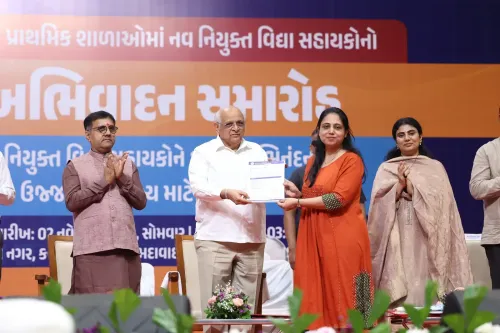
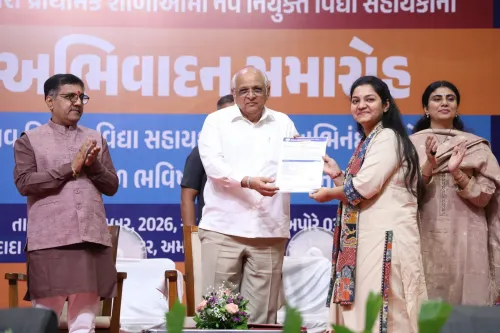
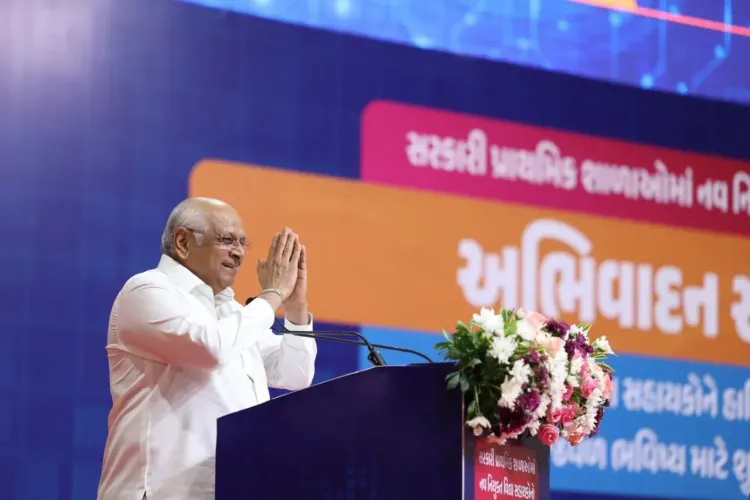
Gujarat's Chief Minister congratulated over 6,000 women selected as Vidya Sahayaks in a transparent recruitment drive on 2 November 2026, connecting the milestone to PM Modi's Kanya Kelavani Mahotsav legacy and calling the new teachers the sentinels of Viksit Bharat's Amrit Kaal.
Key Takeaways
The Chief Minister's Office of Gujarat announced congratulations to all newly appointed Vidya Sahayaks on 2 November 2026 .
More than 6,000 women were selected in what the CM called a transparent recruitment process.
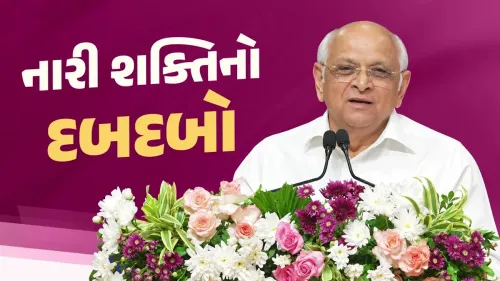
The CM described the women appointees as a symbol of nari shakti (women's power) growing in the education sector.
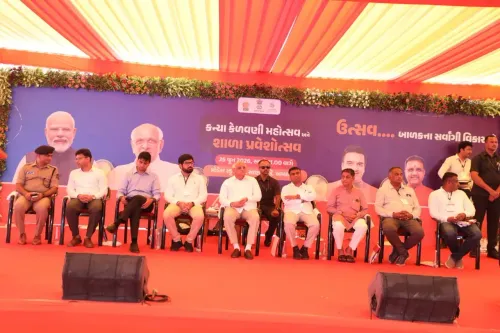
Kanya Kelavani Mahotsav and Shala Praveshotsav , launched by PM Narendra Modi as Gujarat CM in the early 2000s, were cited as the roots of this outcome.
The CM urged newly appointed teachers to use digital and social media judiciously, signalling a focus on responsible professional conduct.
The appointment is aligned with the national Viksit Bharat vision for Amrit Kaal (India's centenary development period up to 2047).
More than 6,000 women have been selected in Gujarat's latest Vidya Sahayak recruitment drive — and the state's Chief Minister is calling it proof that a decades-old bet on girls' education is finally paying full dividends. The Chief Minister's Office of Gujarat announced on Monday, 2 November 2026 that the Chief Minister congratulated all newly appointed Vidya Sahayaks, framing them as the 'amrutkaalna sacha prahari' — the true sentinels of Amrit Kaal — who will help realise the vision of a Viksit Bharat.
Over 6,000 Women Selected in a Transparent Recruitment Round
The Chief Minister described the more than 6,000 women candidates chosen through this transparent recruitment process as a symbol of 'nari shakti' — women's power — asserting its growing dominance in the education sector. The emphasis on transparency is deliberate: Vidya Sahayak appointments have historically drawn scrutiny over irregularities, making a clean recruitment cycle a political as well as administrative milestone. By highlighting the gender composition of the new cohort, the government is positioning the drive as evidence of structural change, not just headline numbers.
From Kanya Kelavani to a Banyan Tree: Modi's Gujarat Legacy Revisited
The Chief Minister explicitly linked the moment to two landmark schemes launched in Gujarat by Prime Minister Narendra Modi during his tenure as Chief Minister of the state in the early 2000s: the Kanya Kelavani Mahotsav, an annual festival designed to promote girls' enrolment in schools, and the Shala Praveshotsav, a community-driven school admission drive. The CM said that approach has today grown into a 'vatvriksha' — a banyan tree — a Gujarati idiom for something that has spread its roots wide and sheltered many. It is a pointed rhetorical bridge between the PM's state-level legacy and today's national ambition under Viksit Bharat.
A Caution for the Digital Classroom
Alongside the celebration, the Chief Minister underlined the dignity of the teaching profession and urged newly appointed teachers to use digital and social media judiciously. The advisory arrives at a moment when smartphones and social platforms are reshaping classroom dynamics across India, and teachers — often young, first-generation social-media users — are navigating that landscape without clear guidelines. The nudge signals that the government sees responsible digital conduct as inseparable from professional competence in the modern public school.
A new generation of teachers now stands at the intersection of Gujarat's long push for female literacy and India's ambition for a developed future by 2047. How their classrooms perform will be the real measure of whether the banyan tree bears fruit.
Point of View
While using gender representation data to rebut any narrative that the state's education push has been exclusionary. The transparency emphasis addresses a longstanding credibility gap in teacher recruitment in Gujarat. The social media advisory is a subtle but notable policy nudge — it suggests the government is beginning to formalise behavioural expectations for public educators in the digital age, a trend that could crystallise into formal guidelines. Cumulatively, the event reinforces Gujarat's positioning as a laboratory for education policy that the Centre then scales nationally.
NationPress
2 Nov 2026
Frequently Asked Questions
What is Vidya Sahayak in Gujarat?
Vidya Sahayak is a recruitment scheme for assistant teachers and education support staff in Gujarat government schools, designed to fill teaching vacancies at the primary and secondary level.
How many women were selected in the latest Vidya Sahayak recruitment?
According to the Chief Minister's Office of Gujarat, more than 6,000 women candidates were selected in the latest Vidya Sahayak recruitment drive announced in November 2026.
What is Kanya Kelavani Mahotsav?
Kanya Kelavani Mahotsav is an annual festival launched in Gujarat by Narendra Modi during his tenure as Chief Minister in the early 2000s, aimed at promoting the education and school enrolment of girls.
What is Shala Praveshotsav in Gujarat?
Shala Praveshotsav is a school enrolment drive started in Gujarat to increase admissions, with a particular focus on bringing girls into the formal education system.
What did Gujarat CM say about teachers and social media?
The Chief Minister urged newly appointed Vidya Sahayaks to use digital and social media judiciously , underlining the dignity of the teaching profession and the need for responsible online conduct.