CM Bhupendra Patel Hands Appointment Letters to New Vidya Sahayaks
Synopsis
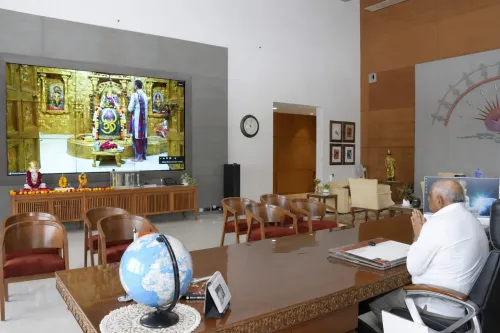
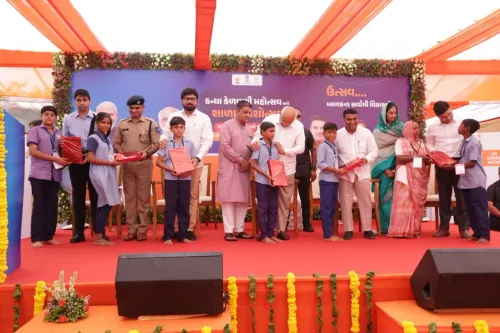
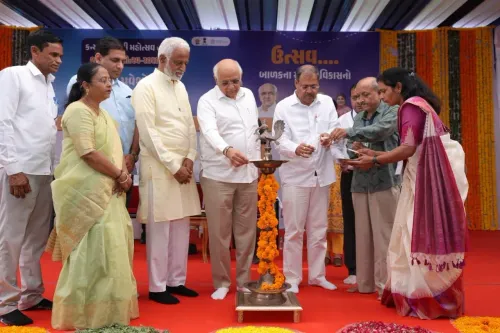
Gujarat Chief Minister Bhupendra Patel presided over a recommendation-letter distribution ceremony for newly appointed Vidya Sahayaks at Trimandir, Adalaj, Gandhinagar on 2 November 2026, formally onboarding fresh support staff into the state's government primary school system.
Key Takeaways
Gujarat CM Bhupendra Patel attended a live ceremony at Trimandir, Adalaj, Gandhinagar on 2 November 2026 .
The event was a formal recommendation-letter (bhalamaNpatra) distribution for newly appointed Vidya Sahayaks .
Vidya Sahayaks are teaching support staff deployed in Gujarat's government primary schools to address staffing shortfalls.
The ceremony was held at Trimandir, Adalaj — a spiritual complex in Gandhinagar district — marking a distinctive venue choice.
Gujarat conducts periodic Vidya Sahayak recruitment drives; new appointees reinforce frontline classroom capacity across the state.
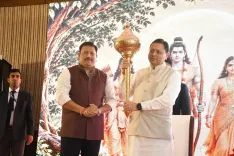
At Trimandir, Adalaj, Gandhinagar, Gujarat Chief Minister Bhupendra Patel personally presided over a formal recommendation-letter distribution ceremony for newly appointed Vidya Sahayaks — support staff positions in the state's government primary schools — on Monday, 2 November 2026. The event marked the official onboarding of a fresh cohort of educators into Gujarat's public school system.
What Are Vidya Sahayaks and Why Do They Matter?
Vidya Sahayaks are state-appointed teaching support staff deployed across Gujarat's government primary schools to bridge staffing gaps in classroom education. The position sits within the Gujarat education department's framework for expanding its frontline teaching workforce, and recruitment drives for the role have been a recurring feature of the state's school administration.
For rural and semi-urban primary schools, these appointments translate directly into more teachers in classrooms — a practical fix for a gap that has persisted through multiple state budget cycles. Each fresh batch of Vidya Sahayaks represents a targeted injection into the system at the grassroots level.
Trimandir Adalaj as the Ceremonial Backdrop
The choice of Trimandir, Adalaj — a prominent spiritual complex located in Gandhinagar district — as the venue gave the ceremony a distinctive character. Bhalpatra (recommendation letter) distribution events of this scale are typically held in government auditoriums, making the Trimandir setting a notable departure that underscored the occasion's significance for the new appointees and their families.
Chief Minister Patel, who assumed office in 2021, has consistently aligned his administration's public-facing moments in education with visible, community-oriented events — using ceremonies like these to signal the state government's commitment to strengthening public school infrastructure.
Primary Schools, Staffing, and the Bigger Picture
Gujarat's periodic recruitment of Vidya Sahayaks reflects a broader challenge common to large state school systems: keeping pace with demand for qualified frontline staff. State budget sessions have repeatedly flagged primary-school staffing as a priority, and appointments of this kind are the visible output of those allocations turning into actual hires on the ground.
With the bhalamaNpatra vitaraN samaroh (recommendation-letter distribution ceremony) now concluded, attention will turn to which talukas and districts receive the newly appointed staff — and whether subsequent recruitment batches follow within the current academic calendar.
Point of View
Allowing it to project delivery on education promises at the grassroots level. Holding the event at a prominent spiritual venue rather than a government hall amplifies the occasion's community resonance and the CM's personal presence. Within Gujarat's BJP administration, primary-school staffing has been a consistent talking point linking governance performance to tangible outcomes for ordinary families. Watch for the districts where new Sahayaks are posted — that distribution pattern will reveal whether the drive targets historically under-staffed rural areas or consolidates gains in already-served urban centres.
NationPress
2 Nov 2026
Frequently Asked Questions
Who are Vidya Sahayaks in Gujarat?
Vidya Sahayaks are state-appointed teaching support staff placed in Gujarat government primary schools to fill classroom staffing gaps. They are recruited and deployed by the Gujarat education department.
What happened at the Trimandir Adalaj ceremony on 2 November 2026?
Gujarat Chief Minister Bhupendra Patel attended a formal recommendation-letter distribution ceremony at Trimandir, Adalaj, Gandhinagar, marking the official onboarding of newly appointed Vidya Sahayaks into the state's primary school system.
Where is Trimandir Adalaj located?
Trimandir Adalaj is a prominent spiritual complex located in the Adalaj area of Gandhinagar district, Gujarat.
Why does Gujarat recruit Vidya Sahayaks?
Gujarat recruits Vidya Sahayaks periodically to address staffing shortfalls in government primary schools, ensuring more teachers are available in classrooms, particularly in rural and semi-urban areas.
When did Bhupendra Patel become Chief Minister of Gujarat?
Bhupendra Patel became Chief Minister of Gujarat in 2021 and is a senior leader of the Bharatiya Janata Party (BJP).