Uttarakhand CMO: Skill Push Bears Fruit in Rudraprayag
Synopsis
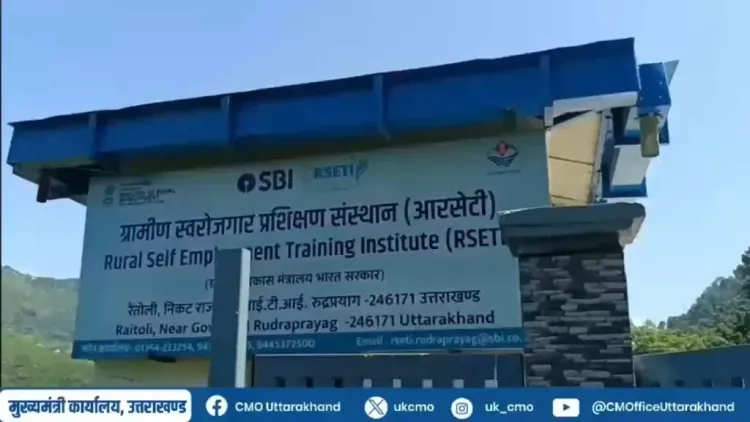
The Chief Minister's Office of Uttarakhand flagged positive ground-level results from skill development efforts in Rudraprayag on 2 November 2026, underscoring the state's push to build self-employment in its hilly interior and curb youth out-migration.
Key Takeaways
The Chief Minister's Office of Uttarakhand posted on 2 November 2026 citing positive outcomes from skill development drives.
Rudraprayag , a remote Garhwal district, is specifically highlighted as a site of ground-level results.
The state's skill push is aligned with the Skill India Mission (launched 2015 ) and targets rural youth and local entrepreneurs.
Uttarakhand's vocational training focus aims to curb chronic out-migration from its hilly interior districts.
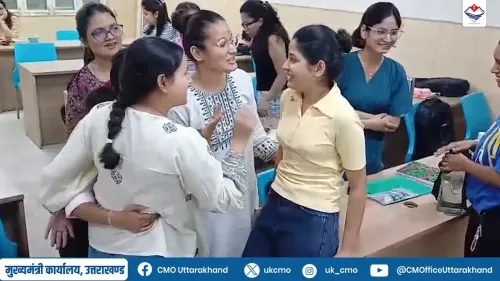
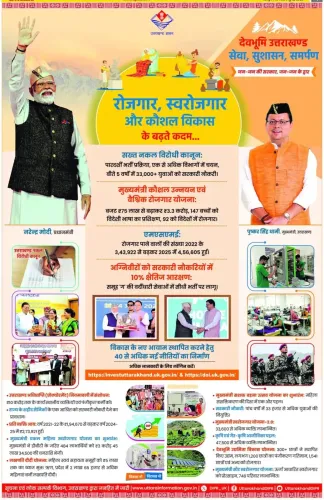
No specific numbers or scheme names were cited; the post was accompanied by a video as primary evidence.
Expansion of training centres to other Uttarakhand districts remains the key next indicator to watch.
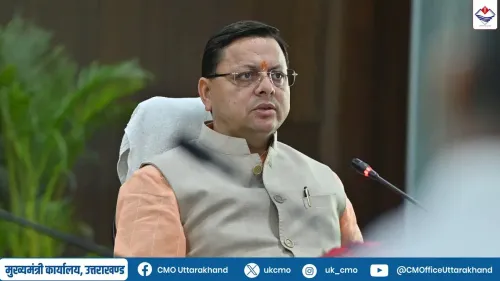
In the mountain villages of Rudraprayag, the long push to build local livelihoods is starting to show. The Chief Minister's Office of Uttarakhand posted on Monday, 2 November 2026, signalling that skill development efforts aimed at self-employment in the state are delivering visible, ground-level results.
The post, shared in Hindi, reads: 'उत्तराखण्ड में स्वरोजगार हेतु कौशल विकास के लिए जारी प्रयासों के धरातल पर दिख रहे हैं सकारात्मक परिणाम' — 'Positive results are visible on the ground from ongoing efforts for skill development towards self-employment in Uttarakhand.' Rudraprayag, a hill district in the Garhwal region, is specifically named as a site of these emerging outcomes.
Why Rudraprayag — and Why It Matters
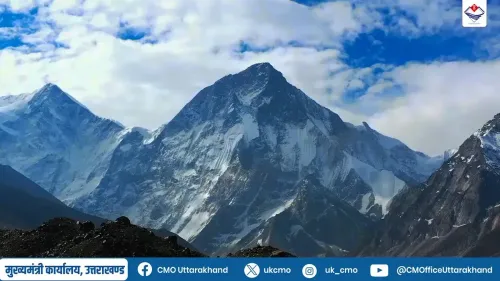
Rudraprayag sits at the confluence of the Alaknanda and Mandakini rivers, deep in Uttarakhand's hilly interior. It is precisely the kind of district where out-migration has historically hollowed out local economies — young people leaving for the plains in search of work that doesn't exist at home. Skill development interventions in such terrain are not just economic policy; they are demographic policy.
Uttarakhand has aligned its vocational training push with the contours of its mountain economy, targeting sectors — hospitality, horticulture, small enterprise, and local crafts — where geography is an asset rather than a barrier. The goal is to anchor working-age residents to their home districts.
Skill India's Mountain Chapter
The national Skill India Mission, launched in 2015, gave states a framework and partial funding to scale vocational training. Uttarakhand has worked to localise that framework, directing programmes at rural youth and aspiring entrepreneurs in districts that lack the industrial corridors of the plains. When outcomes begin to surface in a district as remote as Rudraprayag, it signals the pipeline — training centres, placement linkages, micro-enterprise support — is functioning beyond urban clusters.
No specific numbers, scheme names, or timelines accompany the post, so the scale of the outcomes remains to be quantified. The accompanying video is the primary evidence the state is pointing to — a deliberate choice to show rather than just tell.
The Bigger Watch: Will Other Districts Follow?
The question now is replicability. Uttarakhand has 13 districts, many sharing Rudraprayag's demographic profile. Whether the state rolls out expanded training infrastructure — more centres, more sectors, more districts — will determine if today's announcement marks a turning point or a showcase moment. District-level employment data, when released, will put hard numbers to the claim.
For a state where every retained job is a vote against migration, positive results from even one mountain district carry weight beyond the headline.
Point of View
More visible district — is a deliberate signal that the state's skill programmes are penetrating genuinely remote terrain, not just urban peripheries. Framing the post around 'positive results on the ground' without citing data is a classic pre-election narrative move: it establishes a proof-of-concept story ahead of any hard metrics. More broadly, Uttarakhand's skill-for-retention strategy reflects a growing consensus among hill-state governments that migration cannot be reversed by infrastructure alone — livelihood anchoring at the district level is the only durable fix. Whether the CMO follows this post with substantive data releases will determine if this is a policy milestone or a communications exercise.
NationPress
2 Nov 2026
Frequently Asked Questions
What skill development efforts is Uttarakhand promoting in Rudraprayag?
Uttarakhand is running vocational training and self-employment programmes in Rudraprayag, a hill district in the Garhwal region, aligned with the national Skill India Mission launched in 2015. The programmes target rural youth and aspiring local entrepreneurs.
What is the Skill India Mission and how does it apply to Uttarakhand?
The Skill India Mission was launched by the Government of India in 2015 to scale vocational training and self-employment opportunities across states. Uttarakhand has localised this framework, focusing on sectors suited to its mountain economy such as hospitality, horticulture, and small enterprise.
Why is out-migration a problem in Uttarakhand?
Uttarakhand's hilly terrain historically offers limited industrial employment, pushing working-age residents — especially youth — to migrate to plains cities. Skill development and self-employment schemes are designed to create viable livelihoods locally and reverse this trend.
Where is Rudraprayag district in Uttarakhand?
Rudraprayag is a district in the Garhwal division of Uttarakhand, situated at the confluence of the Alaknanda and Mandakini rivers. It is a primarily rural, mountainous district and a key pilgrimage corridor.
What results have been announced from Uttarakhand's skill development programmes?
The Chief Minister's Office of Uttarakhand stated on 2 November 2026 that 'positive results are visible on the ground' from skill development efforts in Rudraprayag, accompanied by a video. No specific numbers, scheme names, or timelines were cited in the post.