Uttarakhand CMO: Self-Employment Schemes Fuel Hill Youth Startups

Synopsis
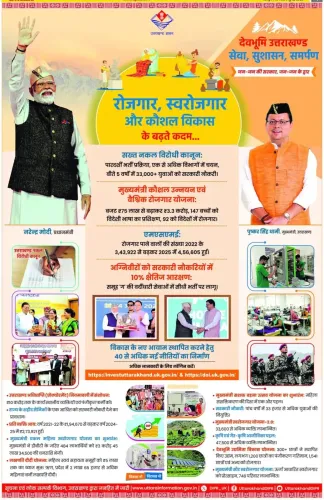
The Uttarakhand Chief Minister's Office on 8 July 2026 spotlighted state self-employment schemes helping young people build micro-enterprises in hill districts, with Nainital highlighted as a hub where small industries are creating local jobs and countering out-migration.
Key Takeaways
The Uttarakhand CMO posted on 8 July 2026 highlighting state self-employment schemes supporting youth entrepreneurship in hill districts.
Nainital was specifically cited as a district where small industries are generating employment for local residents.
Uttarakhand's Swarozgar Yojanas provide subsidies, training, and credit support for micro-enterprises, complementing national schemes like PMEGP .
The schemes target youth entrepreneurs to reduce seasonal unemployment and stem out-migration from mountain communities.
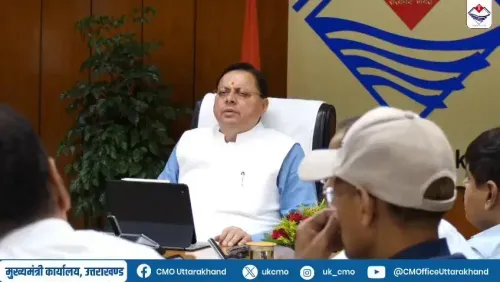
The CMO post was accompanied by a video , suggesting on-ground documentation of scheme beneficiaries or enterprise activity.
Analysts will monitor district-level disbursement data and future budget announcements for the scale of the state's commitment.
The Chief Minister's Office of Uttarakhand on Wednesday, 8 July 2026 highlighted how state-run self-employment schemes are enabling young entrepreneurs to establish micro-enterprises across the hill districts, with Nainital cited as a focal point where small industries are generating local jobs.
Context
The official post, shared in Hindi, states: 'Uttarakhand mein sanchalit swarozgar yojanaon ki madad se yuva udyamon ki aadharshila rakh rahe hain' — 'With the help of self-employment schemes operating in Uttarakhand, youth are laying the foundation of enterprises.' It adds that small industries in the mountains are providing employment to local people, tagging #Nainital and #Uttarakhand.
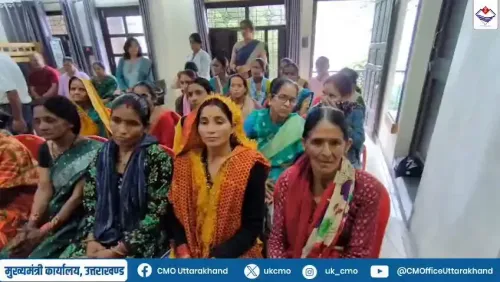
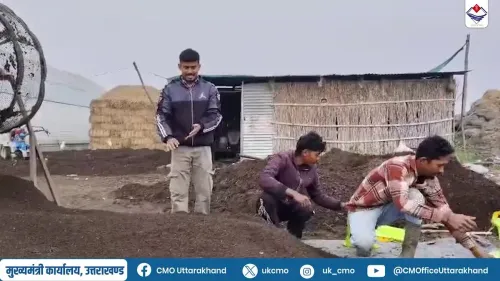
The post was accompanied by a video, indicating on-ground documentation of beneficiaries or scheme activity, though the specific individuals and enterprise details shown have not been independently verified.
Policy Backdrop
Uttarakhand, carved out as a separate hill state in 2000, has long grappled with out-migration from its mountainous blocks, where seasonal unemployment pushes working-age residents toward plains cities. State governments have repeatedly turned to self-employment and Micro, Small and Medium Enterprise (MSME) programmes as a structural counter to this trend.
At the national level, the Prime Minister's Employment Generation Programme (PMEGP), launched in 2008, provides subsidies, training, and credit support for micro-enterprises in both rural and urban areas. Uttarakhand's own Swarozgar Yojanas (self-employment schemes) operate alongside and in conjunction with such central programmes, channelling support toward youth-led ventures in hill districts.
Nainital district, where tourism and small-scale industries intersect, has been a recurring focus of such livelihood interventions. Handicrafts, food processing, agro-based units, and tourism-linked services are among the sectors typically supported under these schemes.
Stakeholders and Impact
The primary beneficiaries are young entrepreneurs in Uttarakhand's hill districts who might otherwise migrate to urban centres in search of work. By anchoring micro-enterprises locally, the schemes aim to retain working-age populations and expand the rural non-farm economy.
Local residents beyond the direct beneficiaries also stand to gain, as small industries create downstream employment — in supply chains, logistics, and services — within the same communities. Districts such as Nainital benefit from the dual pull of tourism demand and state support, making them relatively more viable locations for new enterprises compared to more remote blocks.
The broader Himalayan pattern is consistent: states facing geographic and demographic pressures have increasingly leaned on decentralised livelihood creation rather than relying solely on large industrial investment, which is harder to attract to hill terrain.
What's Next
Observers and policymakers will watch for district-level disbursement data under Uttarakhand's self-employment schemes, which would indicate the scale and reach of current interventions. Any forthcoming state budget announcements expanding credit limits, adding new sectors, or increasing subsidy coverage for hill enterprises will be significant markers of political commitment to this agenda.
The CMO's public communication on this theme suggests the government intends to keep youth entrepreneurship and hill employment at the centre of its welfare narrative — a posture that is likely to intensify ahead of any electoral cycle in the state.
Point of View
Positioning the state government as an active enabler of youth enterprise in geographically challenging terrain. By anchoring the narrative in Nainital — a district with high visibility and tourism traction — the government signals that its self-employment push is producing visible, localised results rather than remaining an abstract policy. This fits a broader pattern across Himalayan states of using MSME and swarozgar schemes as political as much as economic instruments, countering the persistent narrative of state neglect that fuels out-migration grievances. The use of video alongside the post suggests an effort to move beyond announcement-mode governance toward demonstrable, on-ground storytelling ahead of what is likely a politically sensitive period.
NationPress
6 Oct 2026
Frequently Asked Questions
What are the self-employment schemes running in Uttarakhand for youth?
Uttarakhand operates state-level Swarozgar Yojanas that provide subsidies, training, and credit support to young entrepreneurs for setting up micro-enterprises, particularly in hill districts. These run alongside the national Prime Minister's Employment Generation Programme (PMEGP) , launched in 2008.
How are small industries helping employment in Nainital?
Small industries supported under state self-employment schemes in Nainital are generating jobs for local residents, reducing dependence on seasonal or migrant labour markets and helping retain working-age populations in the district.
Why does Uttarakhand focus on self-employment schemes in hill areas?
Uttarakhand faces persistent out-migration from its mountainous blocks due to seasonal unemployment and limited large-scale industry. Self-employment and MSME schemes offer a decentralised livelihood alternative suited to hill terrain where big industrial investment is harder to attract.
What is the PMEGP scheme and does it apply to Uttarakhand?
The Prime Minister's Employment Generation Programme (PMEGP) , launched in 2008 , is a national scheme providing subsidies and credit support for micro-enterprises in rural and urban areas. Uttarakhand beneficiaries are eligible, and state schemes often complement PMEGP support.
What should I watch for regarding Uttarakhand's self-employment push?
Key developments to track include district-level disbursement data under Uttarakhand's schemes, new state budget announcements on credit limits or sector coverage, and any expansion of scheme eligibility targeting hill entrepreneurs in districts like Nainital.