Dr. Jitendra Singh Highlights Syama Prasad Mookerjee Tunnel
Synopsis
Union Minister Dr. Jitendra Singh spotlighted the Syama Prasad Mookerjee Tunnel connecting Chenani and Nashri in Udhampur, J&K, sharing a video of the 9-km NH-44 road tunnel inaugurated by PM Modi in 2017 that cut Jammu-Srinagar travel time by nearly two hours.
Key Takeaways
Jitendra Singh posted a video of the Syama Prasad Mookerjee Tunnel on 8 July 2026 .
The tunnel connects Chenani and Nashri in Udhampur district , Jammu and Kashmir, on National Highway 44 .
Inaugurated by PM Narendra Modi in April 2017 , it cut Jammu-Srinagar travel time by nearly two hours .
The tunnel is named after Syama Prasad Mookerjee , founder of the Bharatiya Jana Sangh.
The project is part of the Bharatmala Pariyojana aimed at all-weather Himalayan connectivity.
Key beneficiaries include defence forces , traders, tourists, and residents of Jammu and Kashmir .
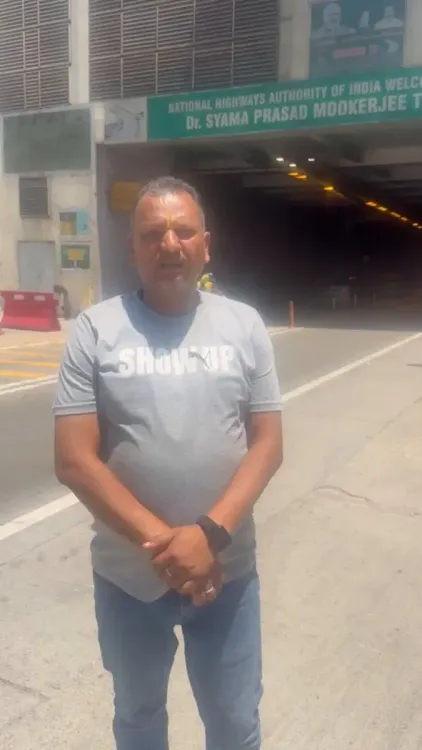
Union Science and Technology Minister Dr. Jitendra Singh, who also represents the Udhampur Lok Sabha constituency, drew attention on Wednesday, 8 July 2026 to the Syama Prasad Mookerjee Tunnel connecting Chenani and Nashri in Udhampur district, Jammu and Kashmir, sharing a video of the landmark infrastructure project on X.
Context
The post, tagged with #SyamaPrasadMookerjee Tunnel, #Chenani, and #Udhampur, accompanies a video of the tunnel, underscoring the minister's continued focus on strategic connectivity in his home constituency. Dr. Jitendra Singh represents Udhampur in the Lok Sabha and has consistently flagged infrastructure milestones in the region. The tunnel sits on National Highway 44, the sole all-weather road linking the Kashmir Valley with the rest of India.
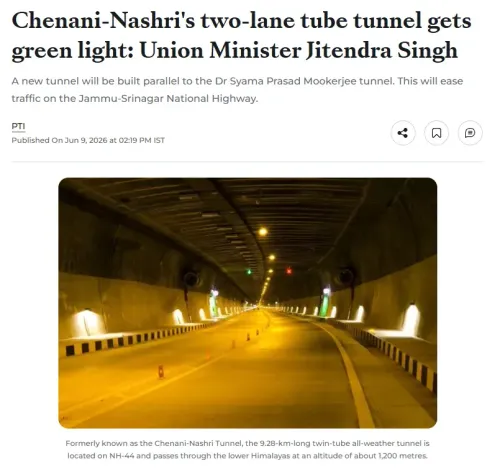
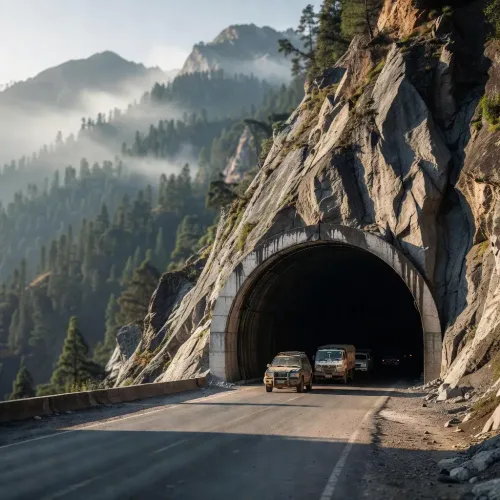
Formerly known as the Chenani-Nashri Tunnel, the structure was renamed the Syama Prasad Mookerjee Tunnel in honour of the Indian independence activist and founder of the Bharatiya Jana Sangh. At roughly 9 kilometres, it is among India's longest road tunnels and was inaugurated by Prime Minister Narendra Modi in April 2017, cutting travel time between Jammu and Srinagar by nearly two hours.
Policy Backdrop
The tunnel was developed under the National Highways Development Project and later integrated into the Bharatmala Pariyojana, the central government's flagship highway-building programme aimed at all-weather connectivity across Himalayan and border states. The project was conceived specifically to bypass the treacherous Patnitop stretch, which remains prone to landslides and snowfall closures during winter months.
Since the reorganisation of Jammu and Kashmir in 2019, the central government has accelerated tunnel and highway projects along NH-44 to strengthen both civilian access and military logistics. Multiple new tunnels have been sanctioned on the corridor, with the Zojila Tunnel being among the most significant upcoming projects intended to extend all-weather connectivity further into the Valley and towards Ladakh.
Stakeholders and Impact
The tunnel's primary beneficiaries include residents of Jammu and Kashmir, traders relying on uninterrupted supply chains, tourists visiting the Valley, and defence forces that depend on rapid, reliable road access for logistics and troop movement. Before the tunnel opened, the highway through Patnitop was frequently shut for days during winter, causing severe disruption to the region's economy and security preparedness.
For the Udhampur district specifically, the tunnel has transformed the town's role as a transit hub, boosting local commerce and reducing commute times for thousands of daily travellers. The minister's post signals continued political attention to infrastructure delivery in a constituency that sits at the gateway of this strategic corridor.
What's Next
The broader NH-44 corridor is set for further upgrades, including four-laning works and the construction of additional tunnels to eliminate remaining bottlenecks between Jammu and Srinagar. The Ministry of Road Transport and Highways is expected to announce updates on these projects, with connectivity improvements in Jammu and Kashmir remaining a priority for the central government. Any maintenance, capacity augmentation, or new milestone announcements related to the Syama Prasad Mookerjee Tunnel are likely to receive close scrutiny given the route's strategic importance.
Point of View
Reminding voters in Udhampur that landmark infrastructure delivered under the current dispensation runs through their backyard. By invoking the Syama Prasad Mookerjee name — the ideological progenitor of the BJP's parent organisation — the minister layers political symbolism onto an engineering achievement. The post fits a broader pattern of BJP leaders using social media to reinforce the government's infrastructure narrative in Jammu and Kashmir, particularly as the Union Territory approaches further electoral and administrative milestones. It also keeps the spotlight on NH-44 at a time when follow-on projects like Zojila are advancing, signalling continued central attention to the corridor.
NationPress
8 Jul 2026
Frequently Asked Questions
What is the Syama Prasad Mookerjee Tunnel?
The Syama Prasad Mookerjee Tunnel, formerly called the Chenani-Nashri Tunnel, is a roughly 9-kilometre road tunnel on National Highway 44 in Udhampur district, Jammu and Kashmir, connecting Chenani and Nashri and bypassing the snow-prone Patnitop stretch.
When was the Syama Prasad Mookerjee Tunnel inaugurated?
The tunnel was inaugurated by Prime Minister Narendra Modi in April 2017, cutting travel time between Jammu and Srinagar by nearly two hours.
Why is the tunnel named after Syama Prasad Mookerjee?
The tunnel was renamed in honour of Syama Prasad Mookerjee, an Indian independence activist and the founder of the Bharatiya Jana Sangh, the ideological predecessor of the Bharatiya Janata Party.
Who is Dr. Jitendra Singh and why did he post about the tunnel?
Dr. Jitendra Singh is the Union Minister of State (Independent Charge) for Science and Technology and Earth Sciences, and also an MoS in the Prime Minister's Office. He represents the Udhampur Lok Sabha seat, the district where the tunnel is located, making it a key constituency issue.
What is the significance of NH-44 for Jammu and Kashmir?
National Highway 44 is the only all-weather road linking the Kashmir Valley with the rest of India, making tunnels and highway upgrades along it critical for civilian supply chains, tourism, and defence logistics.