Gadkari: 25 World-Class Tunnels Being Built Between Jammu and Srinagar
Synopsis
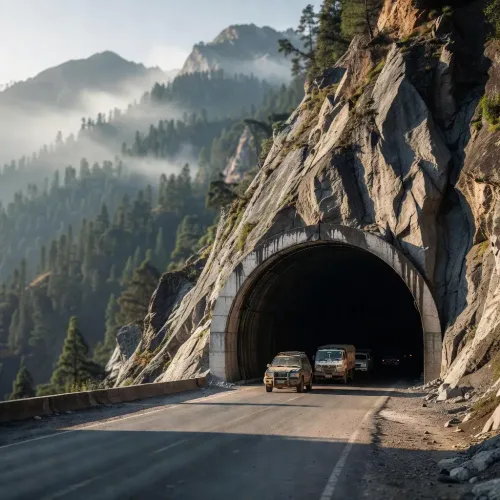
Union Minister Nitin Gadkari has announced that 25 world-class tunnels are being built between Jammu and Srinagar on NH-44, advancing the central government's push for all-weather connectivity in Jammu and Kashmir under the Bharatmala and Gati Shakti frameworks.
Key Takeaways
25 world-class tunnels are under active construction on the Jammu–Srinagar corridor on NH-44 , as announced by Union Minister Nitin Gadkari on 10 June 2026 .
The project is part of the Bharatmala Pariyojana and is coordinated under the Gati Shakti National Master Plan launched in 2021 .
The Chenani-Nashri (Dr Syama Prasad Mookerjee) Tunnel , opened in 2017 , was a forerunner on the same corridor, reducing travel time by roughly three hours .
NHAI is the implementing agency; the tunnels aim to convert a weather-disrupted two-lane route into a reliable four-lane all-weather highway .
Key beneficiaries include Kashmir Valley residents, commercial transporters, tourists and defence logistics operations along the northern frontier.
Phased tunnel openings and parliamentary budget disclosures are the next milestones to watch in the programme.
Union Road Transport and Highways Minister Nitin Gadkari announced on Wednesday, 10 June 2026 that 25 world-class tunnels are under construction along the Jammu–Srinagar corridor, underscoring the central government's drive to deliver all-weather connectivity to Jammu and Kashmir.
Context
Gadkari posted on X — 'जम्मू और श्रीनगर के बीच 25 विश्वस्तरीय टनल का हो रहा है निर्माण!' ('25 world-class tunnels are being constructed between Jammu and Srinagar!') — tagging the initiative under the #PragatiKaHighway, #GatiShakti and #BuildingTheNation banners. The post was accompanied by a video, indicating on-ground construction progress along the route.
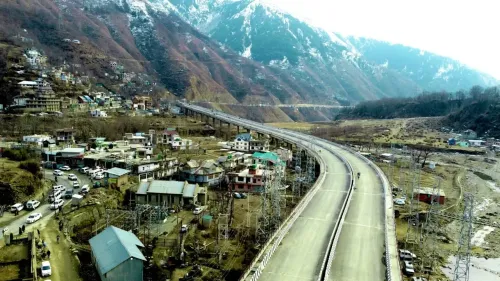
National Highway 44 (NH-44) is the primary surface artery linking Jammu to Srinagar. The highway traverses steep gorges and avalanche-prone stretches of the Pir Panjal and Shivalik ranges, making it highly vulnerable to seasonal closures caused by snow and landslides. Tunnel construction is central to converting this weather-disrupted corridor into a reliable, four-lane all-weather road.
Policy Backdrop
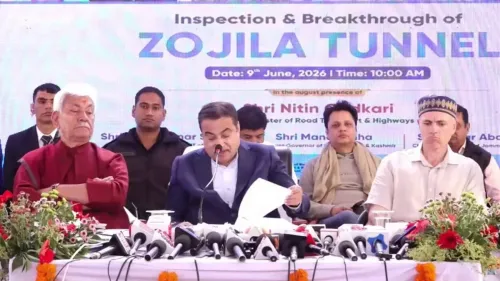
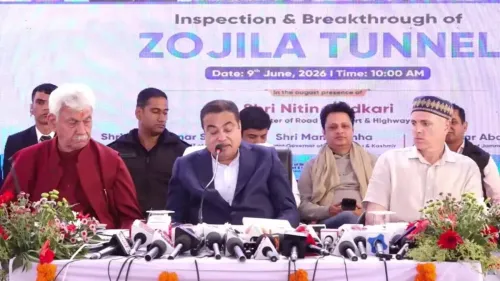
The tunnel push on NH-44 has a documented lineage. The Chenani-Nashri Tunnel — formally the Dr Syama Prasad Mookerjee Tunnel — opened in 2017 at a length of roughly 9 kilometres, cutting travel time between the two cities by approximately three hours and bypassing one of the most landslide-prone stretches of the highway. The Zojila Tunnel project, approved in 2018, aims to extend all-weather access further, connecting Srinagar to Leh through the Zojila Pass.
The broader programme is funded under the Bharatmala Pariyojana, the central government's umbrella road-connectivity scheme launched in 2015, which specifically targets expressways, tunnels and elevated corridors in hilly states. The Gati Shakti National Master Plan, launched in 2021, provides integrated multi-modal planning that coordinates tunnel projects across the Ministry of Road Transport and Highways, Railways and state agencies, reducing duplication and accelerating approvals.
The accelerated focus on physical infrastructure in Jammu and Kashmir has been a consistent policy priority since the reorganisation of the former state into two union territories in August 2019, with highway and tunnel projects framed as instruments of economic integration and national security.
Stakeholders and Impact
The most direct beneficiaries are the residents of the Kashmir Valley, who depend on NH-44 for the movement of essential goods, medicines and fuel during winter months when the highway is frequently cut off. Commercial transporters and the tourism industry — both critical to the valley's economy — stand to gain from reduced transit times and fewer weather-related disruptions once the tunnels are operational.
The National Highways Authority of India (NHAI) is the implementing agency for the tunnel works. Improved connectivity is also expected to ease logistics for security and defence deployments along the sensitive northern frontier, a consideration that has historically shaped investment decisions on this corridor.
What's Next
Attention will now turn to the phased opening timelines for individual tunnels and any revision of project-completion dates that NHAI may announce. Parliamentary sessions are a key forum where budgetary provisions and land-acquisition progress reports for the remaining stretches are typically tabled, offering the next formal checkpoint on the programme's momentum. If the pace of tunnel commissioning matches the government's stated ambitions, the Jammu–Srinagar drive could be transformed from a seasonal gamble into a predictable, all-weather journey within this decade.
Point of View
Particularly in the run-up to electoral and budget cycles. The framing under Gati Shakti and Bharatmala signals an attempt to embed individual projects within a larger, legible policy architecture rather than present them as standalone works. The choice of the Jammu–Srinagar corridor is politically significant: all-weather connectivity is both a genuine administrative necessity and a potent symbol of post-2019 integration. Whether the headline figure of 25 tunnels translates into on-time delivery will ultimately determine the policy's credibility with the Valley's residents and the transport sector.
NationPress
29 Jul 2026
Frequently Asked Questions
How many tunnels are being built between Jammu and Srinagar?
Union Minister Nitin Gadkari announced that 25 world-class tunnels are currently under construction on the Jammu–Srinagar corridor along NH-44 .
Which highway connects Jammu to Srinagar?
National Highway 44 (NH-44) is the primary road link between Jammu and Srinagar, passing through mountainous terrain prone to landslides and snow closures.
What is the Bharatmala Pariyojana?
Bharatmala Pariyojana is a central government umbrella scheme launched in 2015 to fund optimal road connectivity, including expressways, tunnels and elevated corridors, especially in hilly and border states.
What is the Gati Shakti National Master Plan?
Gati Shakti is an integrated multi-modal infrastructure planning framework launched in 2021 that coordinates projects across central ministries and states to reduce approval delays and duplication.
Which tunnel on the Jammu–Srinagar highway was completed earlier?
The Chenani-Nashri Tunnel , officially named the Dr Syama Prasad Mookerjee Tunnel , was opened in 2017 and cut travel time on NH-44 by approximately three hours .