Gadkari Announces New National Highway Projects in J&K
Synopsis
Union Minister Nitin Gadkari on 10 June 2026 announced new national highway projects in Jammu and Kashmir, linking the push to the Gati Shakti multimodal connectivity plan and Bharatmala Pariyojana. The move reinforces the Centre's sustained infrastructure drive in the strategically vital Union Territory.
Key Takeaways
Union Minister Nitin Gadkari announced new national highway projects in Jammu and Kashmir on 10 June 2026 .
The announcement is linked to the Gati Shakti National Master Plan for Multi-modal Connectivity, launched in 2021 .
Bharatmala Pariyojana , targeting approximately 34,800 km of national highways nationwide, forms the broader policy framework for these projects.
Jammu and Kashmir has been under direct central oversight for road development since the Reorganisation Act of 2019 .
Key beneficiaries include local residents, the logistics sector, and the region's tourism industry .
Specific project details, budget allocations, and timelines are yet to be officially released.
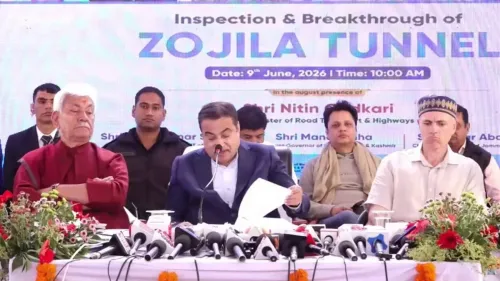
Union Road Transport and Highways Minister Nitin Gadkari on Wednesday, 10 June 2026 announced new national highway projects for the Union Territory of Jammu and Kashmir, signalling a fresh push to expand road connectivity in one of India's most strategically significant regions. The announcement, made via his official social media account, was tagged under the hashtags #PragatiKaHighway, #GatiShakti, and #BuildingTheNation.
Context
In his post, Gadkari declared the announcement of new national highway projects in the Union Territory of Jammu and Kashmir — 'केंद्र शासित प्रदेश जम्मू और कश्मीर में नए राष्ट्रीय राजमार्ग परियोजनाओं की घोषणा!' ('Announcement of new national highway projects in the Union Territory of Jammu and Kashmir!'). The invocation of Gati Shakti — the National Master Plan for Multi-modal Connectivity launched in 2021 — signals that the proposed corridors are intended to be integrated into India's broader multimodal logistics framework rather than treated as standalone road works.
Jammu and Kashmir was reorganised as a Union Territory under the Jammu and Kashmir Reorganisation Act, 2019, placing road development under direct central oversight. Since then, the Ministry of Road Transport and Highways has accelerated project identification and funding allocation for the region.
Policy Backdrop
The announcement sits within the arc of Bharatmala Pariyojana, India's flagship highway development programme launched in 2015 with a mandate to develop approximately 34,800 km of national highways, including dedicated economic corridors and ring roads in border and hilly states. Jammu and Kashmir has featured prominently in successive phases of the programme given its terrain challenges and strategic location along India's northern frontier.
The Gati Shakti framework, which coordinates planning across road, rail, aviation, and waterway ministries through a unified digital platform, has been used to fast-track clearances and reduce inter-ministerial delays on projects in Union Territories. Tagging the post under #GatiShakti suggests the new highway projects have been or are being routed through this coordinated approval mechanism.
Stakeholders and Impact
Residents of Jammu and Kashmir, long dependent on a limited network of all-weather roads, stand to benefit most directly from improved highway connectivity. The region's difficult terrain — spanning the Pir Panjal range, the Kashmir Valley, and the high-altitude districts of Ladakh's former administrative zone — has historically made road access unreliable, particularly during winter months.
The logistics and transport sector, which moves goods between the Kashmir Valley and the rest of India largely via National Highway 44, could see reduced transit times and lower freight costs if new corridors distribute traffic load. The tourism industry, a critical pillar of the local economy, also stands to gain as improved access roads can open new destinations and reduce journey times for visitors travelling overland.
What's Next
Detailed project reports, land acquisition timelines, and environmental clearances will determine the pace at which the announced corridors move from declaration to construction. Parliamentary updates and the next Union Budget will be closely watched for specific budget allocations tied to these projects. Gadkari's ministry has a track record of announcing and commissioning highway projects in quick succession, and stakeholders in Jammu and Kashmir will be looking for project-level specifics in the days ahead.
Point of View
Reinforcing the Centre's post-2019 narrative of accelerated development in the reorganised Union Territory. By anchoring the post under the Gati Shakti banner, the Ministry signals that these are not isolated road works but part of an integrated, multi-ministerial connectivity push. The move also carries political salience ahead of any future assembly electoral cycle in the region, where infrastructure delivery has become a key benchmark of governance. Stakeholders will, however, note that the gap between announcement and ground-level execution in hilly terrain remains the critical test.
NationPress
26 Oct 2026
Frequently Asked Questions
What national highway projects did Gadkari announce for Jammu and Kashmir in June 2026?
Union Minister Nitin Gadkari announced new national highway projects for Jammu and Kashmir on 10 June 2026, though project-level specifics such as alignments and costs are yet to be officially detailed.
What is Gati Shakti and how does it relate to J&K highways?
Gati Shakti is India's National Master Plan for Multi-modal Connectivity, launched in 2021 to coordinate infrastructure planning across road, rail, and other transport ministries. Gadkari tagged the J&K highway announcement under this framework, indicating the projects will be integrated into the unified digital planning platform.
What is Bharatmala Pariyojana and does it cover Jammu and Kashmir?
Bharatmala Pariyojana is a central highway development programme launched in 2015 targeting approximately 34,800 km of national highways, including corridors in border and hilly regions such as Jammu and Kashmir.
Why is the Centre investing heavily in roads in Jammu and Kashmir?
Since Jammu and Kashmir was reorganised as a Union Territory in 2019, road development came under direct central oversight. The government has since prioritised highway expansion there for strategic, economic, and connectivity reasons.
Who benefits from new highways in Jammu and Kashmir?
Residents dependent on all-weather road access, the logistics and freight sector using routes like NH 44, and the tourism industry — which relies on overland access to the region — are the primary beneficiaries of improved highway infrastructure in Jammu and Kashmir.