Gadkari: 4 High-Speed Corridors Under Construction in J&K
Synopsis
Union Minister Nitin Gadkari announced on June 10, 2026 that four high-speed corridors are under construction in Jammu and Kashmir under the Pragati Ka Highway and Gati Shakti frameworks, deepening the Centre's connectivity push in the Union Territory since its 2019 reorganisation.
Key Takeaways
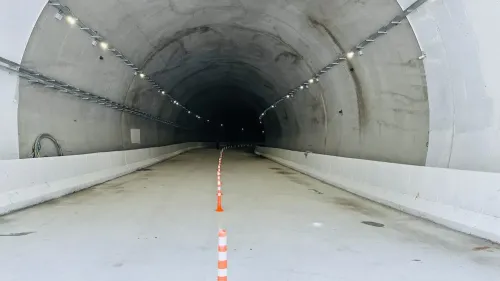
Four high-speed road corridors are currently under construction in the Union Territory of Jammu and Kashmir , as announced by Union Minister Nitin Gadkari on June 10, 2026 .
The projects are being executed under the Pragati Ka Highway branding and are linked to the Bharatmala Pariyojana launched in 2015 .
PM Gati Shakti , the National Master Plan launched in 2021 , provides the integrated multimodal planning framework coordinating road work with rail and logistics investments.
The construction push follows J&K's reorganisation as a Union Territory in 2019 , after which central infrastructure spending in the region was significantly accelerated.
Key beneficiaries include J&K residents, tourism operators, traders , and logistics firms dependent on the Jammu–Srinagar axis.
NHAI reviews and the next Union Budget are expected to provide updated timelines and any fresh allocations for the four corridors.
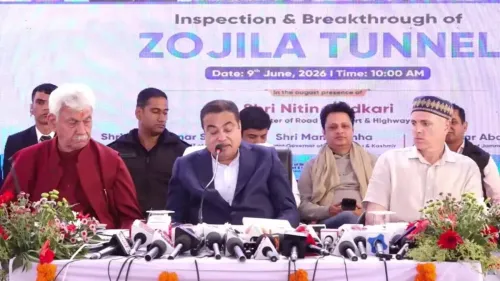
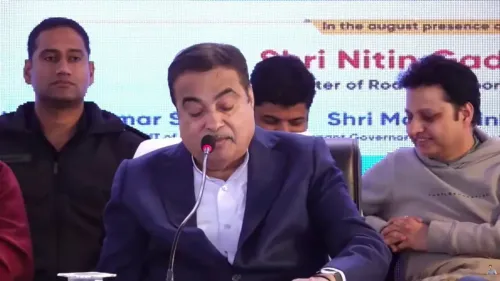
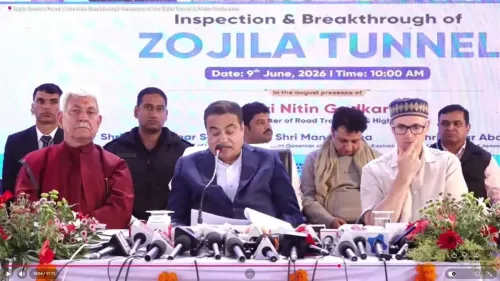
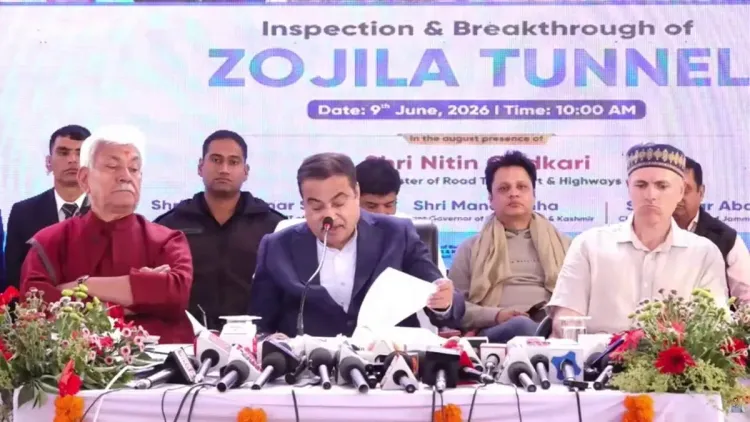
Union Road Transport and Highways Minister Nitin Gadkari announced on Wednesday, June 10, 2026, that four high-speed road corridors are currently under construction in the Union Territory of Jammu and Kashmir, highlighting the Centre's push to deepen physical connectivity in the region.
Posting on X, Gadkari stated — 'केंद्र शासित प्रदेश जम्मू और कश्मीर में 4 हाई स्पीड कॉरिडोर का हो रहा है निर्माण!' ('Four high-speed corridors are being constructed in the Union Territory of Jammu and Kashmir!') — tagging the announcements under the hashtags #PragatiKaHighway, #GatiShakti, and #BuildingTheNation.
Context
The announcement comes as the central government continues its accelerated infrastructure drive in Jammu and Kashmir following the region's reorganisation as a Union Territory in 2019. Physical connectivity has been treated as a central instrument of both economic development and political integration in the territory since that transition.
High-speed corridors reduce travel times for civilians, traders, and tourism operators while also enabling faster logistics movement. The 'Pragati Ka Highway' branding used in the post has been associated with central road projects in J&K since at least the 2022–2023 budget cycle.
Policy Backdrop
The four corridors fall under the broader architecture of Bharatmala Pariyojana, the umbrella highway development programme launched in 2015 that identified priority corridors across northern states and border regions including J&K. Bharatmala marked a shift from standalone road projects to a network-based approach prioritising economic corridors, border connectivity, and ring roads.
Layered on top is PM Gati Shakti, the National Master Plan launched in 2021, which integrates road construction with rail, port, and logistics planning through a common digital platform. Together, the two programmes represent the government's move toward coordinated, technology-enabled infrastructure delivery rather than ministry-by-ministry execution.
Gadkari, who has served as Union Minister of Road Transport and Highways continuously since 2014, has overseen a significant expansion of the national highway network and has repeatedly cited J&K as a priority zone for corridor development under both schemes.
Stakeholders and Impact
Residents of Jammu and Kashmir stand to benefit directly through reduced travel times between key towns and improved access to markets and services. The tourism sector — a critical economic pillar for the territory — is among the most immediate beneficiaries, as better roads lower the cost and time of reaching destinations such as Srinagar, Gulmarg, and the Vaishno Devi corridor.
Traders and logistics operators moving goods across the Jammu–Srinagar axis and into border districts also gain from reduced transit times and improved all-weather road access. Highway contractors and construction firms active in the region represent the principal private-sector stakeholders in the execution phase.
What's Next
Detailed progress reports on land acquisition, tunnelling, and civil works for each of the four corridors are expected to emerge through NHAI reviews and forthcoming budget disclosures. Any supplementary allocation in the next Union Budget or revised completion timelines announced by the ministry will be closely watched by the construction industry and J&K's administration alike.
With the Gati Shakti framework mandating inter-ministerial coordination, progress on the road corridors is likely to be tracked alongside parallel rail and logistics investments in the territory, making the four projects a barometer for the broader connectivity ambition in Jammu and Kashmir.
Point of View
Lending them institutional weight beyond a single ministry. Sustained delivery on these four corridors will be a key test of whether the post-2019 connectivity promise translates into measurable outcomes before the next electoral cycle.
NationPress
26 Oct 2026
Frequently Asked Questions
How many high-speed corridors are being built in Jammu and Kashmir?
Four high-speed road corridors are currently under construction in Jammu and Kashmir, as announced by Union Minister Nitin Gadkari on June 10, 2026.
What is Pragati Ka Highway in Jammu and Kashmir?
'Pragati Ka Highway' is the branding used by the Ministry of Road Transport and Highways for its road infrastructure push in Jammu and Kashmir, associated with projects under the Bharatmala Pariyojana framework since the 2022–2023 budget cycle.
What is PM Gati Shakti and how does it relate to J&K roads?
PM Gati Shakti is the National Master Plan launched in 2021 that integrates road, rail, port, and logistics planning on a common digital platform. J&K corridor projects are coordinated under this framework to ensure multimodal connectivity rather than standalone road construction.
What is Bharatmala Pariyojana and does it cover Jammu and Kashmir?
Bharatmala Pariyojana is a central government umbrella highway development programme launched in 2015 that identified priority corridors across India, including links serving Jammu and Kashmir and other border regions.
Why is the Centre investing heavily in roads in Jammu and Kashmir?
Post-2019, following J&K's reorganisation as a Union Territory, the central government has used highway and corridor projects as a core instrument of economic development, tourism promotion, and political integration in the region.