Gadkari Flags J&K's New Era of Road Connectivity

Synopsis
Union Minister Nitin Gadkari on 11 June 2026 declared Jammu and Kashmir is entering a new era of road connectivity and prosperity, invoking PM Gati Shakti and Bharatmala Pariyojana as the policy backbone, and tagging the LG and Chief Minister in a coordinated message.
Key Takeaways
Union Minister Nitin Gadkari posted on 11 June 2026 declaring Jammu and Kashmir is moving toward a new era of connectivity, progress, and prosperity.
The post tagged Lieutenant Governor Manoj Sinha , Chief Minister Omar Abdullah , and the LG's office, signalling coordinated messaging across central and UT administrations.
Bharatmala Pariyojana (approved 2015 ) and PM Gati Shakti (launched October 2021 ) are the two flagship schemes driving highway expansion in the region.
Road connectivity has been a central policy instrument in Jammu and Kashmir since the revocation of Article 370 in August 2019 and reorganisation into a Union Territory.
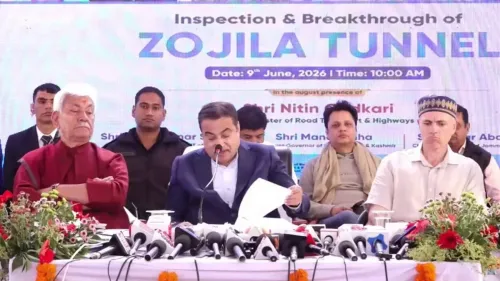
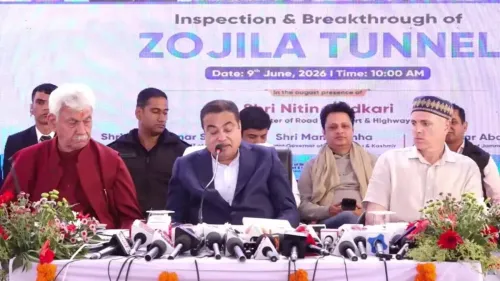
Key projects under watch include the Delhi-Amritsar-Katra Expressway corridor and the Zojila Tunnel for all-weather access to Ladakh.
Residents, tourism operators, local traders, and security planners are all identified as direct stakeholders in the region's highway expansion.
Union Road Transport and Highways Minister Nitin Gadkari on Thursday, 11 June 2026 declared that Jammu and Kashmir is advancing toward a new era of connectivity, progress, and prosperity, invoking the resolve of a 'New India' in a post on X that tagged Lieutenant Governor Manoj Sinha and Chief Minister Omar Abdullah.
Context
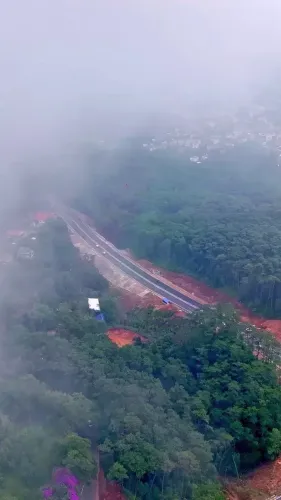
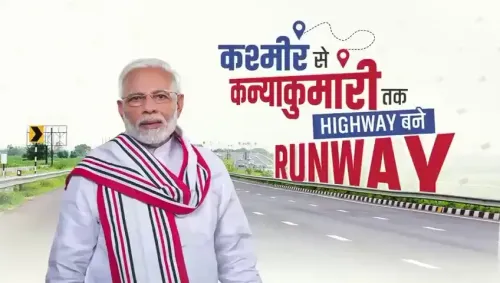
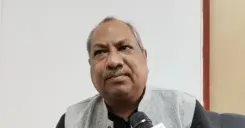
Gadkari's post, in Hindi, reads: 'नए भारत के संकल्प के साथ जम्मू-कश्मीर आज कनेक्टिविटी, प्रगति और समृद्धि के एक नए युग की ओर अग्रसर है!' — ('With the resolve of New India, Jammu and Kashmir today is moving towards a new era of connectivity, progress and prosperity!'). The message was accompanied by a video and hashtagged #PragatiKaHighway, #GatiShakti, and #BuildingTheNation, signalling the government's framing of road infrastructure as a vehicle for the region's economic transformation.
The post tagged @manojsinha_ (Lieutenant Governor of Jammu and Kashmir), @OmarAbdullah (Chief Minister), and @OfficeOfLGJandK, indicating coordinated messaging between the Union Ministry, the LG's office, and the elected state government on the Union Territory's infrastructure push.
Policy Backdrop
Road connectivity in Jammu and Kashmir has been a central plank of central government policy since the revocation of Article 370 in August 2019, which reorganised the erstwhile state into two Union Territories and removed legal barriers to accelerated central funding. Annual Union Budgets post-2019-20 have progressively raised allocations for National Highways in the region under the Ministry of Road Transport and Highways.
Two flagship schemes underpin the current push. Bharatmala Pariyojana, approved in 2015, sanctioned several expressway and corridor projects linking the Kashmir Valley and Jammu with Punjab and Himachal Pradesh, including the Delhi-Amritsar-Katra Expressway corridor. The PM Gati Shakti National Master Plan, launched in October 2021, layered a digital, multi-ministry coordination framework over these projects to reduce delays through single-window clearances, particularly critical in the challenging terrain of border and hill regions.
The Zojila Tunnel project, designed to provide all-weather connectivity to the Ladakh region, is among the marquee works being monitored as a symbol of the government's commitment to the area.
Stakeholders and Impact
Improved road connectivity in Jammu and Kashmir has direct implications for multiple groups. Residents of remote districts stand to gain from reduced travel times and better access to markets and services, while the tourism sector — a backbone of the local economy — depends heavily on reliable, all-weather road access to destinations such as Gulmarg, Pahalgam, and Sonamarg.
Local traders and logistics operators have long cited poor connectivity as a key constraint on economic activity, particularly during winter months when mountain passes close. A faster, more resilient highway network is expected to lower logistics costs and open supply chains to national markets. Security planners also view strategic road links as essential for rapid movement of personnel and supplies along sensitive border areas.
What's Next
Attention will now focus on the completion timelines and utilisation of funds for flagship corridors, including the Delhi-Amritsar-Katra Expressway and the Zojila Tunnel. Parliamentary oversight — through questions in both Houses and periodic Comptroller and Auditor General reports on highway fund utilisation in the Union Territory — will serve as key accountability benchmarks.
The next Union Budget's highway allocation for Jammu and Kashmir will be closely watched as an indicator of whether the political messaging translates into sustained financial commitment. With the Ministry, the LG's office, and the elected government publicly aligned, the institutional groundwork for accelerated delivery appears in place — but on-ground execution across difficult Himalayan terrain remains the defining challenge.
Point of View
Converting a political decision into a tangible development narrative. By tagging both the Lieutenant Governor and the elected Chief Minister together, the messaging deliberately projects institutional unity between the central appointee and the democratically elected government — a politically significant optic in a Union Territory still navigating its post-Article 370 identity. The invocation of #GatiShakti and #PragatiKaHighway anchors the post within a broader national branding exercise that links highway construction to the 'New India' vision. The real test, however, lies in delivery: CAG audits and parliamentary scrutiny of fund utilisation will determine whether the momentum in messaging is matched by progress on the ground.
NationPress
16 Sept 2026
Frequently Asked Questions
What is Gadkari's announcement about Jammu and Kashmir roads?
On 11 June 2026 , Union Minister Nitin Gadkari declared that Jammu and Kashmir is entering a new era of road connectivity, progress, and prosperity, citing schemes like PM Gati Shakti and Bharatmala Pariyojana as the driving force.
What is PM Gati Shakti and how does it apply to Jammu and Kashmir?
PM Gati Shakti is a National Master Plan launched in October 2021 to coordinate infrastructure planning across ministries using digital tools and single-window clearances. In Jammu and Kashmir, it is used to accelerate highway projects in difficult Himalayan terrain by reducing bureaucratic delays.
What is the Bharatmala Pariyojana and which J&K projects does it cover?
Bharatmala Pariyojana is a national highway development programme approved in 2015 that includes expressway and corridor projects linking the Kashmir Valley and Jammu with Punjab and Himachal Pradesh, including the Delhi-Amritsar-Katra Expressway corridor.
How has road development in J&K changed after Article 370 was revoked?
After the revocation of Article 370 in August 2019 , Jammu and Kashmir became a Union Territory under direct central administration, removing legal barriers and enabling accelerated central funding for national highway projects in the region.
Who is Manoj Sinha and why was he tagged in Gadkari's post?
Manoj Sinha is the Lieutenant Governor of Jammu and Kashmir, the senior-most central government representative in the Union Territory. His tagging alongside Chief Minister Omar Abdullah signals coordinated messaging between the Union Ministry, the LG's office, and the elected government on infrastructure delivery.