Shekhawat highlights Kashmir-Kanyakumari road transformation
Synopsis
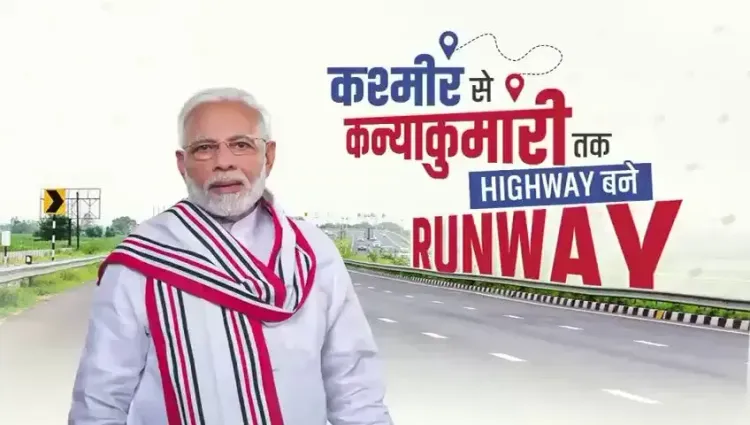
Union Minister Gajendra Singh Shekhawat on 7 June 2026 posted a video contrasting Kashmir-to-Kanyakumari road travel between 2013 and 2026, saying the journey has shrunk from 7-8 days to 2-3 days under Bharatmala and PM Gati Shakti, framing it as an historic leap in connectivity and economic strength.
Key Takeaways
Union Minister Gajendra Singh Shekhawat posted on 7 June 2026 comparing road travel on the Kashmir-Kanyakumari corridor between 2013 and 2026.
The minister claims the journey time has fallen from 7-8 days to 2-3 days over the past 12 years.
Bharatmala Pariyojana , approved in 2015 , targets 34,800 km of new national highways including economic corridors.
PM Gati Shakti , launched in October 2021 , integrates cross-ministry infrastructure planning to speed up project delivery.
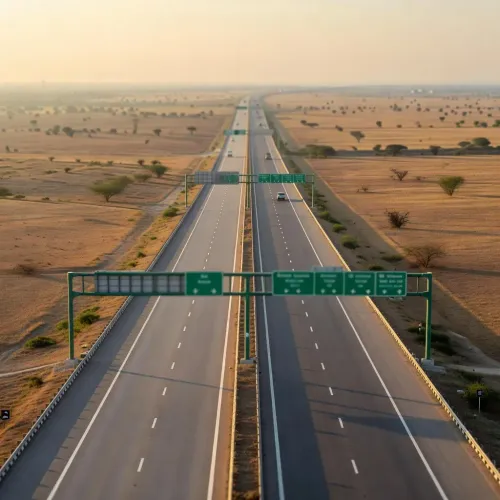
Shekhawat cited wider highways, modern tunnels, wayside amenities every 40-60 km , and EV charging stations as visible improvements.
The post frames road infrastructure as a driver of tourism growth, logistics efficiency, and broader economic development.
Union Culture and Tourism Minister Gajendra Singh Shekhawat on Sunday, 7 June 2026, shared a video on X contrasting road travel conditions on the Kashmir-to-Kanyakumari corridor between 2013 and 2026, crediting the Modi government's infrastructure programmes for a dramatic reduction in journey time and an improvement in road quality across the length of the country.
Context
Shekhawat's post, written in Hindi, draws a pointed before-and-after comparison: 'एक समय था जब कश्मीर से कन्याकुमारी का सफर टूटी सड़कों, लंबे ट्रैफिक जाम और मौसम की चुनौतियों से भरी कठिन परीक्षा हुआ करता था' ('There was a time when the Kashmir-to-Kanyakumari journey was a gruelling test of broken roads, long traffic jams, and weather challenges'). He contrasts that experience with what he describes as today's expressway era, citing wider highways, modern tunnels, wayside amenities every 40-60 km, and EV charging stations as markers of the new India.
The minister states that a journey that once took 7-8 days can now be completed in 2-3 days, attributing the change to 12 years of focused highway development under the current government. The post frames the infrastructure shift not merely as a logistical improvement but as — in his words — 'an historic leap in time savings, better connectivity, and a stronger economy.'
Policy Backdrop
Bharatmala Pariyojana, approved by the Union Cabinet in 2015, set out to develop 34,800 km of national highways, with a focus on economic corridors and border-area connectivity. The programme represented a shift from piecemeal state-level road works to centrally coordinated expressway and tunnel construction along strategically identified routes.
PM Gati Shakti, the National Master Plan launched in October 2021, added a coordination layer, integrating infrastructure planning across ministries to accelerate project execution and reduce logistics costs. Together, these two flagship schemes form the backbone of the government's pitch that India's road network has been structurally transformed over the past decade. The Kashmir-Kanyakumari corridor — spanning the country's northernmost and southernmost tips — has long served as a symbolic measure of national connectivity.
Stakeholders and Impact
The most direct beneficiaries of improved highway infrastructure are long-distance road travellers, the tourism sector, and logistics companies that rely on surface freight. For the tourism ministry, which Shekhawat heads alongside the culture portfolio, better road connectivity directly supports domestic tourism growth by making remote destinations more accessible and reducing travel fatigue.
Logistics firms and small businesses along national highway corridors also stand to gain from lower transit times and reduced vehicle wear. Wayside amenities and EV charging infrastructure along the corridor, as cited in the post, are also relevant to the government's parallel push for electric mobility adoption on inter-city routes.
What's Next
The completion of remaining Bharatmala phases and any new expressway inaugurations flagged in the 2026-27 Union Budget or upcoming parliamentary sessions will determine whether the momentum Shekhawat highlights is sustained. The minister's post, timed outside any specific inauguration event, appears aimed at building a broader public narrative around infrastructure as a governance achievement ahead of electoral cycles in several states. The Kashmir-Kanyakumari frame is likely to recur in BJP communication as a shorthand for national integration through physical connectivity.
Point of View
Using the Kashmir-Kanyakumari corridor — a powerful symbol of national integration — to reinforce the BJP's infrastructure narrative ahead of state electoral cycles. By anchoring the comparison in 2013, the post implicitly targets the preceding UPA government's record on roads, a contrast the party has consistently deployed since 2014. The framing of physical connectivity as economic and cultural integration also aligns neatly with Shekhawat's dual portfolio covering both tourism and culture, lending the message cross-ministry resonance. Whether the specific travel-time claims hold up to independent scrutiny will determine how effectively the post lands beyond the party's existing base.
NationPress
23 Oct 2026
Frequently Asked Questions
What did Gajendra Singh Shekhawat say about Kashmir to Kanyakumari roads?
Shekhawat posted a video on 7 June 2026 saying the Kashmir-to-Kanyakumari road journey, which once took 7-8 days on broken roads with heavy traffic, can now be completed in 2-3 days thanks to expressways, tunnels, and better highway infrastructure built over the past 12 years.
What is Bharatmala Pariyojana and how does it relate to this?
Bharatmala Pariyojana is a central government highway development programme approved in 2015 to build 34,800 km of national highways, focusing on economic corridors and border connectivity. Shekhawat credited it as one of the key schemes behind the improvement in road travel across India.
What is PM Gati Shakti and what does it do?
PM Gati Shakti is the National Master Plan launched in October 2021 that integrates infrastructure planning across multiple central ministries to speed up project execution and improve logistics efficiency. It works alongside Bharatmala to coordinate road, rail, and port development.
How much has India's highway network grown under the Modi government?
The Modi government has cited Bharatmala Pariyojana, which targets 34,800 km of new highways, as the cornerstone of national highway expansion since 2015. Broader national highway construction has accelerated significantly since 2014, though exact cumulative figures vary by measurement period.
Why is the Kashmir to Kanyakumari route significant for India's infrastructure?
The Kashmir-to-Kanyakumari corridor spans the entire length of India from its northernmost to southernmost tip, making it a symbolic benchmark for national connectivity. Improvements along this route reflect the overall quality and continuity of India's national highway network.