Gadkari flags Talegaon-Chakan-Shikrapur corridor for Maharashtra
Synopsis
Union Minister Nitin Gadkari on 19 July 2026 spotlighted the Talegaon-Chakan-Shikrapur Corridor as a defining connectivity project for Maharashtra, linking it to the PM Gati Shakti and Bharatmala frameworks that have driven India's national highway expansion since 2015.
Key Takeaways
Union Minister Nitin Gadkari on 19 July 2026 described the Talegaon-Chakan-Shikrapur Corridor as a 'new symbol of Maharashtra's future connectivity.' The corridor lies in the Pune metropolitan region, adjacent to the Chakan industrial cluster, one of India's largest automotive manufacturing hubs.
The project falls under the Bharatmala Pariyojana framework, which targets 34,800 km of national highways including economic corridors.
The PM Gati Shakti National Master Plan , launched October 2021 , provides the integrated multimodal planning backbone for such corridor projects.
Key stakeholders include Pune commuters, Chakan industrial units and Maharashtra logistics firms dependent on efficient freight movement.
Budget allocations and land acquisition timelines for the corridor are expected to be detailed in the 2025-26 fiscal disclosures.
Union Road Transport and Highways Minister Nitin Gadkari on Sunday, 19 July 2026, highlighted the Talegaon-Chakan-Shikrapur Corridor as a transformative connectivity project for Maharashtra, calling it a new symbol of the state's future infrastructure under the #GatiShakti and #PragatiKaHighway initiatives.
Context
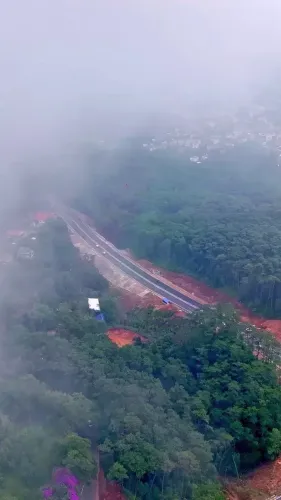
Gadkari posted on X in Hindi, describing the corridor as 'महाराष्ट्र के भविष्य की कनेक्टिविटी का नया प्रतीक' — 'a new symbol of Maharashtra's future connectivity.' The post was accompanied by a video, signalling the ministry's intent to build public awareness around the project. The Talegaon-Chakan-Shikrapur belt sits in the high-growth Pune metropolitan region, home to one of India's densest clusters of automotive and manufacturing industries.
Policy Backdrop
The corridor fits squarely within two flagship central programmes. The Bharatmala Pariyojana, announced in 2015, set out to build 34,800 km of national highways including dedicated economic corridors, with multiple Pune-region projects approved under Phase I between 2017 and 2022. Alongside it, the PM Gati Shakti National Master Plan, launched in October 2021, mandates integrated planning across road, rail, ports and logistics parks to cut freight costs and eliminate bottlenecks.
Gadkari has been at the helm of the road transport ministry since 2014, overseeing a sustained push to upgrade state and district highways to national standards, particularly around industrial nodes in western India. The Chakan industrial area, one of the anchors of this corridor, hosts major automobile manufacturers and component suppliers whose logistics costs are directly affected by road quality and capacity.
Stakeholders and Impact
The primary beneficiaries of a developed Talegaon-Chakan-Shikrapur Corridor would be Pune commuters, logistics firms operating out of Chakan's industrial estates, and freight operators moving goods across Maharashtra's western hinterland. Improved connectivity in this corridor is expected to reduce travel time between these industrial townships and reduce pressure on existing state highways that serve the same belt.
For Maharashtra more broadly, the project aligns with the state government's own infrastructure priorities and could attract further manufacturing investment by improving last-mile access to national highway networks. The central government has consistently framed such corridor projects as tools for reducing logistics costs as a share of GDP — a metric India has sought to bring down to single digits.
What's Next
Formal project timelines, land acquisition schedules and budget allocations for the Talegaon-Chakan-Shikrapur Corridor are expected to become clearer through central and Maharashtra state budget disclosures in the 2025-26 fiscal cycle. The ministry's use of the #GatiShakti hashtag suggests the project will be tracked under the PM Gati Shakti portal's multimodal planning framework, which coordinates approvals across ministries. Watchers of Bharatmala implementation will look for the corridor's formal notification as a national highway project and subsequent tendering activity as indicators of execution pace.
Point of View
Keeping the BJP's infrastructure delivery narrative active in a key state. Maharashtra, with its dense industrial corridors around Pune, has been central to the Centre's Bharatmala and Gati Shakti messaging, and spotlighting the Talegaon-Chakan-Shikrapur belt reinforces the government's claim of translating national schemes into region-specific benefits. The timing — mid-2026 — also suggests the ministry may be building momentum ahead of budget or tendering announcements. Whether this translates into accelerated execution will depend on land acquisition progress and state-centre coordination, the two perennial bottlenecks for Pune-region highway projects.
NationPress
18 Oct 2026
Frequently Asked Questions
What is the Talegaon-Chakan-Shikrapur Corridor?
The Talegaon-Chakan-Shikrapur Corridor is a proposed road connectivity project in the Pune metropolitan region of Maharashtra, intended to improve freight and commuter movement through one of India's densest industrial belts, anchored by the Chakan automotive cluster.
What did Nitin Gadkari say about the Talegaon-Chakan-Shikrapur Corridor?
On 19 July 2026, Gadkari posted on X calling the corridor 'a new symbol of Maharashtra's future connectivity,' tagging it under the PM Gati Shakti and Pragati Ka Highway initiatives.
How does the corridor connect to PM Gati Shakti?
PM Gati Shakti, launched in October 2021, is a National Master Plan that integrates road, rail, port and logistics planning. The Talegaon-Chakan-Shikrapur Corridor is being positioned within this framework to ensure multimodal connectivity for the Pune industrial region.
What is Bharatmala Pariyojana and how does it relate to Maharashtra?
Bharatmala Pariyojana, announced in 2015, is a central programme targeting 34,800 km of national highways including economic corridors. Multiple Pune-region projects were approved under Bharatmala Phase I between 2017 and 2022, making Maharashtra a key focus state.
Who benefits from the Talegaon-Chakan-Shikrapur Corridor?
Primary beneficiaries include Pune commuters, logistics companies operating out of Chakan's industrial estates, automobile manufacturers in the region, and Maharashtra freight operators who rely on efficient road access to national highway networks.