Dr Jitendra Singh seeks parallel tunnel on Chenani-Nashri route
Synopsis
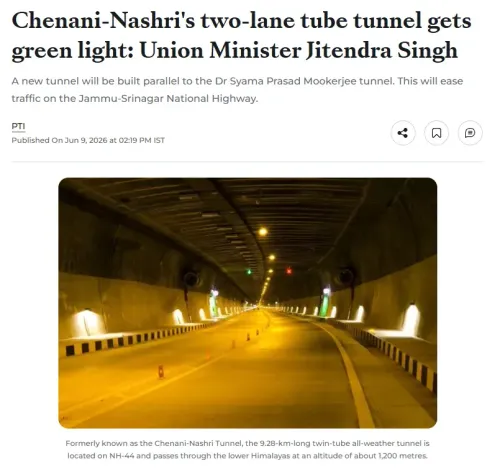
Union Minister Dr. Jitendra Singh has announced that NHAI and Road Transport Minister Nitin Gadkari have accepted his request to propose a new two-lane parallel tube tunnel alongside the Dr Syama Prasad Mookerjee Tunnel on NH-44 in Jammu and Kashmir, aiming to ease growing traffic congestion on the Chenani-Nashri route.
Key Takeaways
Jitendra Singh announced on June 9, 2026 that NHAI and Minister Nitin Gadkari have accepted his request for a parallel tunnel on the Chenani-Nashri route.
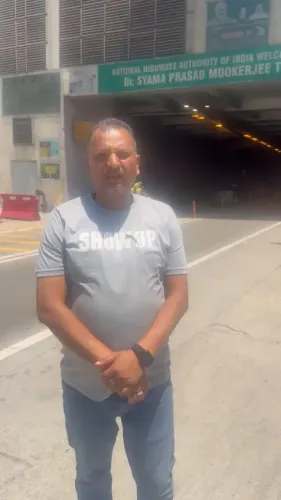
The proposed tunnel would run parallel to the existing 9.2-km Dr Syama Prasad Mookerjee Tunnel on National Highway 44 in Jammu and Kashmir.
The original tunnel was inaugurated by PM Narendra Modi on April 2, 2017 , reducing Jammu-Srinagar travel time by about two hours.
A parallel two-lane tube would address rising traffic volumes and provide operational redundancy during maintenance closures.
The next steps include NHAI preparing a detailed project report and initiating land acquisition notifications.
The project aligns with India's broader Bharatmala Pariyojana and NHDP-phase upgrades targeting all-weather Himalayan connectivity.
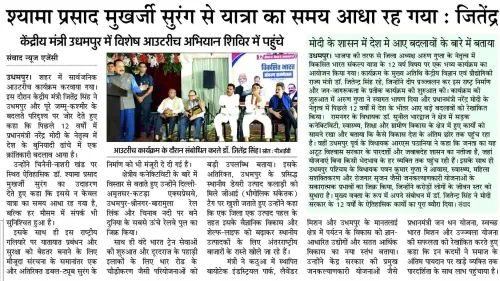
Union Science and Technology Minister Dr. Jitendra Singh on Tuesday, June 9, 2026, announced that the National Highways Authority of India (NHAI) and Union Road Transport and Highways Minister Nitin Gadkari have accepted his request to propose construction of a new two-lane tube tunnel parallel to the existing Dr Syama Prasad Mookerjee Tunnel on the Chenani-Nashri route along National Highway 44 in Jammu and Kashmir.
Context
Dr. Jitendra Singh, who represents the Udhampur Lok Sabha constituency, framed the development as 'another good news for Udhampur.' He credited NHAI and Minister Gadkari for accepting the request and moving to propose the parallel tunnel to ease growing traffic pressure on the Chenani-Nashri section of NH-44.
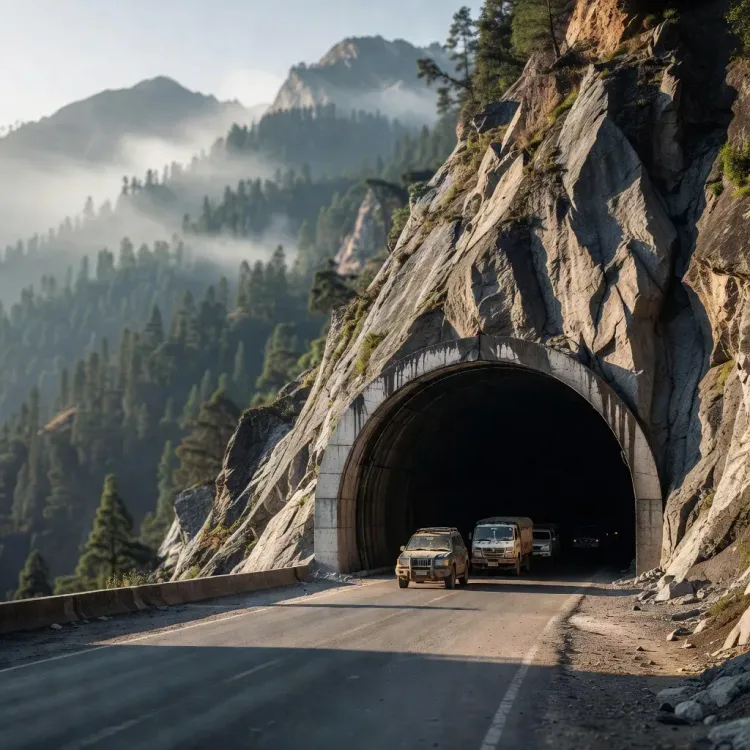
The minister recalled that the existing Dr Syama Prasad Mookerjee Tunnel — a 9.2-km all-weather road tunnel — was inaugurated by Prime Minister Narendra Modi on April 2, 2017, cutting travel time between Jammu and Srinagar by roughly two hours and offering a safer alternative to the snow-prone Jawahar Tunnel route.
Policy Backdrop
The original Chenani-Nashri tunnel was sanctioned under the National Highways Development Project (NHDP) Phase III in the mid-2000s as part of a long-term push to guarantee year-round connectivity to the Kashmir Valley and Ladakh. The NH-44 corridor, stretching over 400 km from Jammu to Srinagar, is the primary strategic artery linking the Union Territory to the rest of India.
The parallel-tube approach is increasingly favoured on high-traffic mountain highways to manage rising vehicle volumes and to ensure operational redundancy when one tube requires maintenance or faces an emergency closure. The proposal is consistent with ongoing corridor upgrades being pursued under Bharatmala Pariyojana and residual NHDP phases.
Stakeholders and Impact
Commuters, freight operators, and the defence and logistics ecosystem that depends on NH-44 stand to benefit most directly. Udhampur district residents, whose connectivity to both Jammu and the Valley runs through this corridor, are among the immediate stakeholders flagged by Dr. Singh in his announcement.
A parallel tube would also provide a critical safety buffer: single-tube tunnels of this length require periodic closures for maintenance, during which all traffic must revert to the older, weather-vulnerable mountain road. A second bore would eliminate that vulnerability and reduce the risk of prolonged blockages during extreme weather or accidents.
What's Next
The proposal stage will be followed by NHAI preparing a detailed project report, including alignment studies and land acquisition notifications. The project's inclusion in Parliament's annual highway construction targets — a key metric for the Ministry of Road Transport and Highways — will be closely watched by infrastructure observers and J&K stakeholders alike.
If the proposal moves through approvals swiftly, the new parallel tube on the Chenani-Nashri section could significantly future-proof one of India's most strategically sensitive highway corridors for decades to come.
Point of View
Planners are now investing in redundancy on choke-point tunnels that carry strategic and civilian traffic alike. The Chenani-Nashri corridor's centrality to Jammu-Kashmir connectivity means any capacity addition here carries outsized political and security weight, making the Centre's responsiveness to Singh's request a visible demonstration of federal attention to the Union Territory. Whether the proposal clears DPR and funding approvals at pace will be the real test of intent.
NationPress
26 Oct 2026
Frequently Asked Questions
What is the Dr Syama Prasad Mookerjee Tunnel?
The Dr Syama Prasad Mookerjee Tunnel is a 9.2-km all-weather road tunnel on National Highway 44 connecting Chenani and Nashri in Jammu and Kashmir, inaugurated by Prime Minister Narendra Modi on April 2, 2017. It reduced travel time between Jammu and Srinagar by approximately two hours.
Why is a parallel tunnel being proposed on NH-44?
A parallel two-lane tube tunnel has been proposed to ease growing traffic congestion on the Chenani-Nashri section of NH-44 and to provide operational redundancy when the existing tunnel requires maintenance or faces emergency closures.
Who approved the parallel tunnel proposal for Chenani-Nashri?
Union Road Transport and Highways Minister Nitin Gadkari and NHAI accepted the request made by Union Minister Dr. Jitendra Singh to propose the construction of the new parallel tunnel.
What is the current status of the parallel tunnel project?
As of June 2026, the project is at the proposal stage. NHAI is expected to prepare a detailed project report and initiate land acquisition notifications before construction can begin.
How does this project relate to Bharatmala Pariyojana?
The proposed parallel tunnel aligns with India's Bharatmala Pariyojana and residual NHDP phases, which together aim to upgrade strategic highway corridors in the Himalayan region for all-weather connectivity to Jammu and Kashmir and Ladakh.