Dr. Jitendra Singh flags green light for Chenani-Nashri two-lane tube tunnel
Synopsis
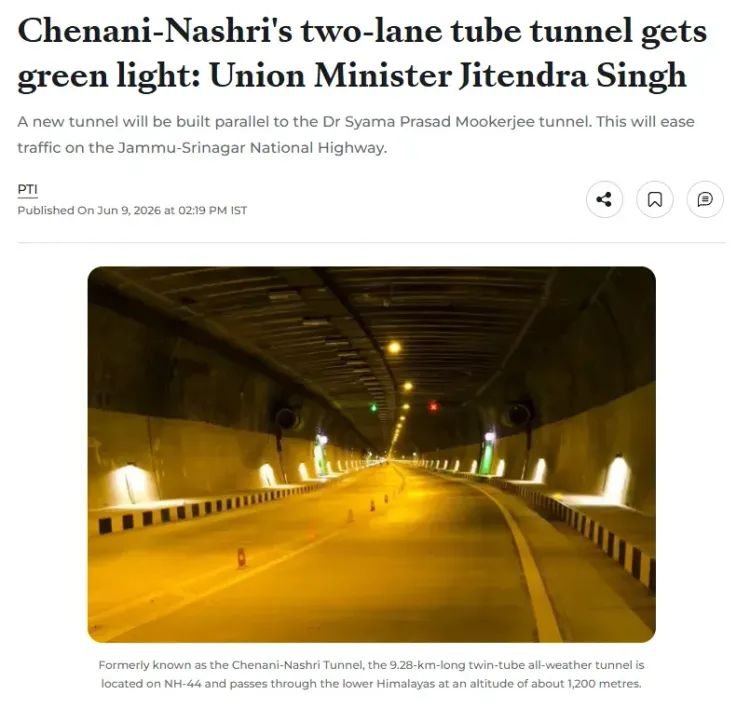
Union Minister Dr. Jitendra Singh highlighted the approval of a new two-lane tube tunnel at Chenani-Nashri on NH-44 in Jammu and Kashmir on June 10, 2026, signalling a fresh push to boost all-weather connectivity on the critical Jammu-Srinagar corridor.
Key Takeaways
Jitendra Singh flagged the green light for a two-lane tube tunnel at Chenani-Nashri on June 10, 2026 .
The corridor sits on NH-44 , the main Jammu-Srinagar national highway in Jammu and Kashmir .
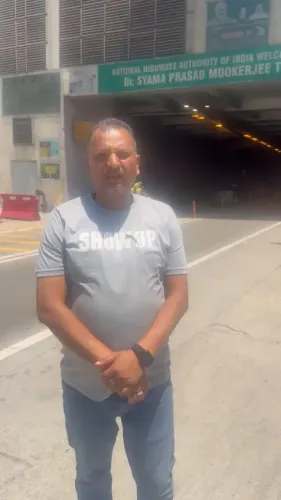
Syama Prasad Mookerjee Tunnel at Chenani-Nashri was inaugurated in April 2017 as India's longest road tunnel at the time.
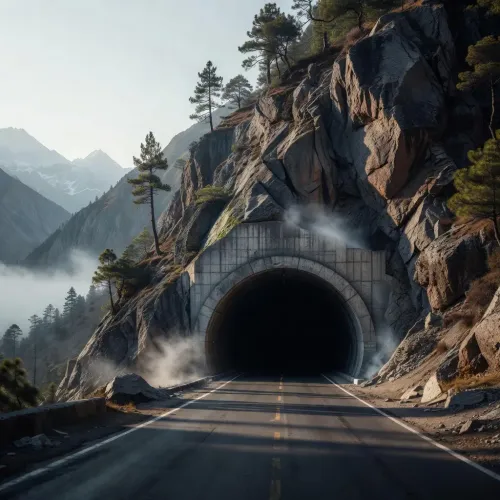
A second tube would provide redundancy and additional capacity for civilian, commercial, and strategic traffic on this mountain corridor.
Next steps include detailed project reports, tendering, and environmental clearances from NHAI and the Ministry of Road Transport and Highways .
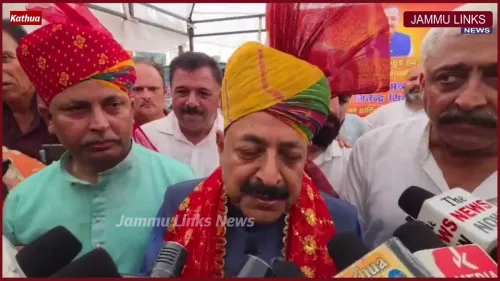
Union Science and Technology Minister Dr. Jitendra Singh on Wednesday, June 10, 2026, highlighted the approval of a new two-lane tube tunnel at Chenani-Nashri on NH-44 in Jammu and Kashmir, sharing the development via his official X account.
Context
The post by Dr. Jitendra Singh draws attention to a fresh regulatory or administrative green light for a second tube at the Chenani-Nashri tunnel corridor, a critical stretch on the Jammu-Srinagar national highway. The minister, who holds independent charge of Science and Technology and Earth Sciences and also serves as Minister of State in the Prime Minister's Office, regularly flags infrastructure milestones in Jammu and Kashmir.
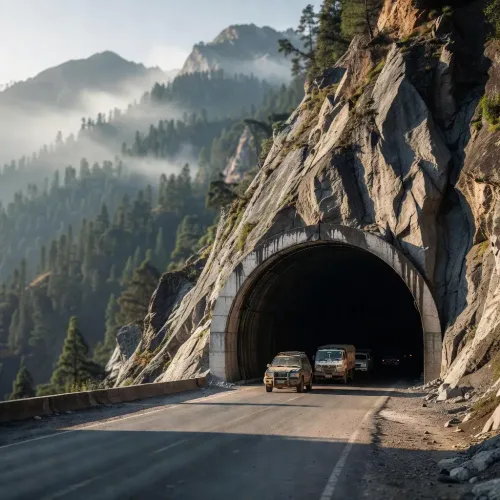
The original Chenani-Nashri Tunnel — formally named the Dr. Syama Prasad Mookerjee Tunnel — was inaugurated in April 2017 and was at the time India's longest road tunnel, cutting the travel time between Jammu and Srinagar significantly. It passes through the Patnitop range, bypassing a treacherous stretch of mountain road prone to landslides and snow closure.
Policy Backdrop
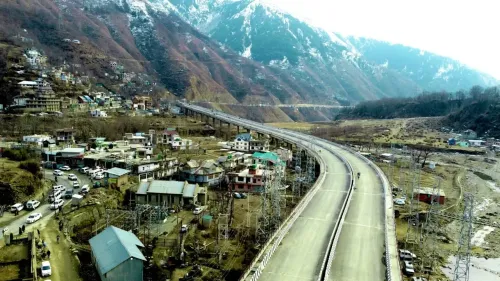
The approval fits into a sustained central government push to upgrade all-weather connectivity along the Jammu-Srinagar corridor since Jammu and Kashmir's reorganisation as a Union Territory in 2019. Multiple tunnels and highway-widening projects on NH-44 have been sanctioned and executed under centrally funded programmes, with the National Highways Authority of India (NHAI) as the primary executing agency.
A dedicated two-lane tube alongside the existing tunnel would address growing traffic volumes and provide redundancy in the event of maintenance shutdowns or emergencies in the primary bore. Such twin-tube configurations have become standard practice on high-traffic mountain corridors to ensure uninterrupted movement of civilian and strategic traffic.
Stakeholders and Impact
Residents of Jammu and Kashmir divisions, commercial transporters, and the large volume of pilgrims and tourists travelling to Vaishno Devi and the Kashmir Valley stand to benefit directly from enhanced capacity at this bottleneck. The corridor is also of strategic importance for defence logistics, making approvals at this node particularly significant.
Local businesses dependent on uninterrupted freight movement, as well as the tourism economy of the Kashmir Valley, are among the key stakeholders watching the project's progress. Smoother, more reliable transit through the Patnitop range translates into lower logistics costs and reduced travel uncertainty for ordinary commuters.
What's Next
The formal approval marks the beginning of the project cycle; detailed project reports, tendering, and construction timelines from the Ministry of Road Transport and Highways or NHAI are expected to follow. Observers will watch for an official announcement on the project's scope, cost, and completion target, as well as any environmental clearances required for tunnelling work in this ecologically sensitive Himalayan zone.
With connectivity remaining a top political and administrative priority in Jammu and Kashmir, the green light for the Chenani-Nashri second tube signals continued momentum in the region's infrastructure transformation — one that successive governments have positioned as central to the territory's economic integration with the rest of India.
Point of View
Linking development optics to the territory's post-reorganisation narrative. The twin-tube model, now routine on major mountain highways, also speaks to a maturation in India's highway engineering ambitions. Whether the project moves swiftly from approval to ground-breaking will be the real test of administrative momentum.
NationPress
19 Sept 2026
Frequently Asked Questions
What is the Chenani-Nashri tunnel and where is it located?
The Chenani-Nashri tunnel, officially named the Dr. Syama Prasad Mookerjee Tunnel, is a road tunnel on NH-44 in Jammu and Kashmir connecting Chenani in Udhampur district with Nashri in Ramban district. It was inaugurated in April 2017 and was India's longest road tunnel at the time.
What does the 'green light' for the two-lane tube tunnel mean?
It refers to an administrative or regulatory approval to construct an additional two-lane tube alongside the existing Chenani-Nashri tunnel bore, aimed at increasing capacity and providing redundancy on the Jammu-Srinagar highway.
Why is a second tube needed at Chenani-Nashri?
Growing traffic volumes and the need for uninterrupted connectivity — especially during maintenance or emergencies in the existing bore — make a second tube necessary. It will also improve safety and reduce congestion on this strategic mountain corridor.
Who is Dr. Jitendra Singh and why is he commenting on a road project?
Dr. Jitendra Singh is the Union Minister of State (Independent Charge) for Science and Technology and Earth Sciences, and also MoS in the Prime Minister's Office. He is a member of Parliament from Jammu and Kashmir and regularly highlights development projects in the region.
What is the significance of NH-44 for Jammu and Kashmir?
NH-44 is the primary road artery linking Jammu with Srinagar and serves as the main route for civilian commuters, commercial freight, pilgrims headed to Vaishno Devi, and strategic defence logistics in Jammu and Kashmir.