CM Bhajan Lal meets Rail Minister Vaishnaw, pushes Rajasthan rail expansion
Synopsis
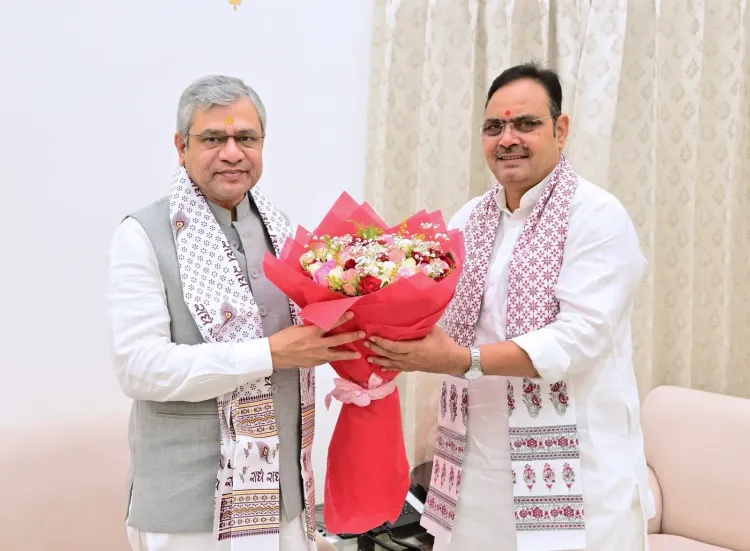
Rajasthan CM Bhajan Lal Sharma hosted Union Rail Minister Ashwini Vaishnaw at the Chief Minister's residence on November 5, 2026, holding discussions on rail network expansion, modernisation, and improved passenger amenities across Rajasthan.
Key Takeaways
Rajasthan CM Bhajan Lal Sharma met Union Rail Minister Ashwini Vaishnaw at the Chief Minister's residence on November 5, 2026 .
Talks covered rail network expansion, modernisation, and strengthening passenger amenities in Rajasthan .
The Amrit Bharat Stations scheme (launched 2023) covers over 1,300 stations nationally, including several in Rajasthan.
Rajasthan, India's largest state by area , has long sought greater rail density to serve its geography and tourism sector.
The meeting fits a pattern of increased Centre-state coordination on railway capital expenditure since 2019 .
Specific project outcomes, if any, are expected to reflect in the next Union Railway Budget pipeline.
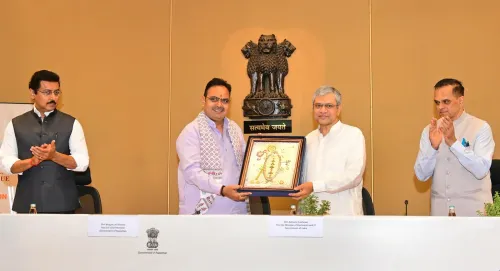
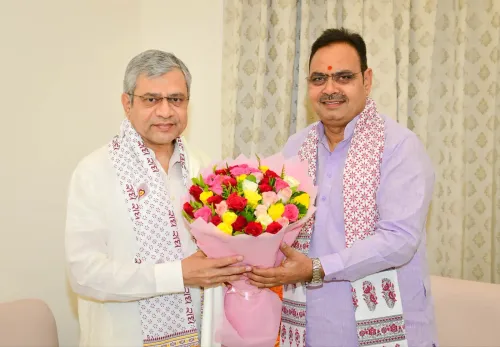
Rajasthan's railway ambitions got a high-level hearing on Thursday, November 5, 2026, when Rajasthan Chief Minister Bhajan Lal Sharma welcomed Union Minister for Railways, Information and Broadcasting, and Electronics and Information Technology Ashwini Vaishnaw at the Chief Minister's residence in Jaipur — signalling that the state's push for a stronger rail network is moving from wishlist to conversation.
CM Sharma greeted the Union Minister with a bouquet and the two held discussions on, as the Chief Minister described it, 'rail network ke vistar, aadhunikaran evam yatri suvidhaon ko aur adhik sudridh banane' — expanding the rail network, modernisation, and strengthening passenger amenities across Rajasthan.
Why Rajasthan's rail gap has long demanded attention
Rajasthan is India's largest state by area, yet its rail density has historically lagged behind its size and economic footprint. The state's sprawling geography — desert corridors, heritage tourism circuits, industrial clusters — demands a denser, faster network than currently exists. Track doubling on key corridors and new line connectivity to underserved districts have been standing demands from the state government for years.
The Centre's Amrit Bharat Stations scheme, launched in 2023, earmarked redevelopment for over 1,300 stations nationwide, with several Rajasthan stations on the list. That programme gave the state a concrete entry point into the broader modernisation push — and Thursday's meeting builds directly on that momentum.
What a BJP state-Centre alignment unlocks
Meetings like this one are more than courtesy calls. When a BJP-governed state's Chief Minister sits down with a Cabinet Minister from the same government, the alignment typically accelerates project clearances and shapes how the next Union Railway Budget prioritises state-specific asks. Rajasthan has consistently sought additional allocations for track doubling, electrification, and station upgrades — particularly along routes connecting its major tourist destinations.
Vaishnaw, who also holds the Electronics and IT portfolio, brings a technology dimension to railway modernisation — digital ticketing infrastructure, Wi-Fi at stations, and real-time passenger information systems are all areas where the IT and Railways portfolios increasingly overlap, giving Rajasthan an opening to pitch smart-station upgrades alongside conventional infrastructure asks.
Passengers and tourism: the real stakeholders
At the end of every such high-level meeting are the millions of passengers who board trains daily at Jaipur, Jodhpur, Udaipur, Ajmer and dozens of smaller stations — and the tourism sector that depends on reliable, comfortable rail access to Rajasthan's heritage circuits. Better frequency, faster journey times, and upgraded waiting areas translate directly into footfall and livelihoods.
Specific project announcements, if any emerge from Thursday's discussions, are most likely to surface in the coordination pipeline ahead of the next Union Railway Budget — and Rajasthan's case, freshly made at the highest level, will be harder to overlook.
Point of View
Where BJP-governed states leverage political alignment to accelerate infrastructure allocations ahead of the annual budget cycle. Rajasthan's ask — more track, better stations, smarter passenger infrastructure — is structurally sound given the state's size and tourism dependency. Vaishnaw's dual Railways-IT mandate also opens a door for digitally-enhanced station upgrades that go beyond brick-and-mortar redevelopment. Whether Thursday's discussion translates into specific project announcements will test how effectively Rajasthan has built its case.
NationPress
5 Nov 2026
Frequently Asked Questions
Why did Rajasthan CM Bhajan Lal Sharma meet Rail Minister Ashwini Vaishnaw?
CM Bhajan Lal Sharma met Union Rail Minister Ashwini Vaishnaw on November 5, 2026 to discuss the expansion of the rail network in Rajasthan, modernisation of infrastructure, and improvements in passenger amenities.
What is the Amrit Bharat Stations scheme and does it cover Rajasthan?
The Amrit Bharat Stations scheme, launched in 2023, targets the redevelopment of over 1,300 railway stations across India. Several stations in Rajasthan are included in the scheme.
What are Rajasthan's main railway infrastructure demands?
Rajasthan has long sought track doubling on key corridors, new rail lines to underserved districts, station upgrades, and better passenger amenities, given that it is India's largest state by area.
Who is Ashwini Vaishnaw?
Ashwini Vaishnaw is the Union Cabinet Minister holding the portfolios of Railways, Information and Broadcasting, and Electronics and Information Technology in the Government of India.
Will Rajasthan get new railway projects after this meeting?
No specific projects have been announced yet. Outcomes from such state-Centre coordination meetings typically surface in Union Railway Budget allocations or subsequent ministerial announcements.