Vaishnaw Highlights 12 Years of Rail Growth in Rajasthan
Synopsis
Union Minister Ashwini Vaishnaw, at the Viksit Bharat Sankalp Sammelan in Jaipur on June 11, 2026, declared that Rajasthan has witnessed unprecedented railway infrastructure growth over the past 12 years, spotlighting the Centre's development record in the state.
Key Takeaways
Union Minister Ashwini Vaishnaw addressed the Viksit Bharat Sankalp Sammelan in Jaipur on June 11, 2026 .
He highlighted 12 years of unprecedented railway infrastructure expansion in Rajasthan .
The 12-year period corresponds to the BJP-led NDA government's tenure at the Centre from 2014 .
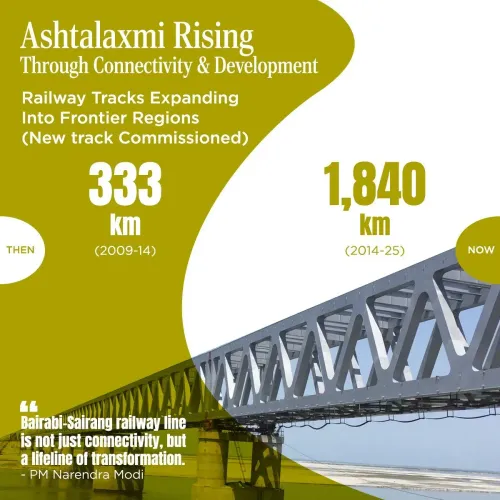
National railway capital expenditure reached a record Rs 2.52 lakh crore in the 2024-25 Union Budget .
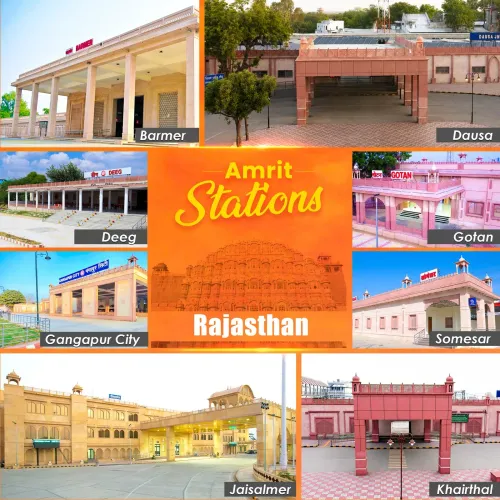
Key projects in Rajasthan include gauge conversions, electrification, new lines, and station upgrades under the Amrit Bharat Station Scheme .
The sammelan format is designed to communicate central government development milestones directly to citizens across states.
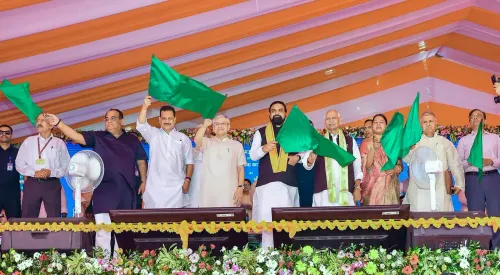
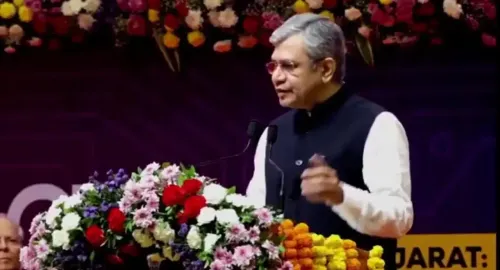
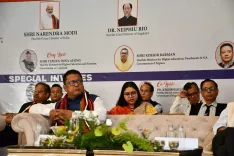
Union Minister Ashwini Vaishnaw on Thursday, June 11, 2026, highlighted the unprecedented expansion of railway infrastructure in Rajasthan over the past 12 years, speaking at the Viksit Bharat Sankalp Sammelan in Jaipur.
Context
Addressing the gathering, Vaishnaw stated — 'Pichhle 12 saalon mein, Rajasthan mein rail infrastructure ka abhootpoorv vistar hua hai' — ('In the last 12 years, there has been an unprecedented expansion of rail infrastructure in Rajasthan'). The event, Viksit Bharat Sankalp Sammelan, is a series of outreach conferences being held across states to communicate central government development milestones and welfare scheme achievements directly to citizens.
Rajasthan, one of India's largest states by area, has historically been a focus of railway expansion owing to its vast geography, sparse connectivity in desert regions, and strategic border importance.
Policy Backdrop
The 12-year period referenced by the Minister spans the tenure of the BJP-led National Democratic Alliance government at the Centre from 2014 onwards, during which railway budget allocations saw a significant upward revision nationally. Capital expenditure on railways has risen sharply in successive Union Budgets, with the 2024-25 Union Budget allocating over Rs 2.52 lakh crore to the railways — the highest ever at that time.
For Rajasthan specifically, this period saw work on new lines, gauge conversion of metre-gauge routes to broad gauge, electrification of rail corridors, and upgrades to stations under schemes such as the Amrit Bharat Station Scheme. The state also falls within the influence zone of the Delhi-Mumbai Industrial Corridor and associated freight rail projects.
Stakeholders and Impact
Improved rail connectivity in Rajasthan has direct implications for millions of daily commuters, farmers transporting produce, and industries reliant on freight movement across the state's 33 districts. Tourism — a major economic driver for cities such as Jaipur, Jodhpur, and Udaipur — also benefits from enhanced train services connecting heritage destinations.
The Viksit Bharat Sankalp Sammelan format positions senior Union Ministers as direct communicators of development outcomes, bypassing intermediary layers and addressing citizens and local stakeholders in state capitals. Vaishnaw's presence in Jaipur underscores the political and administrative importance the Centre places on Rajasthan, a state that has alternated between the BJP and the Congress in recent assembly elections.
What's Next
The sammelan circuit is expected to continue across other state capitals, with ministers from different portfolios anchoring sessions relevant to their ministries. For railways in Rajasthan, ongoing projects — including new line construction, electrification, and station redevelopment — are likely to be cited as the next phase of the infrastructure push Vaishnaw referenced. Completion timelines for key corridors will be closely watched by state stakeholders and commuters alike.
Point of View
The party frames infrastructure growth as a direct outcome of its governance, contrasting it implicitly with the preceding era. The Viksit Bharat Sammelan format — deploying senior Union Ministers to state capitals — reflects the Centre's intent to own the development story at the grassroots level, reducing dependence on state-level party machinery for communication. For Vaishnaw personally, such events reinforce his dual identity as both a technocratic minister and an active political campaigner.
NationPress
19 Sept 2026
Frequently Asked Questions
What did Ashwini Vaishnaw say about Rajasthan railways?
At the Viksit Bharat Sankalp Sammelan in Jaipur on June 11, 2026, Vaishnaw stated that Rajasthan has witnessed unprecedented expansion of rail infrastructure over the past 12 years.
What is the Viksit Bharat Sankalp Sammelan?
The Viksit Bharat Sankalp Sammelan is a series of outreach conferences organised by the central government across state capitals to communicate development milestones and welfare scheme achievements directly to citizens.
How much has India invested in railways in recent years?
The Union Budget for 2024-25 allocated a record Rs 2.52 lakh crore to Indian Railways, reflecting a sharp increase in capital expenditure on rail infrastructure over the past decade.
Which railway projects have been undertaken in Rajasthan?
Key railway projects in Rajasthan include new line construction, conversion of metre-gauge routes to broad gauge, electrification of corridors, and station redevelopment under the Amrit Bharat Station Scheme.
Why is railway connectivity important for Rajasthan?
Rajasthan's vast geography, sparse desert-region connectivity, large tourism economy, and strategic border location make railway expansion critical for commuters, farmers, industries, and tourists across the state's 33 districts.