Gujarat Local Body Elections: CM Bhupendra Patel, CR Patil Vote Early
Synopsis
Gujarat's 2025 local body elections kicked off with CM Bhupendra Patel, Union Minister CR Patil, and Deputy CM Harsh Sanghavi among the earliest voters. With counting on April 28, results will test BJP's two-decade grip on Gujarat's grassroots governance — from Ahmedabad corporations to remote taluka panchayats.
Key Takeaways
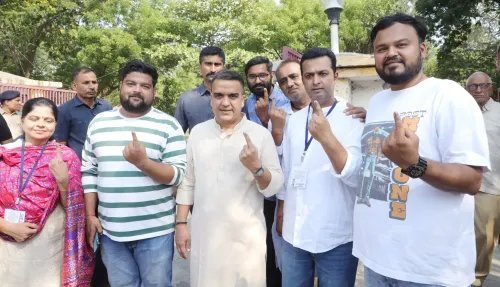
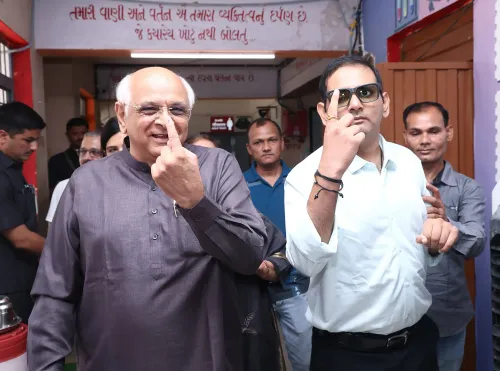
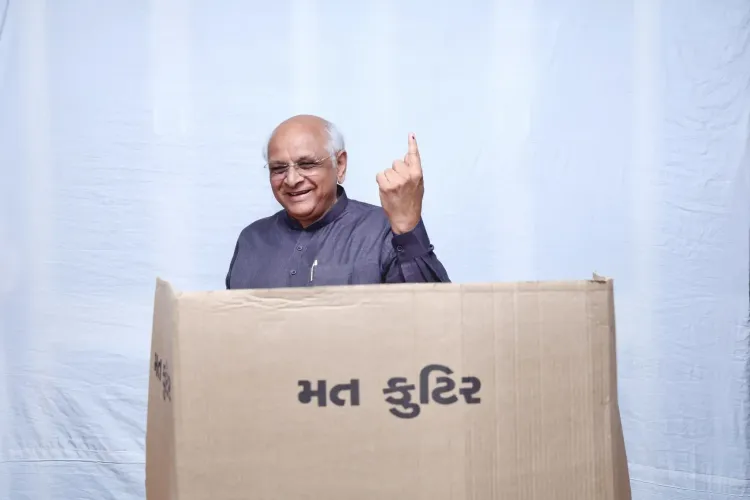
Chief Minister Bhupendra Patel voted at Shilaj Primary School, Ahmedabad on April 27, 2025 and called for 100 per cent voter turnout in Gujarat's local body elections.
Union Jal Shakti Minister C.R.
Patil cast his ballot at Uttar Gujarat Vidyalaya in Surat , accompanied by his 89-year-old mother .
Deputy Chief Minister Harsh Sanghavi voted in Surat and appealed specifically to young voters to participate actively.
Polling began at 7 a.m. across municipal corporations, municipalities, district panchayats, and taluka panchayats statewide under State Election Commission supervision.
Vote counting is scheduled for April 28, 2025 , with results expected to reflect BJP's organisational strength at the local governance level.
Saints from the Swaminarayan Temple and civic officials including Rajkot Municipal Commissioner Tushar Sumera also participated in the voting process.
Gujarat local body elections 2025 saw senior leaders including Chief Minister Bhupendra Patel and Union Jal Shakti Minister C.R. Patil lead by example on Sunday, April 27, casting their ballots among the earliest voters across the state. Polling began at 7 a.m. across thousands of booths covering municipal corporations, municipalities, district panchayats, and taluka panchayats, under the supervision of the State Election Commission of Gujarat.
Chief Minister Bhupendra Patel Votes at Shilaj Primary School
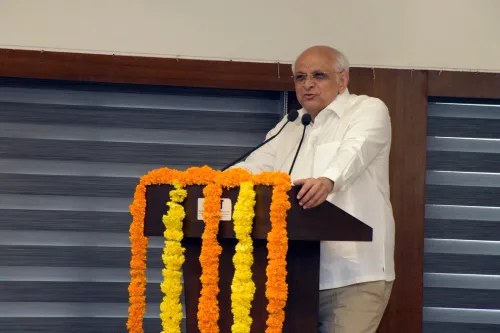
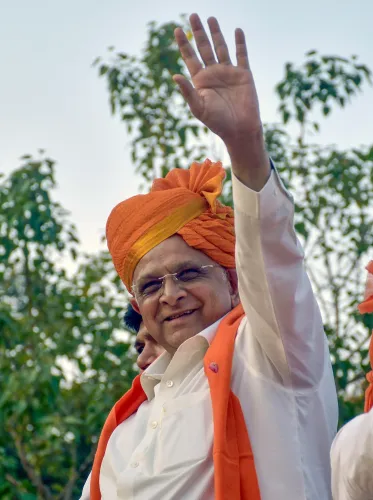
Chief Minister Bhupendra Patel exercised his franchise at Shilaj Primary School in Ahmedabad, accompanied by his family. After voting, he issued a passionate appeal to citizens across Gujarat, particularly targeting first-time and young voters.
He stated: "I have cast my vote with my family at Shilaj Primary School for the local self-government elections. I request all of you to definitely vote. Especially first-time voters and young voters should come forward enthusiastically for the creation of a developed Gujarat. Let us achieve 100 per cent voting and contribute to the overall development of Gujarat by fulfilling this sacred duty of democracy."
The Chief Minister's call for 100 per cent voter turnout reflects a broader push by the ruling Bharatiya Janata Party (BJP) to consolidate its dominance in local governance structures across the state — institutions that directly control civic infrastructure, water supply, sanitation, and rural development funds.
Union Minister CR Patil and Other Leaders Cast Votes
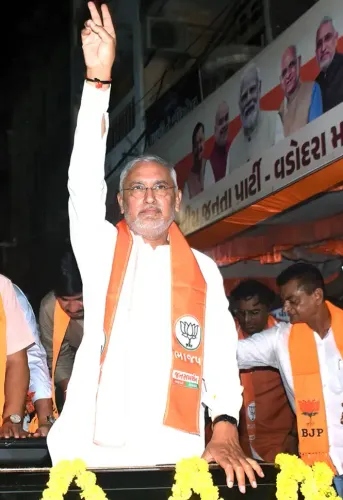
Union Jal Shakti Minister C.R. Patil voted at Uttar Gujarat Vidyalaya in Surat, accompanied by family members including his 89-year-old mother, in a gesture widely noted for its symbolic value around civic participation.
Deputy Chief Minister Harsh Sanghavi also voted in Surat earlier in the day, urging young voters to actively engage, describing the polls as part of a development-oriented mandate for the state.
State Cabinet Minister Arjun Modhwadia cast his ballot in his native Modhwada village in Porbandar district. He remarked that democracy derives its strength from voters and stressed that participating in elections is a fundamental civic duty. He added: "Local self-government institutions play a vital role in the development of villages and cities. Citizens must vote in large numbers."
Polling Across Districts: Security, Participation, and Key Highlights
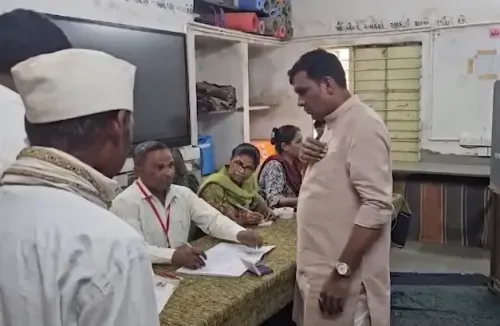
In Botad district, polling was conducted in Barwala for municipal, taluka panchayat, and district panchayat seats under tight security arrangements, with officials confirming peaceful voting throughout the morning.
Saints from the Swaminarayan Temple also participated in the voting process, reinforcing the broad social appeal of civic participation across communities.
In Morbi district, BJP MLA Durlabhjibhai Dethariya from the Tankara constituency cast his vote as polling continued across local bodies in the region.
Rajkot Municipal Commissioner Tushar Sumera also voted with his family at a city polling station, with civic officials across Gujarat actively participating in the electoral process — signalling institutional support for high turnout.
Why These Local Body Elections Matter for Gujarat
Gujarat's local body elections are among the most consequential sub-state electoral exercises in India's largest BJP-governed states. These institutions collectively manage budgets worth thousands of crores annually, influencing everything from urban infrastructure to rural welfare schemes under flagship programmes like PM Awas Yojana and Jal Jeevan Mission.
Notably, C.R. Patil, who heads the Jal Shakti Ministry — the very ministry overseeing national water connectivity — voting in Surat underscores the political importance of local governance in implementing central schemes at the grassroots level. His ministry's flagship Har Ghar Jal programme depends heavily on district and taluka panchayat machinery for last-mile delivery.
This comes amid Gujarat's sustained efforts to position itself as a model state for urban and rural governance, with the BJP keen to reinforce its near-total control of local bodies ahead of future assembly cycles. Critics, however, argue that high-profile voting optics must be matched by genuine administrative accountability at the panchayat and municipal levels, where citizen grievances around water, roads, and sanitation remain persistent.
Counting Date and What Comes Next
The State Election Commission confirmed that polling will continue until evening, with vote counting scheduled for April 28, 2025. Results from these elections will be closely watched as an indicator of ground-level political sentiment in Gujarat, particularly in urban centres like Ahmedabad, Surat, and Rajkot, ahead of future state and national electoral cycles.
With the BJP having dominated Gujarat's local governance landscape for over two decades, the 2025 local body results will test whether the party's organisational strength at the booth level remains intact — and whether the opposition can make meaningful inroads in any district or municipal body.
Point of View
Union Minister CR Patil, and Deputy CM Sanghavi signals a party acutely aware that voter apathy at the local level can erode the organisational edge it has built over two decades. What the optics of leaders voting with elderly mothers and families obscures is the real question: whether Gujarat's panchayats and municipal bodies are actually delivering on water, sanitation, and infrastructure — or whether the 'Viksit Gujarat' narrative is running ahead of ground realities that ordinary voters experience daily.
NationPress
24 Sept 2026
Frequently Asked Questions
Where did Gujarat CM Bhupendra Patel cast his vote in the 2025 local body elections?
Chief Minister Bhupendra Patel cast his vote at Shilaj Primary School in Ahmedabad during the Gujarat local body elections on April 27, 2025. He was accompanied by his family and urged citizens to achieve 100 per cent voter turnout.
When is the counting for Gujarat local body elections 2025?
Vote counting for the Gujarat local body elections 2025 is scheduled for April 28, 2025, as confirmed by the State Election Commission. Polling was conducted on April 27 across municipal corporations, municipalities, district panchayats, and taluka panchayats.
Which local bodies are covered in Gujarat's April 2025 elections?
The April 2025 Gujarat elections cover municipal corporations, municipalities, district panchayats, and taluka panchayats across the state. Polling was conducted at thousands of booths under the supervision of the State Election Commission of Gujarat.
Did Union Minister CR Patil vote in the Gujarat local body elections?
Yes, Union Jal Shakti Minister C.R. Patil voted at Uttar Gujarat Vidyalaya in Surat on April 27, 2025. He was accompanied by his family, including his 89-year-old mother.
What is the significance of Gujarat local body elections for the BJP?
Gujarat's local body elections are a key indicator of the BJP's grassroots organisational strength in its home state, where it has dominated local governance for over two decades. Results from these polls are closely watched ahead of future state and national electoral cycles.