Goyal Hails Bastar's Shift From Naxal Terror to Development
Synopsis
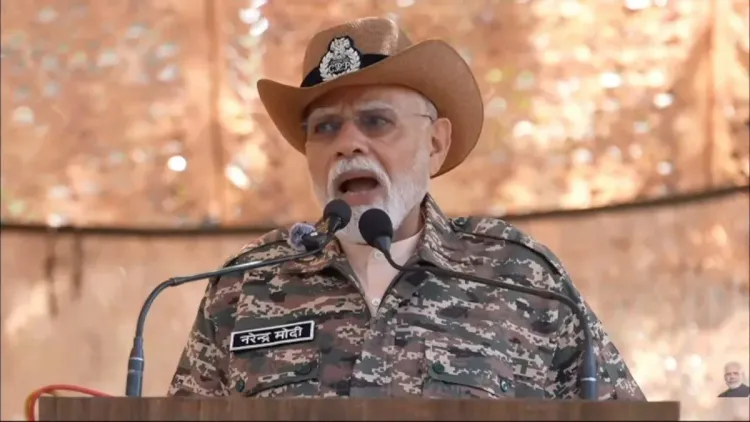
Commerce Minister Piyush Goyal on November 8, 2026 declared that Bastar — once the epicentre of Naxal terror — has been transformed through security forces' sacrifice, with development now taking root across the long-troubled Chhattisgarh division.
Key Takeaways
Union Commerce Minister Piyush Goyal posted on November 8, 2026 hailing the end of Naxal terror in Bastar and the onset of a 'spring of development'.
Goyal credited India's security forces and their 'sacrifice and devotion' for the turnaround in the region.
Bastar division , southern Chhattisgarh, has been a core Left Wing Extremism zone for decades and a focal point of India's anti-Naxal strategy.
The Ministry of Home Affairs' Integrated Action Plan for LWE districts , launched in 2010 , combined security operations with infrastructure investment in affected areas.
The post signals the government's continued narrative of transitioning the Red Corridor from conflict to connectivity and welfare delivery.
A land once synonymous with Maoist ambushes and forest sieges is now being reclaimed — that is the declaration Union Commerce and Industry Minister Piyush Goyal made on Sunday, November 8, 2026, as he saluted security forces for turning the tide in Bastar, the storied heartland of India's decades-long Left Wing Extremism crisis.
Posting in Hindi, Goyal wrote: 'बस्तर की भूमि, जिसपर कभी नक्सली आतंक का कहर था।' — 'The land of Bastar, which was once ravaged by the terror of Naxalism' — before declaring that, through the sacrifice and dedication of India's security forces, that same soil had shed its shadow of terror and stepped into a season of development.
Bastar's Long Shadow: Decades of LWE Conflict
Bastar division, a sprawling cluster of districts in southern Chhattisgarh, became the geographic and symbolic core of the Naxalite insurgency that has haunted India's Red Corridor since the 1960s. Dense forests, remote tribal hamlets, and scarce state infrastructure made it fertile ground for Maoist networks that at their peak controlled entire districts and regularly ambushed security convoys. The human cost — soldiers killed, villages caught between two forces, tribal communities denied basic services — has been among the most painful chapters of post-Independence India's internal security story.
The Ministry of Home Affairs has pursued a twin-track strategy since the early 2000s, combining intensified counter-insurgency operations with the Integrated Action Plan for LWE districts, launched in 2010, which pumped funds into roads, schools, health centres, and mobile connectivity in areas that had long been development deserts.
Security Forces' Sacrifice Behind the Turning Point
Goyal's post places the credit squarely on the boots on the ground. His words — 'त्याग और तपस्या' (sacrifice and devotion) — invoke the thousands of Central Armed Police Forces personnel and Chhattisgarh state police officers who have conducted relentless anti-Naxal operations in some of the country's most difficult terrain. Official metrics over the past decade have consistently pointed to declining violence incidents, surrenders, and the progressive opening of forest roads that insurgents once used as chokepoints.
Successive governments have framed each operational milestone in Bastar as the beginning of a development dividend — the moment sealed roads and mobile towers can follow where paramilitary columns led. Goyal's post continues that well-established narrative of transition: security first, then schools, then prosperity.
What 'Vikas Ki Bahaar' Means for Bastar's Tribal Communities
The phrase 'विकास की बहार' — 'a spring of development' — carries real stakes for the region's largely tribal population. Bastar's communities have historically been caught between insurgent intimidation and state neglect; the promise embedded in this framing is that normalcy now opens the door to infrastructure, livelihoods, and rights that conflict had long deferred. Roads, banking access, and welfare delivery in previously inaccessible pockets are the tangible markers watchers will track as the government presses its development-after-security agenda forward.
The road from declaration to delivery in Bastar has historically been long. But if the security gains hold, the question for Chhattisgarh and New Delhi alike is how fast the state can convert a hard-won peace into the visible, everyday prosperity that makes it permanent.
Point of View
Making this less a new announcement than an authoritative endorsement of a strategy now claiming results. The critical test will be whether the Ministry of Home Affairs formally reclassifies Bastar districts out of LWE status — a step that unlocks additional funding streams and signals institutional, not merely rhetorical, confidence in the peace. For tribal communities on the ground, the credibility of the 'vikas ki bahaar' promise will be measured in roads, schools, and economic access, not ministerial posts.
NationPress
8 Nov 2026
Frequently Asked Questions
What did Piyush Goyal say about Bastar on November 8 2026?
Goyal posted on X declaring that Bastar, once ravaged by Naxal terror, has been freed from that shadow through the sacrifice of security forces and is now entering a phase of development.
Is Naxalism over in Bastar?
The government's position, as reflected in Goyal's post, is that Naxal terror has been overcome in Bastar; however, independent verification of a complete end to LWE activity in the region as of November 2026 is not available.
What is the Integrated Action Plan for LWE districts?
Launched in 2010 by the Ministry of Home Affairs, the Integrated Action Plan channels funds into roads, schools, health centres, and connectivity projects in Left Wing Extremism-affected districts, complementing security operations.
Why is Bastar significant in India's Naxal history?
Bastar division in southern Chhattisgarh is considered the geographic heart of India's Red Corridor — the belt of districts where Maoist insurgents have operated most intensively for decades, exploiting remote forests and tribal areas.
What does 'vikas ki bahaar' mean in the context of Bastar?
'Vikas ki bahaar' means 'a spring of development' — the government's framing that security normalisation in Bastar now enables roads, banking, schools, and welfare delivery to reach communities previously cut off by insurgency.