Gujarat Local Body Polls 2025: Amit Shah, CM Patel, Jeet Adani Vote
Synopsis
Gujarat's sweeping 2025 local body elections — covering 15 municipal corporations and 394 civic bodies — saw Union Home Minister Amit Shah, CM Bhupendra Patel, and Adani scion Jeet Adani among early voters. With counting on April 28, results will reveal whether BJP's grassroots dominance in Gujarat remains intact.
Key Takeaways
Gujarat local body elections 2025 commenced on April 27 across 15 municipal corporations , 84 municipalities , 34 district panchayats , and 260 taluka panchayats .
Union Home Minister Amit Shah voted in Gandhinagar with his family, including son Jay Shah , and later visited a temple after casting his ballot.
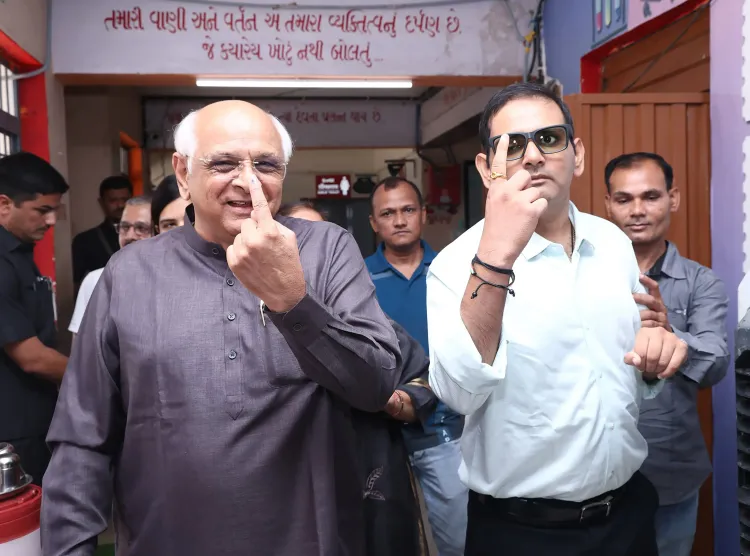
Chief Minister Bhupendra Patel voted in Ahmedabad at 7 a.m. and called the polls a "festival of democracy," urging mass civic participation.
Jeet Adani , Director of Adani Airport Holdings Ltd , voted with wife Diva Shah at an Ahmedabad polling station.
Deputy CM Harsh Sanghavi voted in Surat and attributed strong turnout to public support for PM Modi 's development agenda.
Vote counting is scheduled for April 28, 2025 , with results expected to reflect the BJP 's grassroots strength across Gujarat's urban and rural bodies.
Gujarat local body elections 2025 kicked off on Sunday, April 27, with senior leaders including Union Home Minister Amit Shah, Chief Minister Bhupendra Patel, and Adani Airport Holdings Director Jeet Adani among the first to exercise their franchise. Voting is underway across 15 municipal corporations, 84 municipalities, 34 district panchayats, and 260 taluka panchayats — making this one of the most expansive grassroots electoral exercises in the state's recent history. Vote counting is scheduled for April 28, 2025.
Top Leaders Among Early Voters
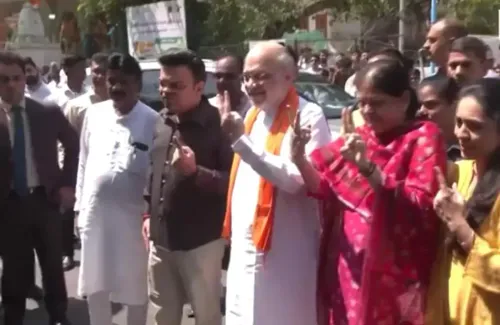
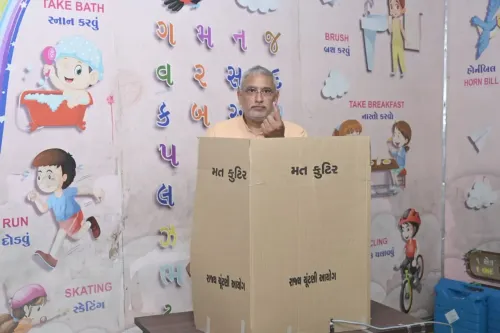
Union Home Minister Amit Shah cast his vote at a polling booth in Gandhinagar, accompanied by his wife Sonal Shah, son Jay Shah, and daughter-in-law Rishita Patel. Following the vote, Shah visited a nearby temple to offer prayers, with the family photographed displaying their inked fingers — a symbolic gesture of civic participation.
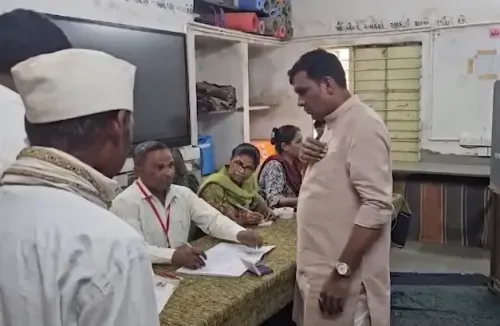
Jeet Adani, Director of Adani Airport Holdings Ltd, voted alongside his wife Diva Shah at a polling station in Ahmedabad. The presence of prominent business figures at polling booths signals broad civic engagement beyond the political class.
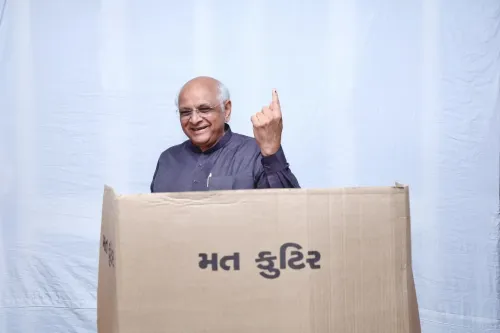
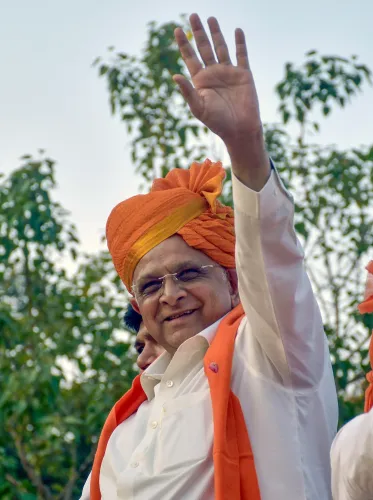
Chief Minister Bhupendra Patel cast his vote in Ahmedabad shortly after polling commenced at 7 a.m. He called the elections a "festival of democracy" and urged all citizens to treat voting as a fundamental civic responsibility. "Local body elections are being held in Gujarat today. This is a celebration of democracy, and every citizen should take part and fulfil their responsibility," he stated.
Deputy CM Sanghavi Votes in Surat, Cites Development Mandate
Deputy Chief Minister Harsh Sanghavi exercised his franchise in Surat and expressed confidence in strong voter turnout across the state. He framed the elections as a public endorsement of Prime Minister Narendra Modi's development-driven governance model.
"Today, along with my family, people from the city and across the state have cast their votes. The citizens of Gujarat have stepped forward to further reinforce Prime Minister Modi's development-driven politics," Sanghavi said.
His remarks reflect the BJP's consistent electoral messaging in Gujarat — positioning local body polls not merely as civic exercises but as referendums on state and central governance performance.
Scale and Significance of the 2025 Gujarat Local Body Elections
The 2025 Gujarat local body polls cover an extraordinarily wide geographic and administrative canvas. Voting is being held simultaneously for 15 municipal corporations — including major urban centres Ahmedabad, Surat, Vadodara, and Rajkot — alongside hundreds of panchayat-level bodies. This scale makes the exercise a critical barometer of public sentiment at the grassroots level.
Local body elections in Gujarat have historically been dominated by the Bharatiya Janata Party (BJP), which has held a strong grip on urban civic bodies for over two decades. The outcome of these polls will be closely watched as an early indicator of voter mood ahead of future state and national elections.
Notably, these elections come at a time when urban infrastructure, civic services, and local governance quality are under heightened public scrutiny across Gujarat's rapidly growing cities.
Broader Political Context and What to Watch
The simultaneous voting across hundreds of local bodies tests the state's electoral machinery at an unprecedented scale. The Election Commission of Gujarat has deployed extensive polling infrastructure to manage the exercise smoothly.
The participation of figures like Jeet Adani — representing one of India's most powerful industrial families with deep roots in Gujarat — underscores the intertwining of business, civic, and political life in the state. Critics have long noted the proximity between the Adani Group and the ruling establishment, making such public gestures a subject of broader political discourse.
With vote counting set for April 28, results will offer a real-time snapshot of the BJP's dominance at the local level and signal how effectively opposition parties — including the Congress and Aam Aadmi Party — have been able to penetrate Gujarat's civic landscape.
Point of View
' the real story will emerge on April 28 — whether opposition parties like AAP, which made inroads in Surat in 2021, can consolidate or whether the BJP's local dominance remains structurally unshakeable. The scale of this election — 393 bodies voting in a single day — is itself a governance achievement worth scrutinising for both its efficiency and its fairness.
NationPress
19 Sept 2026
Frequently Asked Questions
When are the Gujarat local body election results 2025?
The Gujarat local body election results 2025 are scheduled to be announced on April 28, 2025 . Voting took place on April 27, 2025 across 15 municipal corporations, 84 municipalities, 34 district panchayats, and 260 taluka panchayats.
Where did Amit Shah vote in the Gujarat local body elections?
Union Home Minister Amit Shah cast his vote at a polling booth in Gandhinagar, Gujarat . He was accompanied by his wife Sonal Shah, son Jay Shah, and daughter-in-law Rishita Patel.
Which municipal corporations are voting in Gujarat local body polls 2025?
Voting is being held for 15 municipal corporations in Gujarat, including Ahmedabad, Surat, Vadodara , and Rajkot . The elections also cover 84 municipalities, 34 district panchayats, and 260 taluka panchayats.
Did Jeet Adani vote in the Gujarat elections 2025?
Yes, Jeet Adani , Director of Adani Airport Holdings Ltd , voted with his wife Diva Shah at a polling station in Ahmedabad during the Gujarat local body elections on April 27, 2025.
What did CM Bhupendra Patel say about the Gujarat local body elections?
CM Bhupendra Patel described the elections as a "festival of democracy" and urged all citizens to participate actively. He cast his vote in Ahmedabad shortly after polling began at 7 a.m. on April 27.