PM Modi, Amit Shah Vote in Ahmedabad: Gujarat's Biggest Civic Polls Begin
Synopsis
PM Modi and Amit Shah are voting in Ahmedabad as Gujarat conducts its most consequential civic elections in years — 4.19 crore voters, 10,000+ seats, and a historic first: 27% OBC reservation now reshaping who gets to govern at the grassroots level.
Key Takeaways
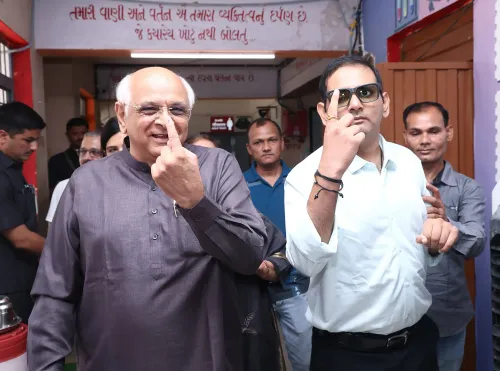
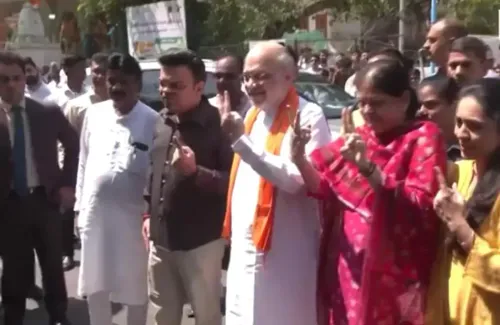
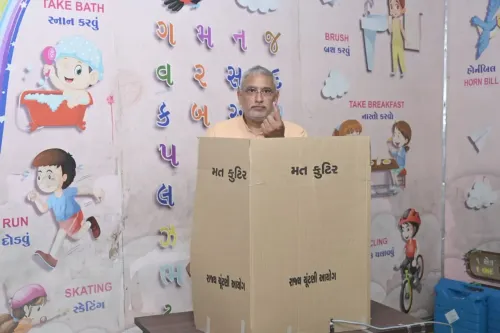
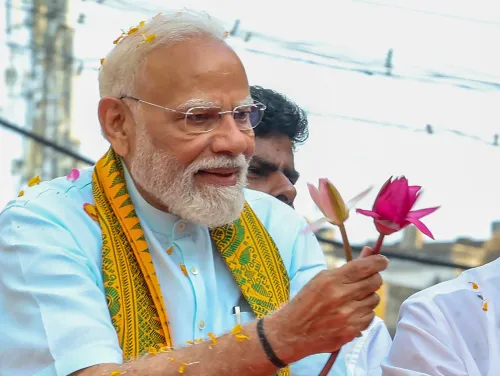
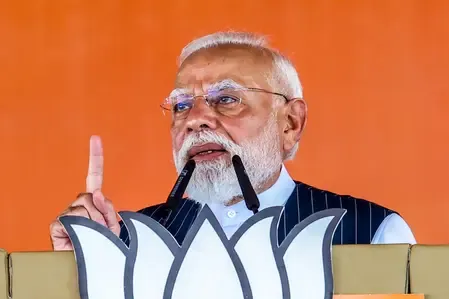
PM Narendra Modi is set to vote at Nishan School, Ranip, Ahmedabad , while Amit Shah will also cast his ballot in the city on April 27, 2025 .
Gujarat civic polls cover 15 municipal corporations , 84 municipalities , 34 district panchayats , and 260 taluka panchayats — over 10,000 seats in total.
Over 4.19 crore voters are registered across nearly 50,000 polling stations ; polling runs from 7 AM to 6 PM using EVMs.
This is the first Gujarat civic election conducted with 27% OBC reservation , a historic policy shift expected to reshape local governance composition.
More than 20,000 candidates from BJP, Congress, AAP , and Independent groups are contesting; vote counting is set for April 28, 2025 .
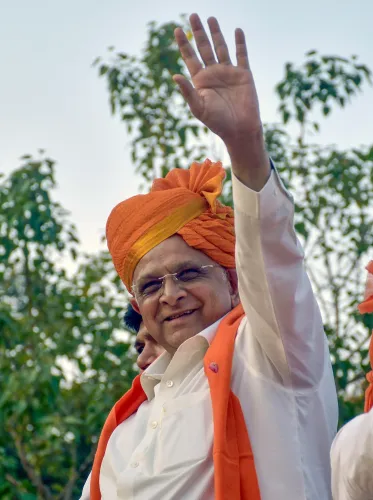
UP Governor Anandiben Patel will vote in Thaltej, Ahmedabad ; MP Governor Mangubhai Patel will vote in Navsari .
Prime Minister Narendra Modi and Union Home Minister Amit Shah are set to exercise their franchise in Ahmedabad on Sunday, April 27, as Gujarat holds one of its largest local self-government elections in recent memory. The high-profile participation underscores the political significance of these civic polls, which will determine governance across 15 municipal corporations, 84 municipalities, 34 district panchayats, and 260 taluka panchayats — with more than 10,000 seats at stake.
Where Modi and Shah Will Cast Their Votes
PM Narendra Modi is expected to vote at a polling booth situated at Nishan School in the Ranip area of Ahmedabad. Amit Shah, who represents the Gandhinagar Lok Sabha constituency, is also likely to cast his ballot at a designated polling station within the city.
Former Chief Minister and Uttar Pradesh Governor Anandiben Patel is expected to vote from the Thaltej area of Ahmedabad, while Madhya Pradesh Governor Mangubhai Patel is likely to cast his vote in Navsari. The visible participation of senior constitutional figures signals the BJP's intent to energise its voter base across the state.
Scale and Scope of Gujarat Civic Polls 2025
Polling is scheduled between 7 AM and 6 PM using Electronic Voting Machines (EVMs), with vote counting set for April 28. Over 4.19 crore voters are registered to participate across nearly 50,000 polling stations spread throughout the state.
More than 20,000 candidates remain in the contest after withdrawals, while several candidates have already been declared elected unopposed. The multi-cornered fight involves the Bharatiya Janata Party (BJP), the Indian National Congress, the Aam Aadmi Party (AAP), and a significant number of Independent candidates.
Historic OBC Reservation Reshapes Local Governance
This election cycle carries landmark significance as it is the first civic election in Gujarat to be conducted following the implementation of 27 per cent reservation for Other Backward Classes (OBCs). This new quota is layered on top of existing reservations for Scheduled Castes (SCs), Scheduled Tribes (STs), and women.
Together, these overlapping reservations are expected to fundamentally reshape the social and political composition of local governance bodies across Gujarat. Analysts note that OBC communities — who constitute a substantial share of Gujarat's electorate — could emerge as decisive kingmakers in closely contested wards.
Notably, the Supreme Court had previously struck down Maharashtra's OBC reservation in local body elections in 2021, citing the absence of empirical data on backwardness. Gujarat's implementation, backed by a dedicated commission's findings, is being watched as a potential model for other states navigating the same legal challenge.
Political Stakes and What Comes Next
For the BJP, which has dominated Gujarat's political landscape for over two decades, these elections serve as a critical gauge of grassroots support ahead of future state and national electoral cycles. A strong showing would reinforce the party's narrative of uninterrupted dominance in Prime Minister Modi's home state.
The AAP, which made inroads in Gujarat during the 2022 Assembly elections by securing its first seats in the state legislature, views these civic polls as an opportunity to consolidate its urban presence. Congress, meanwhile, is attempting to rebuild its organisational strength at the ground level after successive electoral setbacks.
With results expected on April 28, the outcome will offer the clearest signal yet of how Gujarat's voters are aligning ahead of the next major electoral contest — and whether the BJP's local machinery remains as formidable as its state-level record suggests.
Point of View
It's not just civic duty — it's a carefully calibrated political signal. Gujarat is Modi's home turf, and any erosion of the BJP's grip at the grassroots level would carry national implications. More critically, this election's introduction of 27% OBC reservation is the real story that most headlines are missing: it represents a structural shift in who holds power at the village and ward level, and its success or failure will influence how other BJP-ruled states approach the politically sensitive OBC quota question ahead of the 2027 electoral cycle.
NationPress
7 Oct 2026
Frequently Asked Questions
Where will PM Modi vote in the Gujarat civic polls 2025?
PM Modi is expected to cast his vote at a polling booth at Nishan School in the Ranip area of Ahmedabad . This is part of the Gujarat local self-government elections being held on April 27, 2025 .
How many seats are at stake in the Gujarat local body elections 2025?
More than 10,000 seats are at stake across 15 municipal corporations , 84 municipalities , 34 district panchayats , and 260 taluka panchayats . Over 4.19 crore voters are eligible to vote across nearly 50,000 polling stations .
When will Gujarat civic poll results be declared?
Vote counting for the Gujarat civic polls 2025 is scheduled for April 28, 2025 . Polling took place on April 27 between 7 AM and 6 PM using Electronic Voting Machines.
What is the significance of OBC reservation in Gujarat civic polls 2025?
This is the first Gujarat civic election held after implementing 27% OBC reservation in local body seats. Combined with existing SC, ST, and women's quotas, this is expected to significantly reshape the social composition of local governance bodies across the state.
Which parties are contesting the Gujarat local body elections 2025?
The main parties contesting are the BJP , Congress , and AAP , along with a large number of Independent candidates . Over 20,000 candidates are in the fray after withdrawals, with some already elected unopposed.