Gujarat CM Calls for 100% Voter Turnout in April 26 Local Body Polls
Synopsis
Gujarat's massive local body elections on April 26 cover 15 municipal corporations, 84 municipalities, and over 10,000 seats — with CM Bhupendra Patel personally urging 100% turnout. Crucially, these are the first polls held under the new 27% OBC reservation, making them a landmark moment for grassroots democracy in the state.
Key Takeaways
Gujarat Chief Minister Bhupendra Patel has appealed for 100% voter turnout in local self-government elections scheduled for April 26, 2025 .
The elections span 15 municipal corporations , 84 municipalities , 34 district panchayats , and 260 taluka panchayats — over 10,000 seats in total.
More than 4.19 crore eligible voters are registered to vote, with polling from 7 a.m. to 6 p.m. using Electronic Voting Machines .
These are the first Gujarat local body elections held under the revised 27% OBC reservation framework, a landmark policy shift.
Over one lakh security personnel have been deployed statewide to ensure peaceful polling.
Vote counting is scheduled for April 28, 2025 , with results expected to shape grassroots governance across Gujarat for the coming term.
Gandhinagar, April 25 — Gujarat Chief Minister Bhupendra Patel has issued a strong appeal for 100 per cent voter participation in the state's local self-government elections scheduled for Sunday, April 26, calling voting both a democratic right and a fundamental civic duty. The elections — one of the largest grassroots electoral exercises in Gujarat's recent history — will span urban and rural local bodies across the state, with over 4.19 crore eligible voters expected to cast their ballots.
CM Patel's Appeal: Democracy as a Sacred Duty
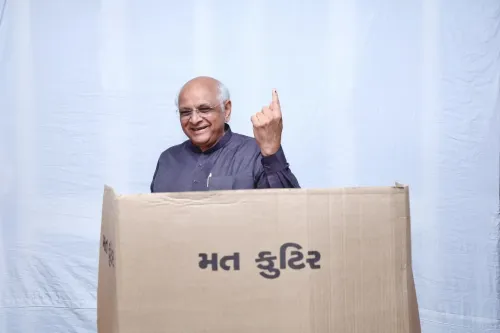
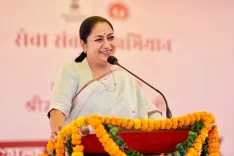
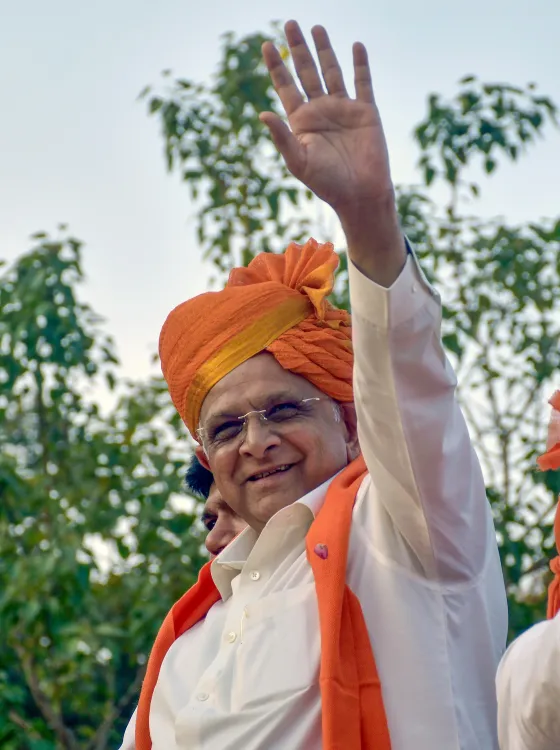
In a formal message released on Saturday, April 25, Chief Minister Bhupendra Patel urged voters to treat the elections as what he called the sacred festival of democracy. He emphasised that casting a vote is not merely a constitutional right but a sacred duty as a citizen.
Patel stated that every vote will further accelerate the overall development of the state's villages, talukas, districts and cities. He called on voters to visit their polling stations and to actively encourage family members, friends, and neighbours to participate as well.
He also framed civic participation within the larger national vision, noting that voting would contribute to building a developed Gujarat from a developed India — a direct echo of the ruling Bharatiya Janata Party (BJP)'s signature developmental narrative ahead of the polls.
Scale of the Elections: What's at Stake
The electoral exercise covers an extraordinary breadth of local governance structures. Voting will be held across 15 municipal corporations, 84 municipalities, 34 district panchayats, and 260 taluka panchayats — making it a multi-tiered contest that will define grassroots governance across Gujarat for the coming term.
Over 10,000 seats are being contested in this election cycle, including positions in newly constituted municipal bodies. Notably, these polls are also the first to be conducted under the revised 27 per cent reservation for Other Backward Classes (OBC) in local bodies — a policy change with significant political and social implications for communities across the state.
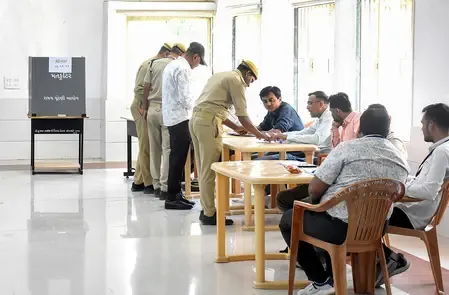
Polling will be conducted from 7 a.m. to 6 p.m. using Electronic Voting Machines (EVMs) at tens of thousands of polling stations. Vote counting is scheduled for April 28.
Security and Administrative Preparedness
Authorities have deployed over one lakh security personnel across Gujarat to ensure peaceful polling. Additional security measures have been put in place in areas identified as sensitive, reflecting the scale and political significance of the exercise.
The State Election Commission has overseen extensive logistical preparations to manage voting across such a geographically and administratively diverse set of constituencies. The use of EVMs at every polling booth is intended to streamline the counting process ahead of the April 28 result declaration.
Political Context: Campaigning Ends, Stakes Rise
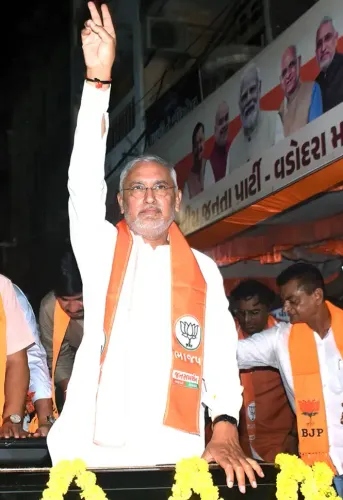
Campaigning concluded on Friday, April 25, with major political parties — led by the BJP — holding high-profile roadshows and rallies across the state, including prominent events in Ahmedabad. The final push saw parties mobilising voters at the ward and panchayat level in a bid to consolidate support ahead of polling day.
This comes amid a broader political context where the BJP, which has dominated Gujarat politics for over two decades, is seeking to reaffirm its grip on local governance. The Congress and other opposition parties have also been active in campaigning, particularly in urban pockets and OBC-dominated constituencies where the new reservation framework could shift electoral dynamics.
Significantly, the introduction of the 27 per cent OBC reservation — implemented following a Supreme Court-mandated process requiring empirical data on backwardness — marks a structural change in how local body seats are distributed. Critics and political analysts note that this could reshape vote-bank calculations for all parties, with OBC communities now holding greater formal representation in local governance than ever before.
Why These Elections Matter Beyond the Vote Count
Local body elections in Gujarat are often seen as a barometer of ground-level public sentiment — a test of whether the ruling party's development narrative resonates at the village and ward level, beyond the national election cycle. The outcome will directly determine who controls municipal budgets, infrastructure decisions, and welfare scheme implementation for millions of citizens.
With 4.19 crore voters across urban and rural bodies, the sheer scale means that even marginal shifts in turnout can alter outcomes in hundreds of seats. CM Patel's personal appeal for 100 per cent turnout signals that the ruling establishment is acutely aware that low voter participation — historically a challenge in local body polls — could complicate their electoral arithmetic.
As Gujarat heads to the polls on April 26, all eyes will be on voter turnout figures, OBC constituency results, and urban versus rural performance patterns — data that will set the political tone in the state well ahead of the next assembly election cycle.
Point of View
But the real story is structural: the introduction of 27% OBC reservation fundamentally rewires the political calculus at the grassroots level — and every major party knows it. CM Patel's personal appeal for 100% turnout is less a civic gesture and more a strategic signal, given that lower turnout in local polls historically favours incumbents with stronger ground machinery. The BJP's two-decade dominance in Gujarat is not under existential threat, but these elections will reveal whether its local governance narrative still holds in an era of rising OBC political assertion and urban voter fatigue. The April 28 results will be studied far beyond Gujarat's borders.
NationPress
24 Sept 2026
Frequently Asked Questions
When are the Gujarat local body elections 2025?
The Gujarat local body elections are scheduled for April 26, 2025 , with voting from 7 a.m. to 6 p.m. Vote counting will take place on April 28, 2025 .
How many seats are being contested in Gujarat local body polls 2025?
Over 10,000 seats are being contested across 15 municipal corporations , 84 municipalities , 34 district panchayats , and 260 taluka panchayats . More than 4.19 crore voters are eligible to participate.
What is the OBC reservation in Gujarat local body elections?
The 2025 Gujarat local body elections are the first to be held under a revised 27% reservation for Other Backward Classes (OBC) in local bodies. This follows a Supreme Court-mandated process requiring empirical data to justify OBC quotas in local governance.
What did CM Bhupendra Patel say about the Gujarat elections?
Chief Minister Bhupendra Patel called voting a sacred duty as a citizen and urged all voters to participate in what he described as the sacred festival of democracy. He linked voter participation directly to Gujarat's development goals.
How many security personnel are deployed for Gujarat local body elections 2025?
Authorities have deployed over one lakh security personnel across Gujarat for the local body elections. Additional security measures have been put in place in areas identified as sensitive by election authorities.